

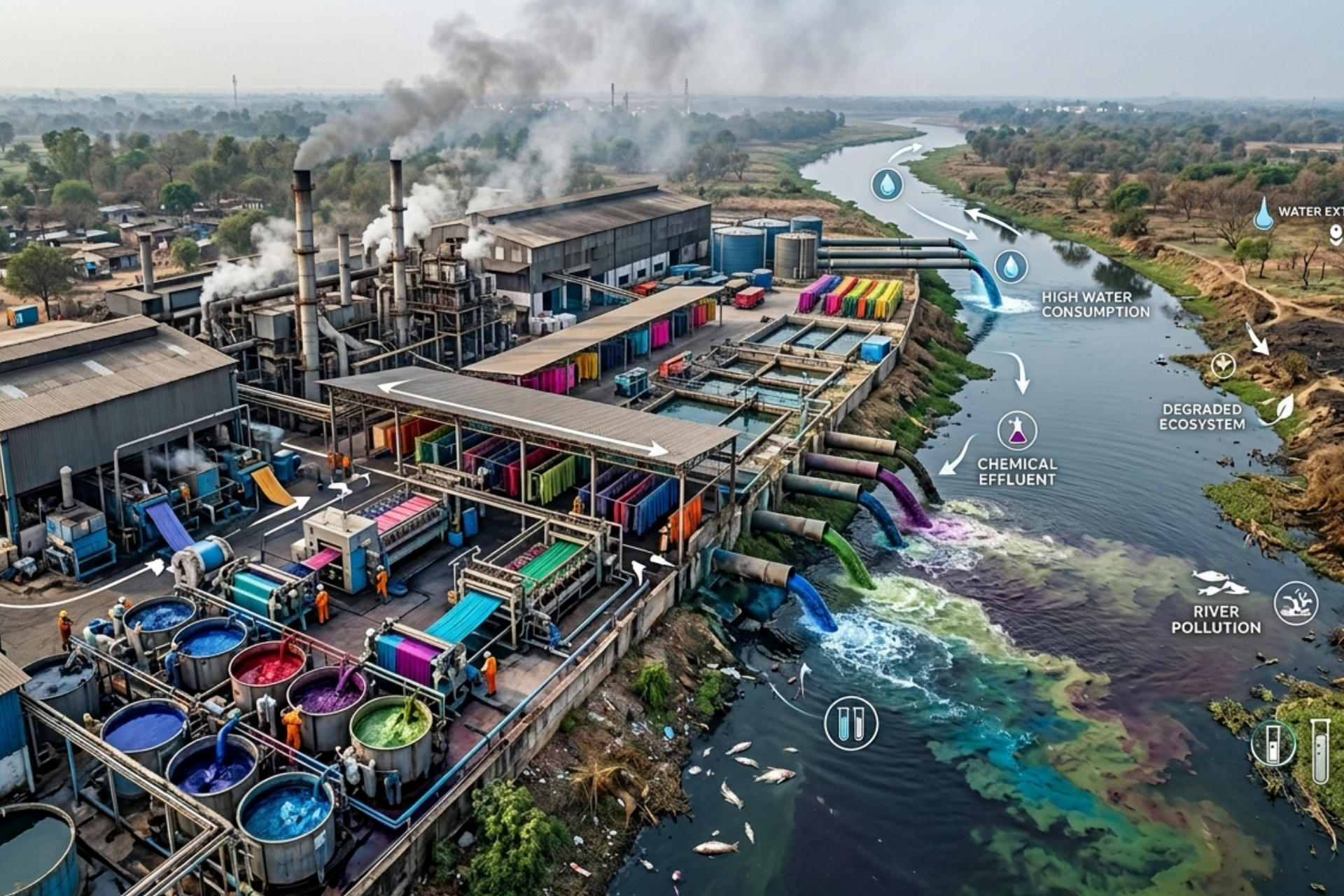
Colour is one of the most attractive aspects of fashion, but few consumers think about how those colours are created. The textile dyeing industry is one of the most resource-intensive parts of garment production and can have significant environmental consequences when not managed responsibly.
Synthetic dyes were developed to create consistent, vibrant colours at scale. While they helped make colourful clothing widely available, they also introduced environmental challenges. Dyeing processes often require large quantities of water, energy, and chemical inputs.
When wastewater is not properly treated, dye residues and chemicals can enter rivers, lakes, and groundwater systems. This can affect aquatic ecosystems and create challenges for communities that rely on these water sources.
Textile production is also energy-intensive. Large-scale manufacturing facilities consume substantial amounts of electricity and fuel throughout the production process. As global demand for clothing increases, the environmental footprint of the industry grows as well.
Another issue is the volume of clothing being produced. Fast fashion encourages rapid consumption, resulting in higher demand for dyed fabrics and increased pressure on natural resources.
Natural dyeing is not a perfect solution to every challenge, but it offers an opportunity to rethink how colour is introduced into textiles. Plant-based dyes can reduce reliance on certain synthetic inputs and help reconnect fashion with more traditional methods.
Consumers can contribute by choosing quality garments that last longer, supporting brands that prioritize responsible production, and learning more about the origins of the products they purchase.
Why Textile Dyeing Has Such a Large Environmental Footprint
Most people associate fashion’s environmental impact with fabric production, but dyeing and finishing are often among the most resource-intensive stages of the entire manufacturing process.
To produce bright and long-lasting colours, textile manufacturers may use:
- Large volumes of water
- Chemical dyes and fixing agents
- Heat-intensive processing equipment
- Multiple washing and rinsing cycles
- Energy-consuming drying systems
Every additional production step increases resource consumption. When millions of garments are manufactured every day, even small inefficiencies can create significant environmental impacts on a global scale.
Did You Know?
“A single garment may go through multiple washing, bleaching, dyeing, rinsing, and finishing stages before reaching a retail store. Each step can require additional water, chemicals, and energy”
The Hidden Journey of Dye Wastewater
One of the biggest concerns associated with synthetic textile dyes is wastewater management.
During the dyeing process, not all dye particles attach to the fabric. Some remain in the water used during production. Without effective treatment systems, these substances can enter local waterways.
Potential consequences include:
- Reduced water quality
- Disruption of aquatic ecosystems
- Reduced sunlight penetration in rivers and lakes
- Challenges for communities that depend on these water sources
- Increased costs for water treatment and purification
Responsible manufacturers invest in wastewater treatment technologies to reduce these impacts, but standards and implementation can vary across different regions.
Fast Fashion and the Colour Consumption Cycle
Modern fashion trends change faster than ever. New collections are introduced frequently, encouraging consumers to purchase more clothing than previous generations.
This creates a cycle:
- More clothing demand
- More fabric production
- More dyeing and finishing
- More resource consumption
- More textile waste
The environmental challenge is not only how clothes are dyed but also how many clothes are being produced and discarded.
Ask Yourself:
- How often do I wear the clothes I buy?
- Do I choose quality over quantity?
- Could I extend the life of a garment through better care?
- Do I know where and how my clothing was produced?
Small changes in consumer habits can collectively create significant positive impacts.
Innovations Creating a More Sustainable Future
The textile industry is actively exploring new ways to reduce its environmental footprint.
Some emerging approaches include:
Water-Efficient Dyeing
New technologies are being developed to reduce water usage during the colouring process.
Plant-Based and Natural Dyes
Colours derived from roots, leaves, flowers, bark, and agricultural waste offer alternatives to some synthetic dye applications.
Closed-Loop Manufacturing
Certain facilities recycle water and recover resources during production, reducing overall waste.
Renewable Energy Integration
Manufacturers are increasingly adopting solar and other renewable energy sources to power production facilities.
While no single solution eliminates every environmental concern, combining multiple innovations can significantly improve sustainability outcomes.
What Consumers Can Do
Consumers play an important role in shaping industry practices through purchasing decisions.
Here are some simple actions that can make a difference:
✓ Buy fewer, higher-quality garments
✓ Support brands that provide transparency about their production processes
✓ Choose timeless styles that remain wearable for years
✓ Repair clothing instead of immediately replacing it
✓ Donate, resell, or recycle unwanted garments
✓ Learn about the materials and dyes used in the products you purchase
Every purchase sends a signal to the market about what consumers value.
Key Takeaways
- Textile dyeing is one of the most resource-intensive stages of clothing production.
- Synthetic dyes have enabled affordable, colourful fashion but can create environmental challenges when not managed responsibly.
- Wastewater treatment, energy consumption, and overproduction remain major concerns.
- Natural dyes and innovative technologies offer promising alternatives and improvements.
- Consumers can influence positive change through informed purchasing decisions and longer garment use.
Conclusion
The future of fashion depends not only on creativity and design but also on how responsibly products are manufactured. The colours we enjoy in our clothing often have a complex journey behind them—one that involves water, energy, resources, and environmental considerations.
By becoming more aware of how garments are dyed and produced, consumers can make choices that support a more sustainable fashion industry. Whether through purchasing fewer but better-quality items, supporting responsible brands, or learning about alternative dyeing methods, every decision contributes to a larger movement toward environmental responsibility.
Fashion will always be about self-expression, but the future of fashion can also be about conscious choices that benefit both people and the planet.