

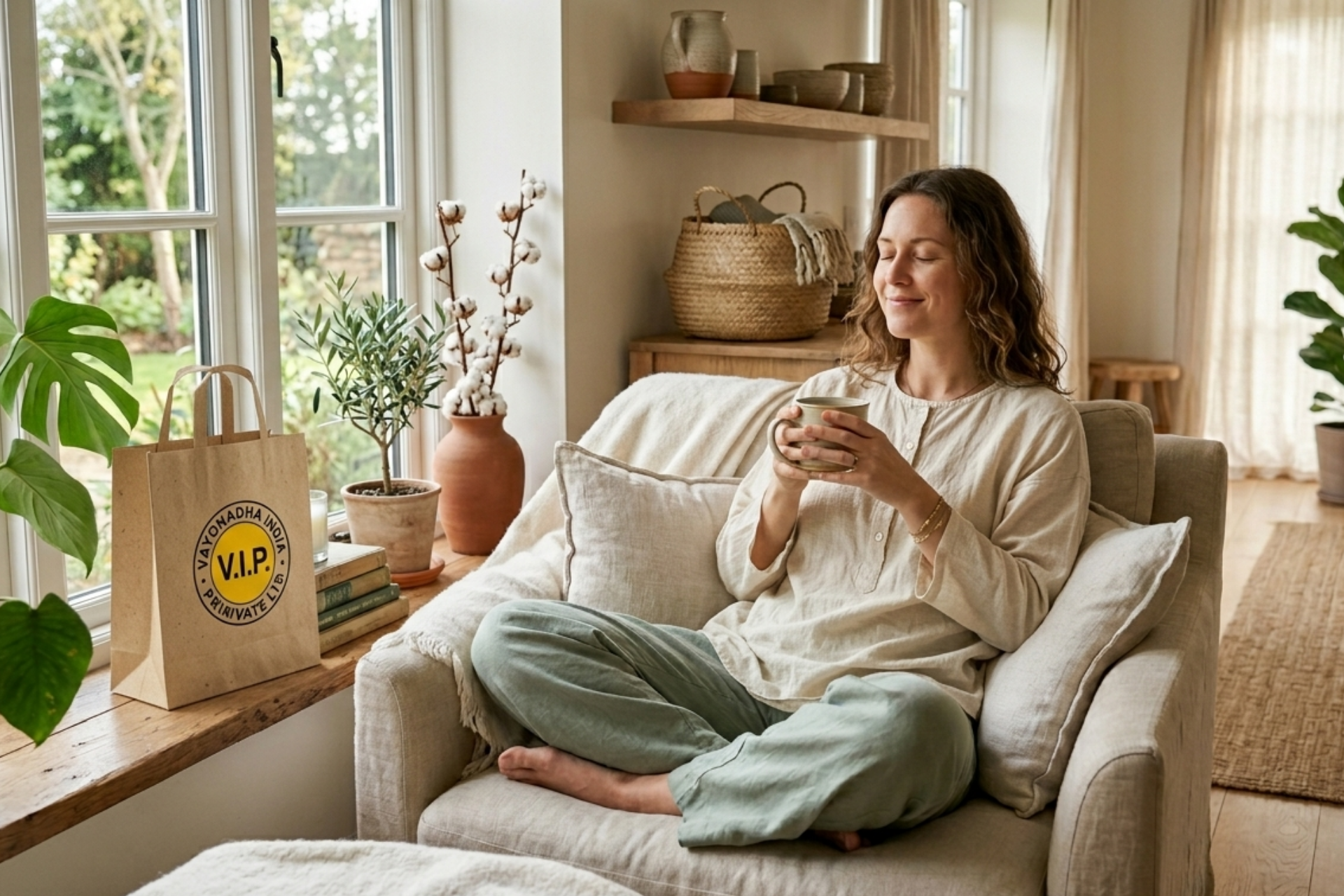
Most people think about food, exercise, and sleep when discussing wellness. Few consider the role clothing plays in daily comfort and well-being.
The fabrics we wear remain in contact with our skin for many hours every day. Comfort, breathability, and texture all influence how we feel.
Natural fibres such as cotton are often appreciated for their breathability and comfort. Many consumers also prefer clothing that feels connected to nature and craftsmanship.
Beyond physical comfort, clothing can affect emotional well-being. Wearing garments that align with personal values can create a sense of confidence and satisfaction. For people who care about sustainability and ethical production, choosing responsible fashion can reinforce those values.
The slow fashion movement encourages mindful consumption. Instead of purchasing large quantities of clothing, consumers are encouraged to select fewer pieces that offer greater meaning and quality.
Naturally dyed and handcrafted garments often provide a stronger sense of connection to the people and traditions behind them. This connection can transform clothing from a simple necessity into something more meaningful.
Well-being is influenced by many factors, and what we wear is one part of that larger picture. Choosing thoughtfully made clothing can contribute to a more mindful and intentional lifestyle.
The Connection Between Comfort and Daily Mood
Think about how you feel when wearing clothing that is too tight, traps heat, or causes irritation. Even minor discomfort can affect concentration, productivity, and overall mood throughout the day.
Comfortable clothing, on the other hand, allows us to focus on the activities that matter rather than constantly adjusting or feeling restricted.
Many people choose natural fabrics because they often provide:
- Better breathability in warm weather
- A softer feel against the skin
- Improved moisture absorption
- Greater comfort during extended wear
While clothing alone cannot determine well-being, physical comfort can contribute to a more pleasant daily experience.
Reader Question
Have you ever changed into a comfortable outfit after a long day and immediately felt more relaxed?
That simple feeling highlights the relationship between clothing and personal comfort.
Clothing and Emotional Well-Being
What we wear can influence more than our physical comfort. Clothing often reflects our personality, beliefs, and lifestyle choices.
When people wear garments that align with their values, they may experience:
- Greater confidence in their choices
- A stronger sense of authenticity
- Reduced guilt associated with overconsumption
- Increased appreciation for the items they own
For example, someone who values environmental responsibility may feel more satisfied wearing clothing produced through sustainable practices rather than fast-fashion alternatives.
This emotional connection can transform clothing from a disposable product into something meaningful and personal.
The Psychology of Mindful Dressing
Modern consumers are increasingly embracing the concept of mindful dressing. This approach encourages individuals to be intentional about what they buy and wear.
Instead of asking:
“What’s trending right now?”
Mindful consumers often ask:
- Who made this garment?
- How long will it last?
- Do I genuinely need it?
- Does it reflect my values?
These questions help create a healthier relationship with fashion by shifting attention away from constant consumption and toward thoughtful ownership.
“Research in consumer psychology suggests that people often derive greater long-term satisfaction from purchases that align with their personal values rather than impulse purchases driven by trends.”
Why Handmade Clothing Feels Different
Handcrafted garments often carry stories that machine-made products cannot.
Behind every handwoven fabric, naturally dyed textile, or artisan-made garment are skilled individuals who invest time, knowledge, and creativity into their work.
When consumers understand these stories, they often develop a deeper appreciation for their clothing.
This sense of connection can:
- Encourage better garment care
- Increase the lifespan of clothing
- Reduce unnecessary purchases
- Foster respect for traditional craftsmanship
As a result, clothing becomes more than a product—it becomes a reflection of human skill and cultural heritage.
Creating a Wellness-Oriented Wardrobe
Building a wardrobe that supports well-being does not require replacing everything you own. Small changes can make a meaningful difference.
Consider:
- Choosing breathable natural fabrics when possible
- Prioritizing quality over quantity
- Supporting ethical and artisan-made brands
- Selecting colours and textures that make you feel comfortable
- Caring for garments properly to extend their life
These simple decisions can help create a wardrobe that feels both practical and meaningful.
A Broader View of Wellness
Well-being is not built from a single habit. It is shaped by countless everyday choices.
We often focus on nutrition, exercise, and sleep because their impact is obvious. Yet the products we interact with daily—including our clothing—also contribute to our overall experience of life.
The garments we wear accompany us through work, travel, celebrations, and ordinary moments. Choosing clothing that provides comfort, reflects our values, and supports responsible production can be one small but meaningful step toward a more intentional lifestyle.
Key Takeaway
Your clothing may not determine your well-being, but it can influence how you feel physically, emotionally, and mentally throughout the day.
By choosing garments that prioritize comfort, craftsmanship, sustainability, and personal values, you create a wardrobe that supports not only your style but also a more mindful way of living.
The next time you get dressed, consider this simple question:
Does what I’m wearing simply cover me, or does it contribute positively to how I feel and live?