

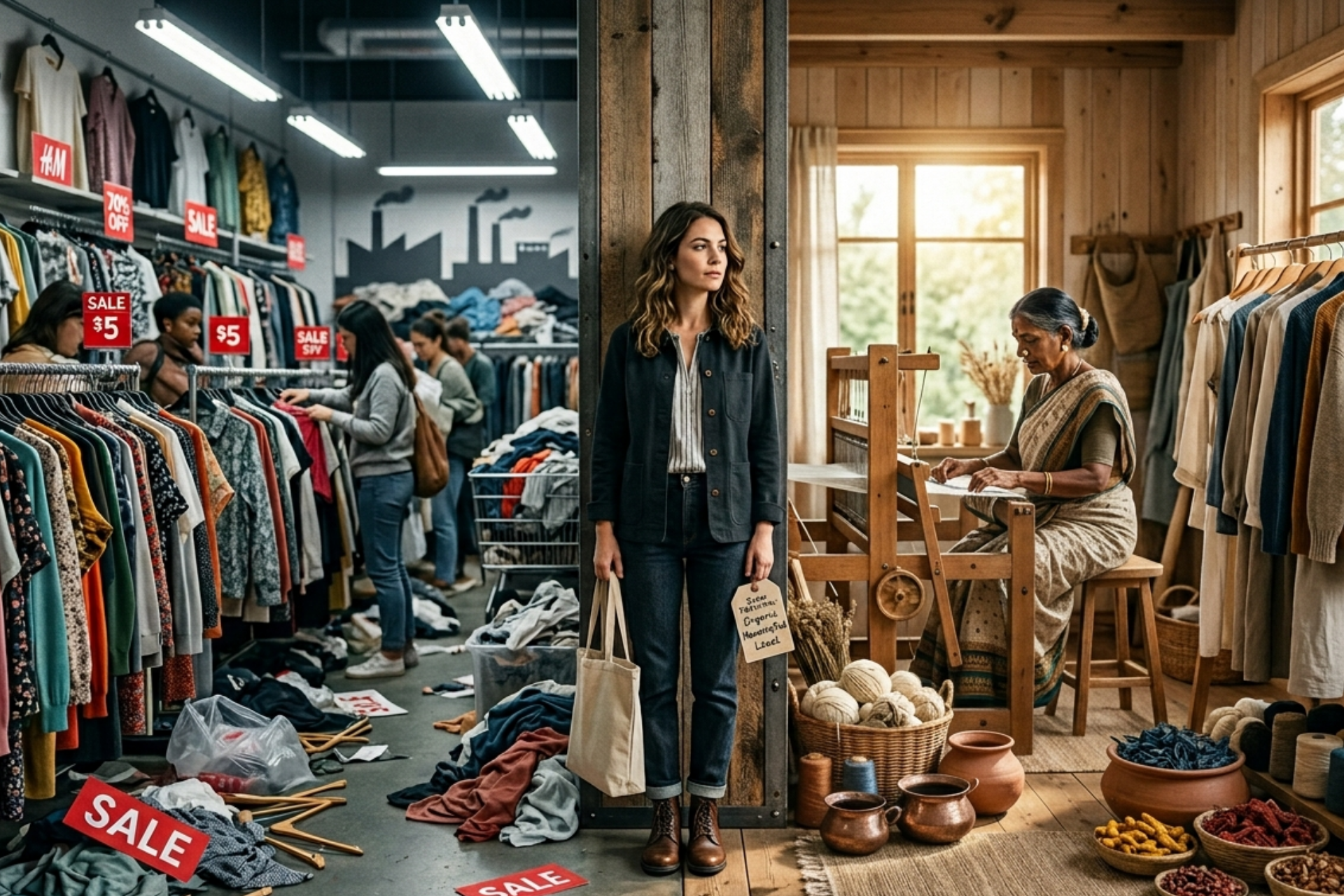
Fashion is at a crossroads. On one side is fast fashion, driven by rapid production, frequent trends, and low prices. On the other is slow fashion, which emphasizes quality, sustainability, and thoughtful consumption.
Fast fashion has made clothing more accessible, but it has also encouraged a culture of disposability. Garments are often purchased, worn a few times, and replaced by newer styles.
Slow fashion encourages a different approach. It focuses on craftsmanship, durability, and timeless design. Instead of buying more, consumers are encouraged to buy better.
This shift has implications for the environment, communities, and personal consumption habits. Slow fashion often supports artisan producers, smaller production runs, and more transparent supply chains.
The goal is not perfection. Rather, it is progress toward a fashion system that balances economic needs with social and environmental responsibility.
Consumers ultimately shape the future of fashion through their choices. Every purchase sends a message about what values matter most.
By supporting quality, sustainability, and craftsmanship, we can help create a fashion industry that benefits both people and the planet. The future of fashion depends on the choices we make today.
Understanding the Real Cost of Clothing
When we see a very low-priced garment, it is easy to focus only on the cost at checkout. However, every piece of clothing carries hidden environmental and social costs.
Fast fashion often relies on:
- High-volume production cycles
- Frequent trend changes that encourage overconsumption
- Large amounts of water and energy usage
- Short product lifespans
- Increased textile waste
Many garments are designed to be affordable and trendy rather than durable. As a result, clothing may lose its shape, color, or quality after only a few uses, leading consumers to purchase replacements more frequently.
Fact: Millions of tons of textile waste are generated globally each year, much of which ends up in landfills or is incinerated.
What Makes Slow Fashion Different?
Slow fashion is not simply about buying expensive clothing. It is about making thoughtful decisions that prioritize longevity, quality, and responsible production.
Key principles of slow fashion include:
- Choosing durable materials
- Supporting skilled artisans and craftspeople
- Encouraging fair and ethical production practices
- Reducing waste through mindful purchasing
- Creating timeless designs that remain relevant beyond seasonal trends
A well-made garment may cost more initially, but it can often provide better value over time because it lasts longer and requires fewer replacements.
Fast Fashion vs Slow Fashion: A Simple Comparison
| Fast Fashion | Slow Fashion |
|---|---|
| Trend-driven | Timeless design |
| Mass-produced | Smaller production runs |
| Lower upfront cost | Higher long-term value |
| Frequent purchases | Intentional purchases |
| Short lifespan | Durable and long-lasting |
| Limited transparency | Greater supply chain awareness |
The comparison highlights that the difference is not only about clothing—it is about the mindset behind consumption.
How Consumer Choices Create Industry Change
Every purchase acts as a vote for the type of fashion industry we want to support.
When consumers choose quality over quantity, brands receive a clear signal that sustainability, transparency, and craftsmanship matter.
Consider these everyday choices:
- Repairing a garment instead of replacing it
- Choosing natural or responsibly sourced fabrics
- Buying fewer but higher-quality pieces
- Supporting local artisans and weaving communities
- Donating or recycling unwanted clothing responsibly
While a single purchase may seem insignificant, collective consumer behavior can influence entire markets.
The Benefits of Building a Thoughtful Wardrobe
A wardrobe built around quality rather than quantity often offers several advantages:
Better Value
Fewer replacements mean lower costs over time.
Greater Personal Style
Timeless pieces help create a consistent and authentic look rather than constantly chasing trends.
Reduced Environmental Impact
Long-lasting garments require fewer resources compared to repeatedly buying and discarding clothing.
Stronger Connection to Craftsmanship
Consumers gain a greater appreciation for the skills, traditions, and people involved in making clothing.
Small Steps Toward a More Sustainable Future
Transitioning to slow fashion does not require replacing an entire wardrobe overnight.
Start with manageable actions:
- Buy less and choose carefully
- Care for garments properly
- Learn basic clothing repairs
- Support ethical and artisan-made products when possible
- Focus on quality instead of quantity
Progress is more important than perfection. Even small changes can contribute to a more responsible fashion ecosystem.
Looking Ahead: The Future We Are Choosing
The debate between slow fashion and fast fashion is ultimately about priorities. Do we value speed and constant consumption, or do we value durability, craftsmanship, and sustainability?
The future of fashion will be shaped not only by brands and manufacturers but also by everyday consumers. Each purchasing decision contributes to a larger story about how clothing is produced, used, and valued.
Key Takeaway
Slow fashion is not about owning less for the sake of sacrifice. It is about owning better, appreciating craftsmanship, and making choices that support both people and the planet.
As consumers become more aware of the impact of their purchases, the fashion industry has an opportunity to evolve toward a model that balances style, quality, responsibility, and long-term sustainability.
The future of fashion is being woven today—one thoughtful choice at a time.