
Saving Heritage Through Fashion: Why Traditional Weaving Matters
India is home to one of the richest textile traditions in the world. Across the country, weaving communities have developed distinctive techniques, patterns, and styles that reflect local culture and history.
These traditions represent more than economic activity. They are living expressions of heritage and identity.
However, many traditional weaving communities face challenges from industrial production and changing consumer preferences. As demand for handmade textiles declines, valuable skills risk being lost.
Supporting traditional weaving helps preserve cultural knowledge. It provides income opportunities while ensuring that future generations can learn and continue these crafts.
Consumers play an important role in this process. Every purchase of a handwoven garment contributes to sustaining artisan livelihoods and protecting cultural heritage.
Fashion has the power to connect the past with the future. By choosing handcrafted textiles, consumers help ensure that traditional weaving remains relevant in a modern world.
Preserving heritage is not only the responsibility of artisans. It is a shared effort involving businesses, communities, and consumers who recognize the value of cultural traditions.
The Story Woven Into Every Thread
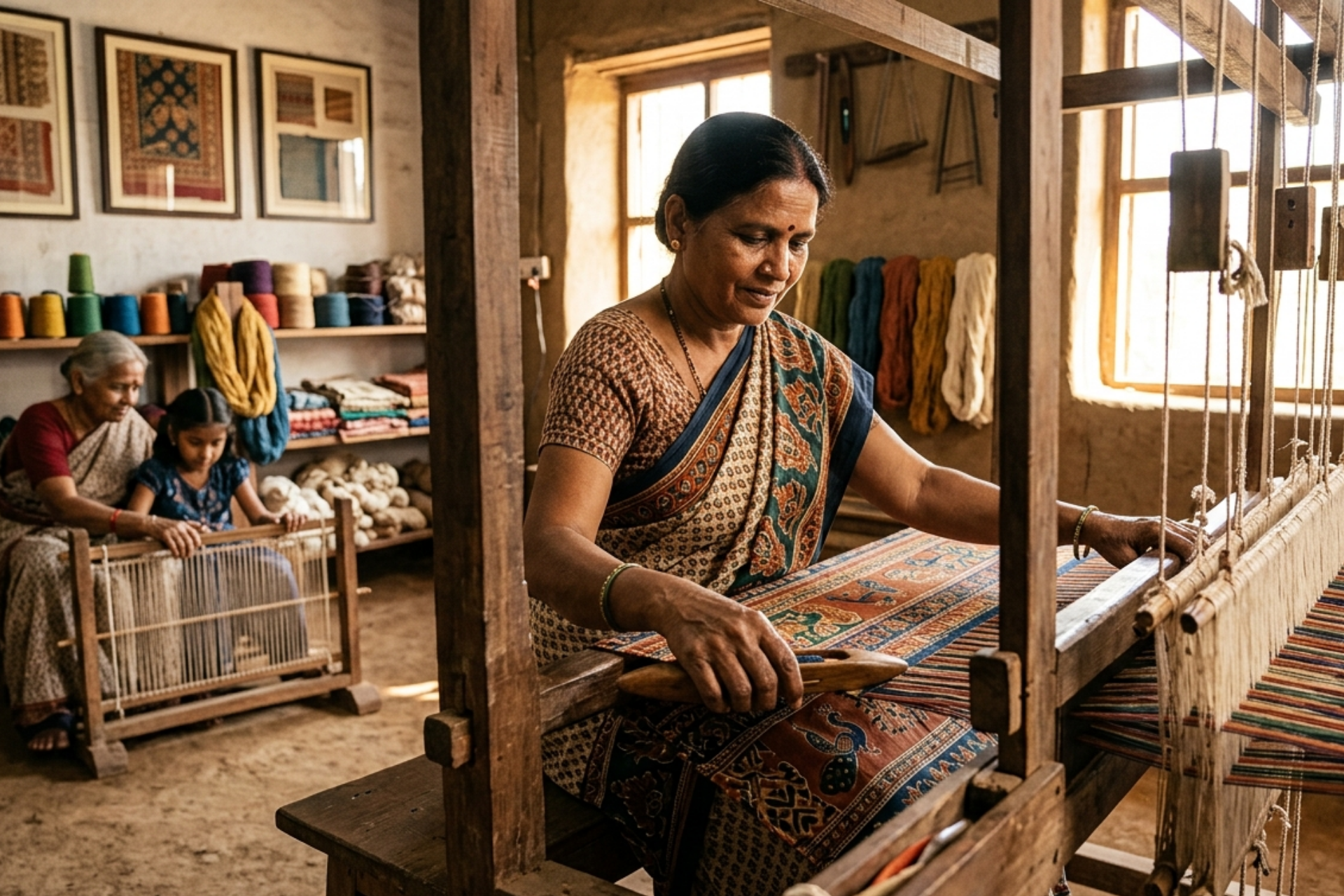
Traditional weaving is much more than the process of creating fabric. Behind every handwoven textile lies a story that has often been passed down through generations.
Many weaving families learn their craft from parents and grandparents. The techniques, patterns, and cultural symbols embedded in their work reflect centuries of accumulated knowledge. In many communities, weaving is not simply a profession—it is a way of life.
Unlike mass-produced fabrics, handcrafted textiles carry a personal touch. Each piece reflects the skill, patience, and creativity of the artisan who made it.
Did You Know?
- Some traditional weaving techniques have been practiced for hundreds of years.
- Many regional patterns are inspired by local landscapes, folklore, festivals, and spiritual traditions.
- Certain weaving styles can only be created by highly skilled artisans after years of training.
These unique characteristics make traditional textiles cultural treasures rather than ordinary products.
Why Traditional Weaving Is Under Threat
The rise of fast fashion and large-scale manufacturing has transformed the textile industry.
Machine-made fabrics can often be produced more quickly and at lower costs. While this increases accessibility, it also creates challenges for artisan communities that rely on handcrafted production methods.
Some of the key challenges include:
- Reduced demand for handmade textiles.
- Lower income opportunities for artisans.
- Migration of younger generations to other professions.
- Loss of traditional knowledge and craftsmanship.
- Increasing competition from factory-produced alternatives.
When a weaving tradition disappears, the loss extends beyond fabric production. Valuable cultural stories, techniques, and artistic expressions may vanish as well.
The Human Impact Behind Every Purchase
Consumers often focus on the appearance or price of a garment, but every purchase has a wider impact.
Choosing handwoven clothing can help:
✔ Support artisan families and local economies.
✔ Encourage younger generations to continue traditional crafts.
✔ Preserve unique weaving techniques and cultural identities.
✔ Promote slower, more thoughtful consumption.
✔ Create demand for authentic handmade products.
A single purchase may seem small, but collectively, consumer choices influence the future of entire craft communities.
Traditional Weaving and Sustainable Fashion
Traditional weaving naturally aligns with many principles of sustainable fashion.
Handcrafted production often emphasizes quality, durability, and careful craftsmanship rather than high-volume output. Many artisan communities also work with natural fibres and traditional production methods that have been refined over generations.
Benefits of Handwoven Textiles
- Often produced in smaller quantities.
- Designed with greater attention to detail.
- Frequently support local supply chains.
- Encourage mindful purchasing habits.
- Celebrate craftsmanship over mass production.
While every production system is different, traditional weaving offers an alternative perspective to the fast-paced cycle of disposable fashion.
The Role of Businesses and Designers
Fashion brands, designers, and businesses also play an important role in preserving weaving traditions.
By collaborating directly with artisan communities, businesses can help create sustainable income opportunities while bringing traditional craftsmanship to modern audiences.
Successful partnerships can:
- Introduce heritage textiles to new markets.
- Encourage innovation while respecting tradition.
- Improve visibility for artisan communities.
- Create long-term economic opportunities.
When done thoughtfully, these collaborations ensure that traditional crafts continue evolving rather than becoming forgotten relics of the past.
Looking Ahead: Protecting Heritage for Future Generations
Preserving traditional weaving is about more than nostalgia. It is about protecting cultural diversity, supporting livelihoods, and ensuring that valuable knowledge survives for future generations.
Every handwoven textile represents patience, creativity, and human connection. In a world increasingly dominated by automation and mass production, these qualities have become even more meaningful.
Key Takeaways
- Traditional weaving preserves cultural heritage and identity.
- Artisan communities face growing challenges from industrial production.
- Consumer choices directly influence the survival of traditional crafts.
- Handwoven textiles support skilled artisans and local economies.
- Fashion can be a powerful tool for protecting cultural traditions.
The future of traditional weaving depends on collective action. When consumers, businesses, and communities choose to value craftsmanship, they help ensure that these remarkable traditions continue to thrive for generations to come.