
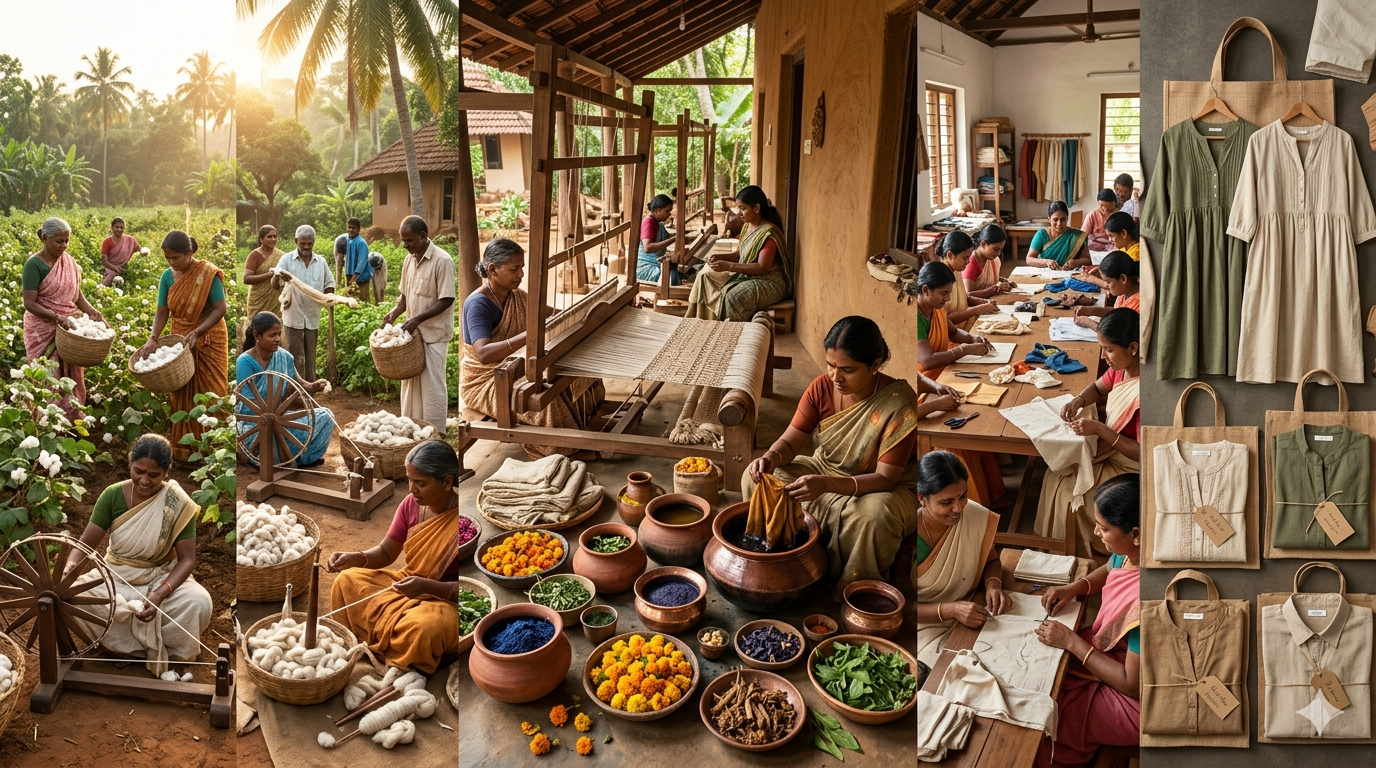
A sustainable garment begins long before it reaches a store. Its journey starts with raw materials and continues through multiple stages of production.
The process often begins with natural fibres. These fibres are transformed into yarn, which is then woven into fabric by skilled artisans or weaving communities.
The fabric may then be coloured using natural dyeing techniques. Botanical ingredients are prepared and carefully applied to create unique shades inspired by nature.
Once the fabric is ready, it moves to tailoring and garment construction. Women-led self-help groups and local tailoring units often play a crucial role in transforming fabric into finished products.
Quality checks ensure that garments meet standards for comfort, durability, and craftsmanship. Finally, products are packaged and prepared for customers.
Each stage involves people, skills, and decisions that influence the final product. Sustainable fashion seeks to make these decisions more responsible, transparent, and community-focused.
When consumers understand the journey from farm to fabric, they gain a greater appreciation for the work involved in creating clothing. This awareness encourages more thoughtful purchasing decisions and stronger connections to the products we wear.
Why the Journey Matters
In today’s fast-fashion world, clothing often appears on store shelves without consumers knowing where it came from or who made it. Sustainable fashion aims to change that by creating transparency throughout the supply chain.
Every garment has a story. Understanding that story helps consumers make informed choices about the products they buy and the impact those purchases have on people and the environment.
Did You Know?
- A conventional garment may pass through multiple countries before reaching the customer.
- Sustainable brands often work to shorten supply chains and improve traceability.
- Ethical production creates employment opportunities for rural artisans, farmers, and local communities.
The Importance of Responsible Fibre Cultivation
The sustainability journey starts at the source. Whether the fibre is cotton, linen, hemp, or another natural material, the way it is grown significantly affects its environmental footprint.
Responsible cultivation practices can help:
- Reduce excessive water consumption
- Minimize chemical fertilizer use
- Improve soil health
- Support biodiversity
- Protect farming communities
When farmers adopt environmentally conscious practices, the positive effects extend beyond clothing production and benefit entire ecosystems.
The Human Hands Behind Every Garment
One of the most meaningful aspects of sustainable fashion is the people involved in creating each piece.
From farmers harvesting natural fibres to weavers operating traditional looms, dyers preparing botanical colours, and tailors stitching garments, every stage relies on human skill and expertise.
Consider the journey of a handwoven garment:
- Farmers cultivate and harvest natural fibres.
- Fibre is cleaned and spun into yarn.
- Weavers transform yarn into fabric.
- Natural dye artisans create colours using plant-based ingredients.
- Tailors cut and stitch the final garment.
- Quality inspectors ensure durability and finish.
This process preserves traditional knowledge while creating livelihoods for local communities.
Transparency Builds Trust
Modern consumers increasingly want to know:
- Who made my clothes?
- Where were the materials sourced?
- Were workers treated fairly?
- What environmental impact did production create?
Sustainable brands strive to answer these questions openly. Transparency helps build trust and encourages greater accountability across the fashion industry.
When brands share information about sourcing, production methods, and community partnerships, customers can make purchasing decisions with greater confidence.
What Consumers Can Learn from the Farm-to-Fabric Journey
Understanding the production process often changes how people view clothing.
Instead of seeing a garment as a disposable item, consumers begin to recognize it as the result of time, craftsmanship, and resources.
Before making your next purchase, consider asking:
- Do I know where this garment comes from?
- How long is it likely to last?
- Who may have been involved in making it?
- Does the brand share information about its production process?
These simple questions can lead to more thoughtful and sustainable shopping habits.
Small Choices Create Bigger Impact
Consumers may not control every aspect of the fashion industry, but their choices influence market demand.
Choosing sustainably produced clothing can help support:
- Ethical employment opportunities
- Traditional artisan communities
- Environmentally responsible production methods
- Reduced waste and overconsumption
- Long-lasting, high-quality garments
Every purchase sends a signal about the kind of fashion industry consumers want to support.
Key Takeaway
The journey from farm to fabric is far more complex than most people realize. Behind every sustainable garment are farmers, artisans, dyers, tailors, and countless hours of skilled work. Understanding this journey helps us appreciate the true value of clothing and encourages more responsible consumption.
When we look beyond the finished product and recognize the people, resources, and craftsmanship involved, fashion becomes more than what we wear—it becomes a connection to communities, traditions, and a more sustainable future.