
As the world moves toward sustainable agricultural practices, the importance of indigenous knowledge in advancing organic farming cannot be overstated. Indigenous farming techniques passed down through generations offer invaluable insights into how farming can work in harmony with the environment, ensuring soil health, biodiversity, and resilience to climate change. In this blog, we will explore how indigenous knowledge is reshaping global organic agriculture, with a special focus on Kerala, a state that is a beacon of organic farming in India, showcasing how traditional wisdom is being applied in modern agricultural practices.
1. Indigenous Knowledge in Global Organic Agriculture
Indigenous knowledge encompasses a range of practices developed over centuries, involving deep observations of local ecosystems, climate patterns, and natural processes. These practices focus on sustainable, holistic farming systems, often utilizing natural fertilizers, mixed-cropping systems, and agroforestry. Many global movements in organic farming today draw inspiration from indigenous systems of agriculture.
For example, indigenous communities in the Amazon rainforest have long used the slash-and-char technique, where plant matter is burned and then buried to enhance soil fertility. Similarly, in Africa, traditional agroecological practices like intercropping (planting complementary crops together) have helped maintain soil fertility and biodiversity. These time-tested techniques are now being integrated into modern farming as part of the global shift toward organic and sustainable practices.
2. Indigenous Agricultural Wisdom in Kerala
Kerala, with its rich agricultural heritage, offers many examples of how traditional farming practices are thriving and contributing to the global movement for sustainable agriculture.
The Traditional Paddy Systems
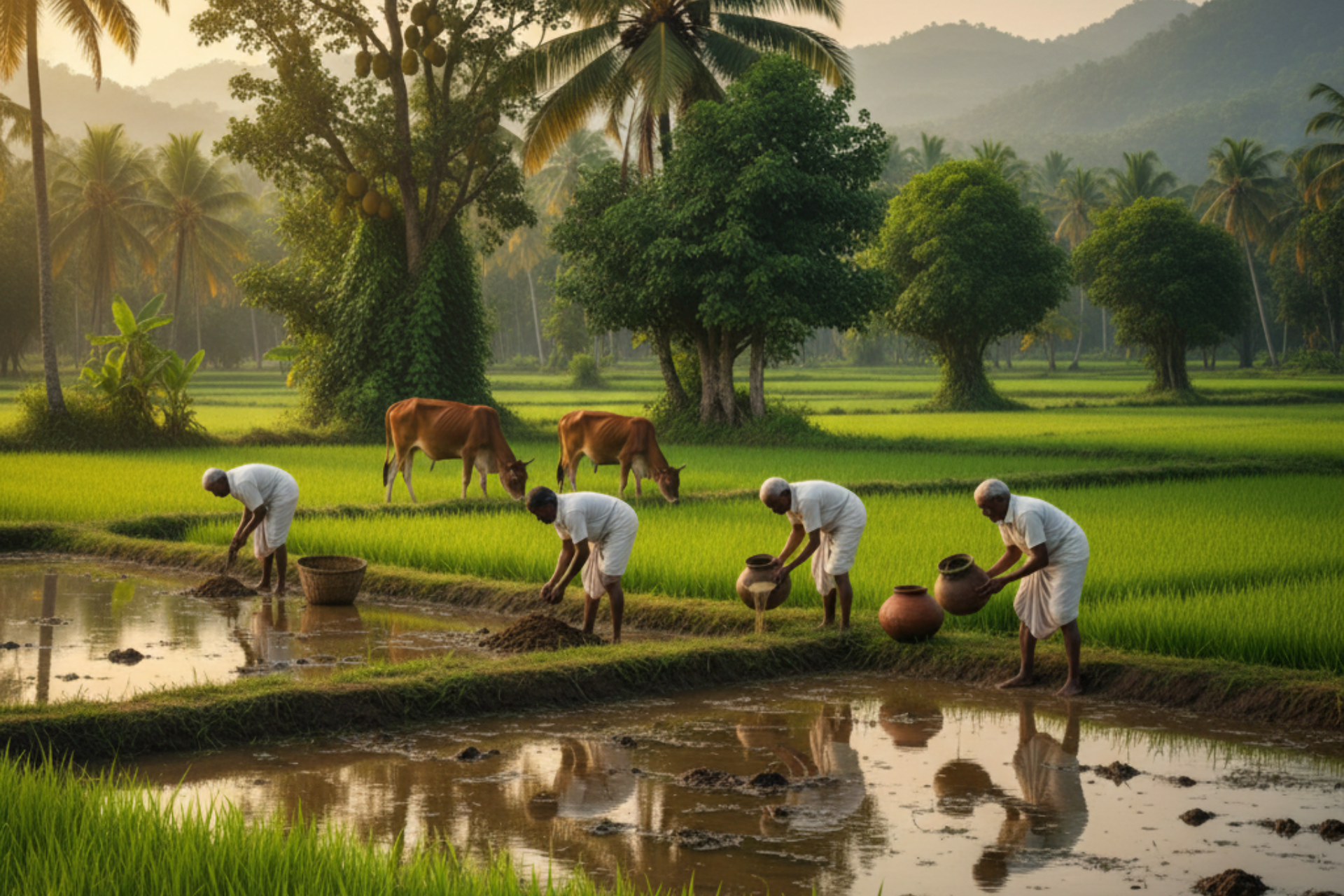
In Kerala, indigenous knowledge plays a critical role in paddy cultivation, especially in the Kuttanadu region, known as the “Rice Bowl of Kerala.” Farmers in Kuttanadu have been practicing a unique form of lowland rice cultivation for centuries. Known as “Kaithari,” this system involves cultivating rice in flood-prone areas where water levels fluctuate. Farmers rely on their deep understanding of local water systems and weather patterns to manage the flooding and harvest rice efficiently.
This traditional system is now being studied for its resilience against changing climatic conditions. The Sustainable Development and Resource Management (SDRM) Project initiated by the Kerala Agricultural University (KAU) has incorporated traditional rice varieties like Pokkali and Chinakasala into modern organic farming systems. These indigenous rice varieties are naturally resistant to pests and diseases, thus reducing the need for chemical pesticides, and are more suited to wetland cultivation.
Agroforestry in Kerala: A Time-Tested Practice
Kerala’s indigenous communities have also long practiced agroforestry, an agricultural approach that integrates trees with crops. Traditional farming systems in Kerala often combine fruit-bearing trees like mango, jackfruit, and coconut with spices such as black pepper and cardamom, creating diversified, ecologically sustainable farms.
In the Western Ghats, indigenous communities have used agroforestry to conserve soil, maintain water tables, and enhance biodiversity. In this system, crops are planted in the shade of trees, which helps retain moisture and protect the soil from erosion. The Kerala State Biodiversity Board is working to revive such practices, as they provide a perfect example of sustainable farming and have a low environmental impact.
The Role of Traditional Pest Control Methods
In Kerala, indigenous farmers have long relied on natural methods for pest control, a key component of organic farming. Traditional techniques include the use of neem oil, tobacco extracts, and garlic-based solutions for pest management. These methods, rooted in ancient wisdom, avoid the use of harmful chemical pesticides, which have led to soil degradation and biodiversity loss.
In the Idukki region, for instance, farmers use the “Panchagavya” method, an organic concoction made from cow dung, cow urine, milk, curd, and ghee. This organic pesticide is believed to improve soil fertility while acting as a natural repellent to pests and diseases.
3. Kerala’s Organic Movement and the Integration of Indigenous Practices
Kerala is leading the way in promoting organic agriculture in India, largely due to the state’s embrace of indigenous farming knowledge. The Kerala State Organic Farming Mission (KSOFM) has played a pivotal role in transitioning farmers from conventional methods to organic farming by integrating indigenous knowledge with modern sustainable practices. The mission focuses on natural pest control, organic fertilizers, and crop diversification, drawing inspiration from traditional farming systems like those seen in Kuttanadu and the Western Ghats.
Zero Budget Natural Farming (ZBNF)
One of the most promising examples of indigenous knowledge in Kerala is the implementation of Zero Budget Natural Farming (ZBNF). ZBNF, which is based on traditional farming practices, encourages farmers to use local inputs such as cow dung, cow urine, and organic matter to fertilize the land. The philosophy behind ZBNF is to reduce the dependency on external resources, such as chemical fertilizers and pesticides, and focus on building soil health naturally. ZBNF is gaining popularity in Kerala, with many farmers transitioning to this method as it offers lower input costs and sustainable farming practices.
The Kerala government has also supported ZBNF by providing training to farmers and organizing workshops that teach traditional methods for organic pest control, soil fertility, and seed saving.
4. The Future: Combining Indigenous Knowledge with Modern Science
While Kerala has made significant strides in integrating indigenous knowledge into organic farming, there is still much to be done. The future of organic farming lies in the fusion of traditional wisdom with modern scientific practices. For example, while traditional practices provide insights into soil health and pest management, modern science can help improve these practices through technology and data-driven insights.
At Vayonadha, we believe that the global organic movement can benefit greatly by embracing the synergy between indigenous knowledge and contemporary agricultural science. By combining the resilience and sustainability of indigenous farming methods with the innovation of modern farming techniques, we can create a more robust and sustainable food system for future generations.
5. Conclusion
Indigenous knowledge plays a vital role in advancing global organic agriculture, offering time-tested solutions that can address contemporary challenges such as soil degradation, pest management, and climate change. Kerala’s rich agricultural heritage, characterized by its traditional rice systems, agroforestry practices, and organic farming initiatives, serves as a model for the rest of the world. By recognizing the value of indigenous wisdom and integrating it into modern agricultural practices, we can create a more sustainable, resilient, and environmentally friendly future for farming.
At Vayonadha, we are committed to promoting these traditional farming methods, ensuring that Kerala’s organic farmers have access to the tools, resources, and knowledge they need to thrive in a rapidly changing world. Through continued collaboration and innovation, we can create a farming system that honors the earth, its resources, and the generations of knowledge that have shaped it.