

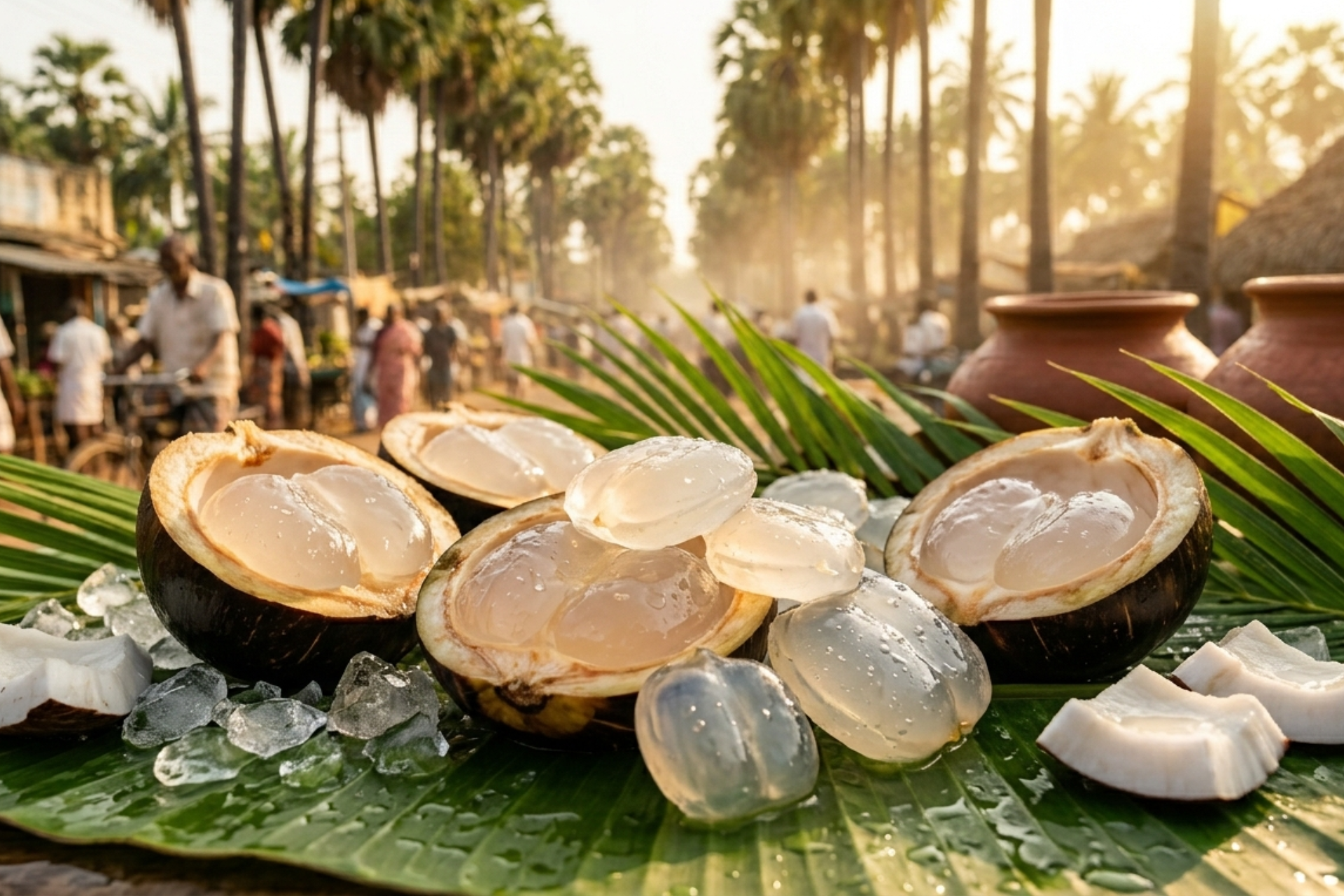
When the summer sun burns across the fields of South India, roadside vendors quietly open dark palm fruits with swift cuts of a knife. Inside lies one of nature’s most refreshing gifts the Ice Apple. Known as Nungu in Tamil Nadu, Tati Munjalu in Andhra Pradesh and Telangana, and Pana Nongu in parts of Kerala, this translucent jelly-like fruit has been cooling generations long before packaged juices and energy drinks existed.
But the story of Ice Apple is much bigger than just a summer fruit. It is deeply connected to the mighty Palmyra Palm — a tree often called the “Tree of Life” or the “Tree of a Thousand Uses.” For centuries, this tree has fed people, protected soil, supported rural livelihoods, and shaped the culture of South India. Today, however, the Palmyra palm faces neglect despite its incredible ecological and nutritional value.
For readers of Vayondha, this is not just a fruit story. It is a story about heritage, sustainability, wellness, and reconnecting with nature.
What Is Ice Apple?
Ice Apple is the fruit of the Palmyra Palm, scientifically known as Borassus flabellifer. The fruit grows inside a hard black shell, and when opened, reveals soft translucent pods filled with mildly sweet natural water. The texture resembles lychee or tender coconut jelly.
Across South India, Ice Apple has been part of traditional summer diets for centuries. Farmers, travelers, laborers, and villagers depended on it to survive intense tropical heat. Before refrigerators and sports drinks existed, Ice Apple naturally hydrated the body.
The fruit is seasonal and mostly available between April and June. Its short shelf life makes it rare in supermarkets, which is why many people still associate it with roadside vendors and village markets.
The History of Palmyra in South India
The Palmyra palm has ancient roots in South Indian civilization. Historical references show that palm leaves were once used to preserve Tamil literature, scriptures, medical knowledge, and poetry. In Tamil culture, the tree is respected as Karpaga Vruksham — the heavenly tree that gives everything.
For generations, rural families depended on the Palmyra tree for food, shelter, medicine, roofing, baskets, mats, sugar, and even fuel. Every part of the tree had value.
In ancient times:
- Palm leaves were used as writing manuscripts.
- Palm jaggery was a major natural sweetener.
- Palm sap became traditional drinks like Padaneer.
- Palm wood was used in construction.
- Leaves were woven into household products.
This was sustainability long before the modern world gave it a name.
Why Ice Apple Is So Beneficial for Humans
Modern science is now rediscovering what traditional communities already knew — Ice Apple is incredibly healthy.
1. Natural Summer Hydration
Ice Apple contains very high water content, making it ideal for preventing dehydration during hot summers. It naturally replenishes the body without artificial chemicals or preservatives. (–)
2. Rich in Nutrients
Studies and health reports show that Ice Apple contains:
- Potassium
- Sodium
- Iron
- Calcium
- Vitamins A, B, and C
These nutrients help maintain electrolyte balance and overall wellness.
3. Cooling Effect on the Body
In Ayurveda and traditional South Indian food culture, Ice Apple is considered a cooling food. It helps reduce body heat and is often consumed during peak summer to avoid fatigue and heat exhaustion.
4. Good for Digestion
The fruit contains dietary fiber and is known to support digestion and reduce constipation. (–)
5. Low-Calorie Natural Food
Unlike processed sugary drinks, Ice Apple is naturally low in calories and fat, making it suitable for healthy lifestyles and weight-conscious diets.
6. Skin and Wellness Benefits
Traditional medicine systems have long used Palmyra-based foods for improving skin hydration and reducing inflammation. Some reports also mention antioxidant properties in the fruit.
The Palmyra Palm: Nature’s Gift to Humanity
The Palmyra palm is far more important than most people realize.
Environmental Benefits: The tree survives extreme heat and drought conditions with very little water. In a warming world facing climate change, this is extremely important.
Its deep root system:
- Prevents soil erosion
- Helps groundwater recharge
- Stabilizes coastal ecosystems
- Protects dry landscapes
The tall trees also act as natural lightning conductors during monsoon seasons.
Support for Biodiversity: Birds, insects, and animals depend on Palmyra palms for food and shelter. In some regions, elephants consume fallen fruits during lean seasons.
Livelihood for Rural Communities
Thousands of rural families still depend on palm products:
- Palm jaggery
- Palm sugar
- Handicrafts
- Palm leaf products
- Toddy tapping
- Fruit vending
For many villages, Palmyra is not just a tree — it is an economy.
The Sad Reality: Decline of the Palmyra Tree
Despite its importance, Palmyra trees are disappearing in many regions.
Urbanization, real estate expansion, and reduced interest among younger generations have caused a sharp decline in traditional palm-based occupations. Many old trees are cut down without replanting.
Modern lifestyles also shifted people toward packaged drinks and processed foods, reducing appreciation for natural seasonal fruits like Ice Apple.
Some states have now begun recognizing the ecological value of Palmyra trees and are introducing restrictions on cutting them. Odisha, for example, has emphasized their environmental importance.
However, conservation efforts are still limited compared to the scale of decline.
Why the Future of Ice Apple Matters
The future of Ice Apple is connected to larger conversations around:
- Sustainable agriculture
- Climate-resilient crops
- Traditional wellness
- Rural employment
- Natural nutrition
As consumers increasingly seek chemical-free and functional foods, Ice Apple has enormous potential.
Imagine:
- Natural Ice Apple beverages
- Palm fruit desserts
- Wellness products
- Organic palm sugar exports
- Eco-friendly palm leaf packaging
Research is already exploring value-added Palmyra products such as jams and processed foods to improve shelf life and market reach.
This opens a huge opportunity for South Indian entrepreneurs and wellness brands like Vayondha to revive traditional superfoods in a modern way.
A Fruit That Connects Us to Our Roots
There is something deeply nostalgic about Ice Apple. It reminds many South Indians of childhood summers, roadside stops, village visits, and simpler times.
In today’s fast-moving world filled with artificial flavors and synthetic health products, Ice Apple stands as a symbol of nature’s quiet wisdom. It asks us to slow down, eat seasonally, and value what our ancestors protected for centuries.
The Palmyra palm does not demand much from humans. Yet it gives food, shade, medicine, shelter, livelihood, and ecological balance in return.
Perhaps that is why generations before us respected it so deeply.
And perhaps it is time we do the same again.