

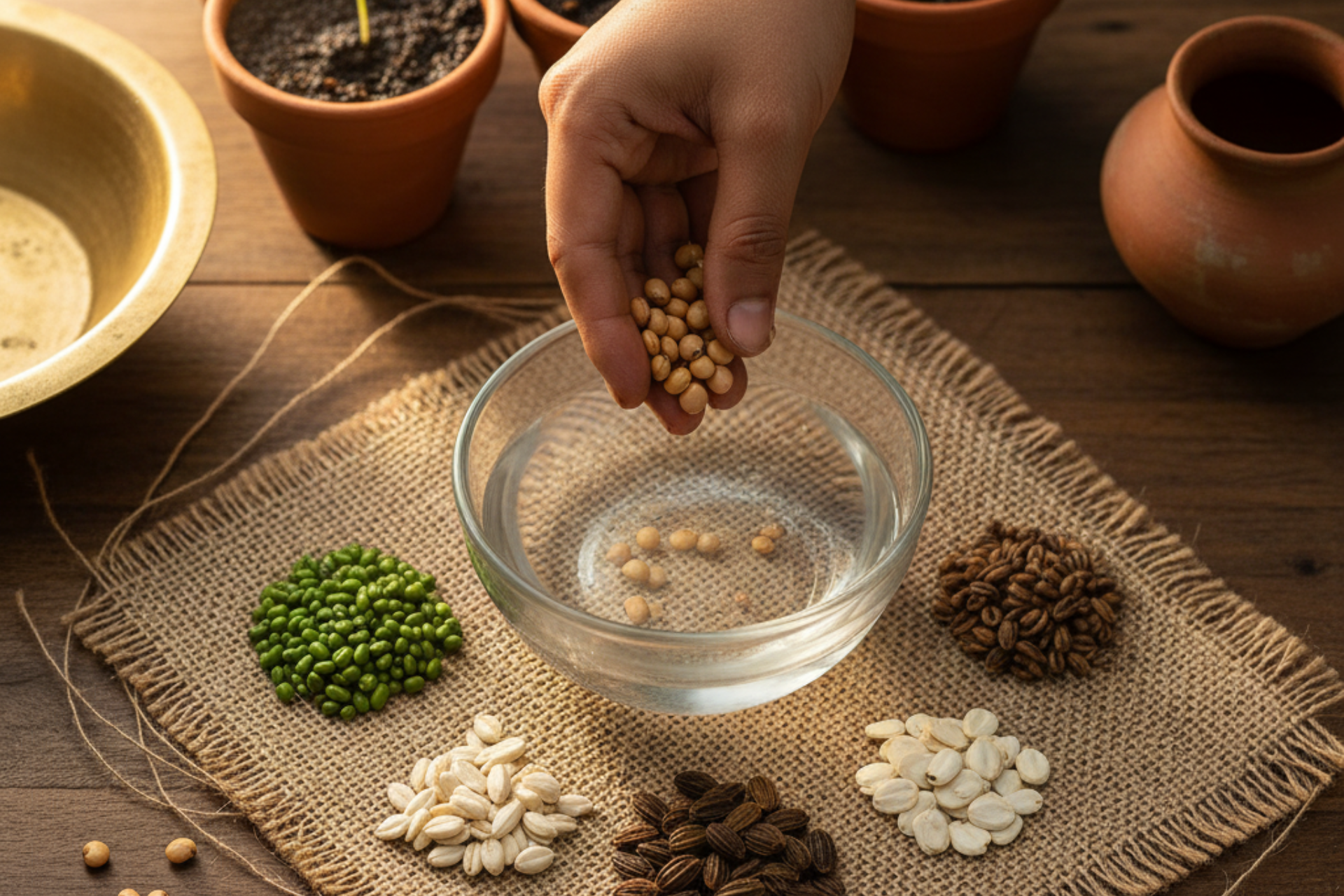
Soak Your Seeds for Success: The Smart Start for your Gardens
In our warm and humid climate, where the rains and sunshine dance through the year, seed germination can sometimes be unpredictable. Many farmers and home gardeners simply sow their seeds directly into the soil, expecting them to sprout naturally. But if you’re aiming for faster and more reliable germination, soaking your seeds beforehand is one of the simplest and smartest steps you can take.
Why Soak Seeds?
Seeds have protective shells that naturally delay water absorption. In nature, rain and soil moisture slowly soften them before they sprout. But in controlled home gardens or farms especially during Kerala’s dry spells or when using potting soil this natural process can take longer.
By soaking seeds in water, you help nature along. It softens the seed coat, allowing moisture to reach the embryo faster. This small pre-planting ritual often leads to quick and uniform germination, helping plants establish better in the field or pot.
However, soaking isn’t a one-size-fits-all trick. Some seeds benefit greatly, while others especially those with thin coatings can actually get damaged or rot if soaked too long.
The General Rule: 6 to 24 Hours
Most seeds that respond well to soaking should be left in water for 6 to 24 hours. The exact duration depends on the type of seed and the hardness of its outer shell. Never exceed 48 hours, as lack of oxygen may kill the seed.
Kerala’s Common Crops That Benefit from Soaking
Let’s look at some common Kerala seeds and how long to soak them for best results:
· Paddy (Njavara, Uma, Jyothi varieties): Soak for 12–24 hours to trigger faster and more uniform germination, especially before direct sowing or nursery planting.
· Cowpea (Vanpayar) and Green gram (Cherupayar): Soak for about 8–10 hours. Helps with better sprouting and uniform growth.
· Bitter gourd (Pavakka), Snake gourd (Padavalanga), Ash gourd (Kumbalanga): Soak for 8–12 hours; the tough shells need moisture to start softening.
· Lady’s finger (Vendakka): Soak for 6–8 hours. This reduces germination time and helps the seeds sprout evenly.
· Brinjal (Vazhuthananga): Soak for 24 hours; it helps in quick sprouting and better seedling vigor.
· Chili (Mulaku): 12–24 hours soaking can break dormancy and help stubborn seeds sprout.
· Cluster bean (Amara) and Long bean (Payar): Soak for 10–12 hours. It boosts uniform emergence.
· Coriander (Malli) and Fenugreek (Uluva): Light soak for 4–6 hours help split the seed coat and sprout quickly in moist soil.
· Cucumber (Vellarikka): Only 4–6 hours; over-soaking can cause the seeds to rot.
When Soaking Helps the Most
Kerala’s soil varies from laterite uplands to clay-rich paddy fields, and moisture availability differs widely. Soaking is particularly useful when:
· You’re sowing in well-drained or sandy soil (common in coastal or Palakkad regions) that loses moisture quickly.
· You’re planting just before monsoon the soaked seeds can sprout faster once rains start.
· You’re doing tray or pot cultivation for home gardens, where initial moisture is controlled manually.
When You Should Avoid Soaking
If you’re sowing tiny seeds such as amaranth (Cheera), basil (Tulasi), or mustard (Kadugu), avoid soaking—they can easily rot or stick together. Similarly, spinach (Cheera) or leafy greens may only need gentle sprinkling of water before sowing instead of soaking.
How to Soak Seeds the Right Way
1. Use clean, room-temperature water. Avoid chlorinated or very hot water.
2. Soak only the amount you’ll plant immediately.
3. Don’t over-soak. For most seeds, 6–24 hours are enough.
4. Dry before planting. After soaking, spread seeds on a towel for 10–15 minutes so they aren’t dripping wet.
5. Plant immediately. Sow them in moist, well-prepared soil or seed trays.
6. Label and record. Keep track of which seeds soaked and for how long—over time, you’ll discover the perfect routine for your climate.
A Kerala Gardener’s Tip
Farmers or home gardeners who grow vegetables in grow bags or terrace gardens have found that soaking cowpea, bitter gourd, and okra seeds for a few hours dramatically improves sprouting speed.
This traditional method once passed down through generations is now being rediscovered as a simple, scientific way to boost productivity naturally.
Final Thoughts
Soaking seeds is not mandatory but in variable weathers, it’s a smart, low-cost habit that can make a noticeable difference. Whether you’re growing vegetables, herbs, or paddy, a few hours in water can mean a stronger start for your plants.
At Vayonadha, we encourage every gardener and farmer to experiment, observe, and share your soaking results. Over time, you’ll discover the unique soaking rhythm that works best for your seeds and soil.
Happy planting and may every soaked seed turn into a strong, thriving plant!