
Cow, Buffalo, and Goat Milk: What You Should Know About A1, A2, and the Power of Indigenous Dairy
Milk has long been considered a staple of nutrition in Indian households. From morning chai to sacred rituals, milk flows through both our diets and traditions. But with the rise of concerns around lactose intolerance, hybrid breeds, and the A1/A2 debate, it’s time to take a closer look at the milk we consume—especially when it comes from cows, buffaloes, and goats
The Basics: Cow, Buffalo, and Goat Milk Compared
| Feature | Cow Milk (Indian) | Buffalo Milk | Goat Milk |
| Fat Content | 3–5% | 6–8% | 3–4.5% |
| Protein | Moderate | High | Easy-to-digest |
| Taste | Mild & sweet | Thick & creamy | Slightly salty |
| A1/A2 Type | Desi cows: A2 | Mostly A2 | A2 |
| Best Use | Drinking, curd, ghee | Paneer, sweets | Kids, elderly, sensitive digestion |
A1 vs A2 Milk: Why It Matters
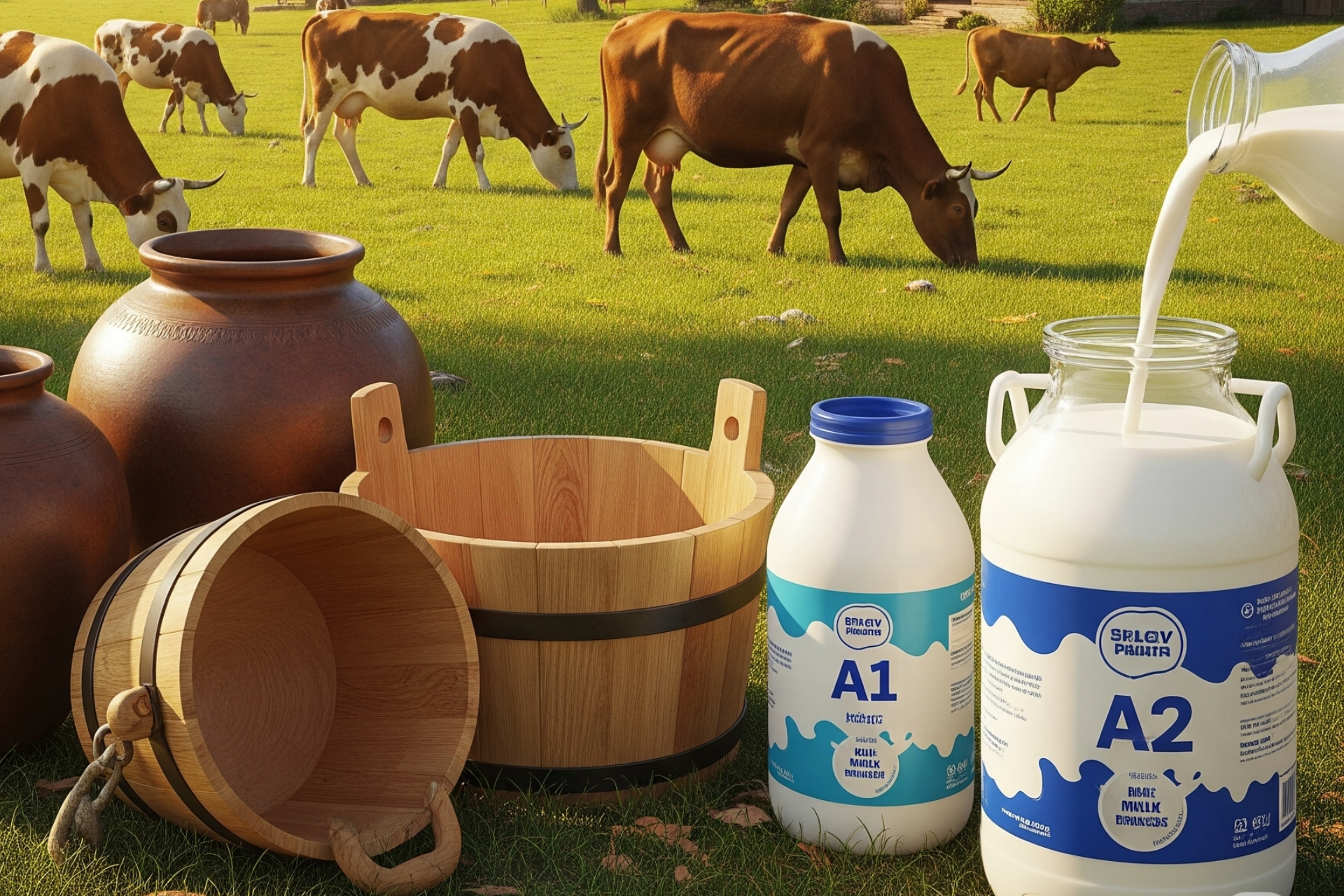
One of the most significant distinctions in modern dairy science is between A1 and A2 beta-casein proteins found in milk. While they may sound similar, they have very different effects on human health.
What is A1 and A2?
- A2 milk is the natural form of milk that has been consumed by humans for thousands of years.
- A1 milk is a result of genetic mutation in European breeds like Holstein Friesians and Jerseys.
Health Impacts of A1 Milk:
- Linked with inflammation, digestion issues, type 1 diabetes, and heart disease in some studies.
- May contribute to milk intolerance in people who think they’re lactose intolerant.
Benefits of A2 Milk (from Desi Indian Cows like Gir, Sahiwal, Tharparkar, Malnad Gidda):
- Easier to digest and absorb
- Supports gut health and reduces bloating
- Rich in omega-3 fatty acids, beta-carotene, and conjugated linoleic acid (CLA)
- Anti-inflammatory properties
Why Choose Indian Desi Cow Breeds?
Indian cows like Gir, Kasaragod Dwarf, Vechur, and Sahiwal not only produce A2 milk but are eco-resilient, better suited to Indian climates, and require less water and feed compared to foreign breeds.
In Ayurveda, Desi Cow Milk Is:
- Sattvic (pure, promoting clarity of mind)
- Used in Panchagavya, a sacred Ayurvedic blend made from cow milk, curd, ghee, urine, and dung
- Considered a Rasayana (rejuvenator) when consumed warm and spiced with turmeric or cardamom
Goat Milk: The Forgotten Superfood
Often overlooked, goat milk is a natural A2 milk and ideal for children, elderly, and those with digestion issues.
Benefits of Goat Milk:
- High in calcium and phosphorus
- Low allergenic
- Naturally homogenized – easier on the stomach
- Contains medium-chain fatty acids which boost energy
What Can Be Made From These Milks?
Ghee (Clarified Butter)
- Desi cow ghee (A2) is a superior healing fat in Ayurveda.
- Used in Abhyanga (massage), Nasya (nasal drops), and memory-boosting therapies.
Buttermilk (Takra)
- A probiotic-rich drink to improve digestion and cool the body.
- “Takra is nectar for the gut” – as per Charaka Samhita.
Paneer & Sweets
- Buffalo milk makes richer paneer and malai-based sweets like rasgulla, rasmalai, and peda.
- Goat milk can also be used to make soft cheese.
Medicinal Uses:
- Milk boiled with turmeric and pepper boosts immunity and reduces inflammation.
- Cow milk mixed with Brahmi or Ashwagandha supports brain and nervous system health.
- Desi cow ghee is a key ingredient in Ayurveda for eye, brain, and joint disorders.
Ayurvedic Wisdom on Milk Consumption
“Milk is the nectar of life when consumed correctly.”
Ayurveda Recommends:
- Drink milk warm, ideally spiced with turmeric, cardamom, or ginger.
- Avoid combining milk with sour, salty, or fermented foods.
- Best taken at night to support ojas (vitality).
When to Avoid Milk:
- If you have persistent indigestion, sinus issues, or inflammation, consult an Ayurvedic practitioner.
- Never mix milk with fish, meat, or sour fruits – these combinations are viruddha ahara (incompatible foods).
Final Thoughts from Vayonadha
In our rush toward industrial food systems, we’ve forgotten the sacred, medicinal, and cultural value of milk. Not all milk is the same. Choosing A2 milk from native Indian cows, or switching to goat milk where needed, is not just a dietary change—it’s a return to ancestral wisdom and a step toward sustainable health.
Let’s honor the animals, the earth, and the farmers who nurture this sacred nourishment. Choose local. Choose kind. Choose A2.
Interested in connecting with A2 milk producers or learning more about Ayurveda and natural farming?