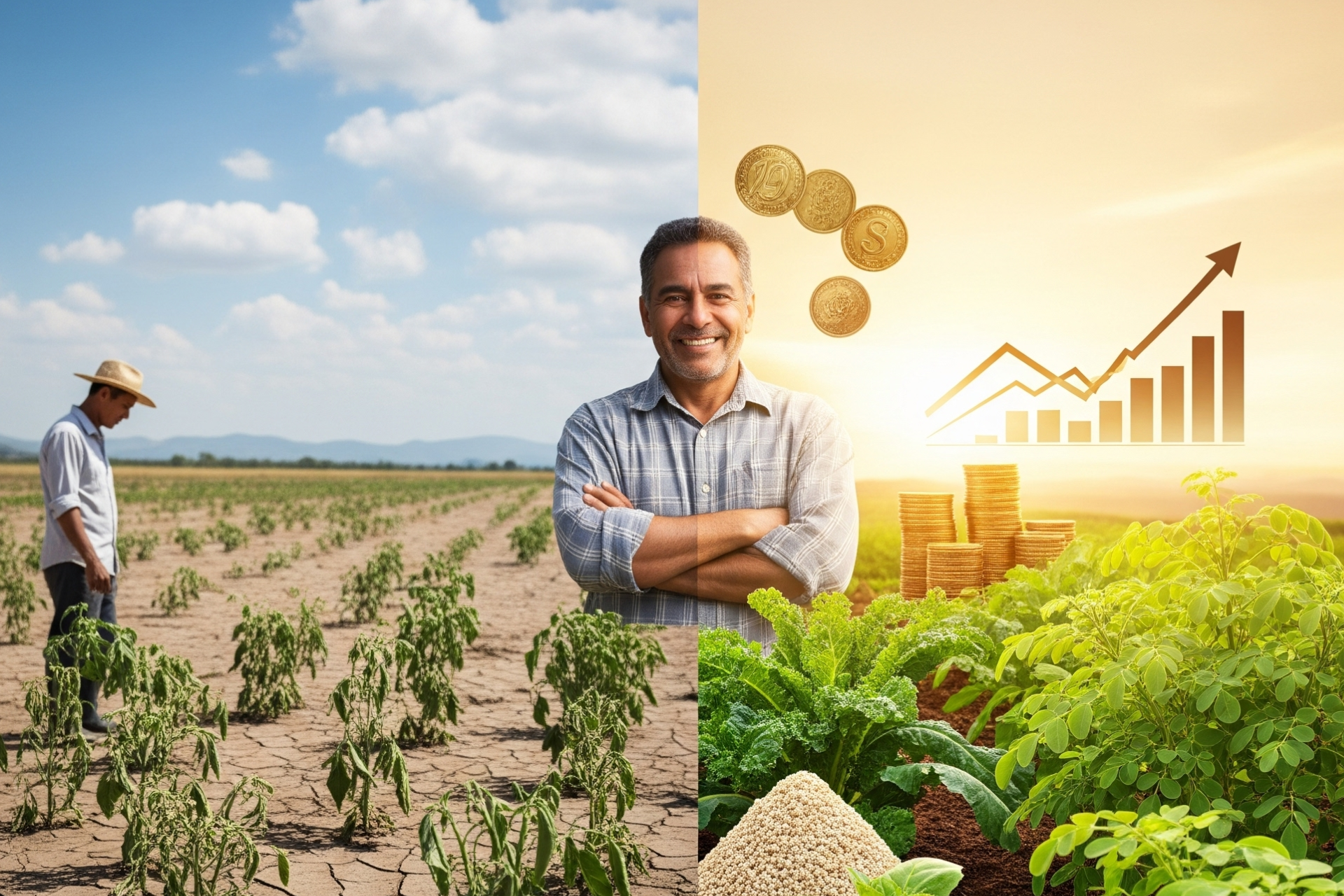
In many regions, including ours in Kerala, the story is the same — the fields are drying up, not because of water, but because of lack of motivation.
Why? Because farmers are growing the wrong crops, using expensive inputs, and getting poor returns. Over time, this has led to abandonment of farmland, rising debt, and a growing generational gap in agriculture.
At Vayonadha, we believe it’s time to change the crop, the mindset, and the market.
The Core Problem: Wrong Crops, Wrong Markets
- Crop Choice Mistakes: Many farmers continue to grow water-intensive or low-demand crops that may have worked 10 years ago — but no longer do.
- No Market Linkages: Even if a good crop is grown, there’s no guarantee of buyers or good prices.
- High Input Costs: Chemical inputs, hybrid seeds, and unpredictable yields often eat up the little margins that exist.
- Lack of Market Intelligence: Most farmers don’t know what is trending in urban health markets or export potential.
The Solution: Switch to High-Value, Low-Risk Superfoods
“Superfoods” are nutrient-dense foods gaining global attention — and India has a rich native base of these that can be grown sustainably.
What are Superfoods?
Examples that grow well in our region:
- Moringa (Drumstick) – Leaves, powder, and oil have huge local and export markets.
- Amla (Indian Gooseberry) – For juice, candy, powders, and immunity-boosting value.
- Turmeric (especially Lakadong or wild varieties) – Premium variety with high curcumin content.
- Millets (Foxtail, Little, Kodo) – High demand for diabetic and gluten-free diets.
- Aavaram Poo (Tanner’s Cassia) – For herbal teas, liver detox, and skincare.
- Jackfruit and Raw Banana – For flour, chips, and meat-alternative products.
Step-by-Step: How to Transition to Superfood Farming
- Start Small and Diversify
Begin with a 10–20 cent test patch for superfoods alongside your existing crops. This reduces risk and builds your experience with market-demanded products.
- Choose the Right Varieties
Use region-specific, heirloom or organic-certified seeds. Avoid over-hyped hybrids unless they have clear local support.
- Go Organic or Naturally Grown
Superfoods have higher value only when they are chemical-free. Focus on bio-inputs, compost, and intercropping to reduce costs.
- Value Addition at the Farm
Raw produce often sells cheap. But drying, powdering, or packaging at a small scale (solar dryers, home-scale grinders, clean packing) can triple your margins.
- Create Farmer Collectives
Alone, a small farmer can’t meet quantity or market requirements. But 10–15 farmers growing the same superfood can:
- Share processing units
- Get better pricing
- Negotiate with bulk buyers or export agents
- Market Linkage & Branding
- Collaborate with local health stores, organic retailers, and online platforms like Amazon, BigBasket, and JioMart.
- Create a brand identity (like “Vayonadha Naturals”) that assures quality and authenticity.
- Use Instagram, WhatsApp, and YouTube to show how your food is grown — transparency builds trust and premium pricing.
A Real-World Example: Tamil Nadu’s Moringa Farmers
In Dindigul, Tamil Nadu, hundreds of farmers transitioned from low-profit cotton and rice to Moringa farming. With government support and NGO help:
- They adopted drip irrigation, low-cost organic inputs, and community dryers.
- Set up FPOs (Farmer Producer Organizations) to negotiate with export houses.
- Developed local processing units for Moringa powder — a key product in health supplement markets in the US and Europe.
Results: A 2x–3x increase in income, and many farmers who had given up returned to farming.
How Vayonadha Can Help Farmers Locally
We are working on:
- Superfood Farming Starter Kits (Seeds + Manual + Natural Inputs)
- Workshops on Processing & Value Addition
- Partnerships with Organic Brands and Buyers
- Branding & Packaging Support for Local Farmer Groups
- Market Demand Reports for Urban and Export Buyers
Final Thought: Farming is Not Dying — It Needs Reinvention
By growing what the market wants, with a focus on health, sustainability, and community, farmers can reclaim profitability and revive the rural economy.
Let’s move from survival farming to smart farming.
Let’s grow superfoods for a super future.
📣 Join us at Vayonadha to be part of this transformation. Whether you’re a farmer, entrepreneur, student, or volunteer — the future of food is in your hands.