
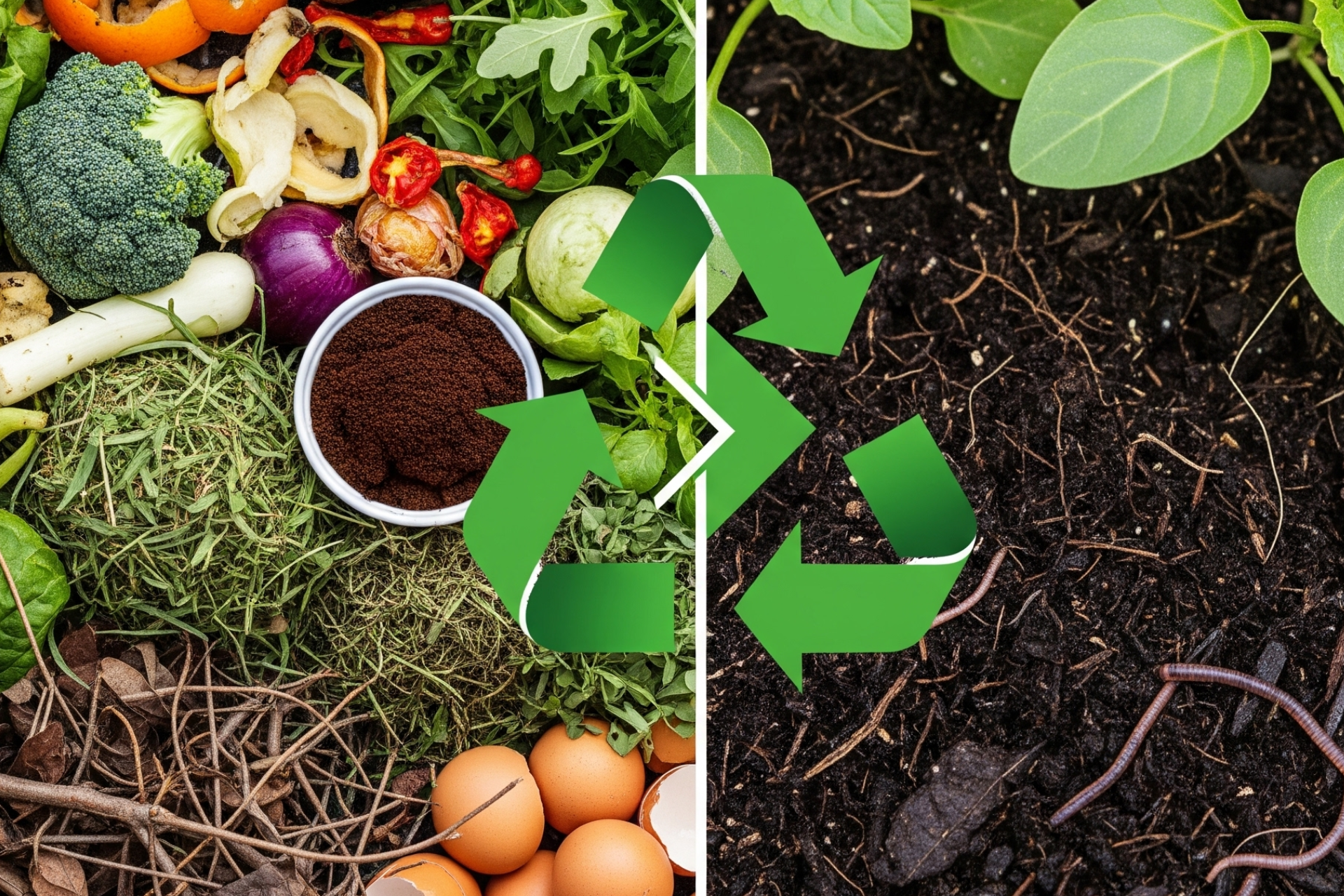
In the quest for sustainable and regenerative agriculture, composting is one of the simplest yet most powerful tools available to farmers and gardeners. It is more than just a method of waste disposal—it is the process of transforming organic matter into nutrient-rich soil amendments that feed plants, boost soil biology, and reduce dependence on synthetic inputs.
At Vayonadha, we explore the intersection of tradition and innovation in organic agriculture. Composting is an ancient practice with modern relevance—supporting resilient ecosystems, improving yields, and sequestering carbon. This blog dives into how composting works, why it matters, and how it is transforming farms across the globe.
🌱 What Is Composting?
Composting is the biological decomposition of organic materials—like crop residues, kitchen scraps, manure, and dry leaves—under controlled conditions. Through the activity of microbes, fungi, and earthworms, this organic matter breaks down into humus, a stable, dark material rich in nutrients and beneficial microbes.
Compost is often called “black gold” because of its unmatched value in enriching soil.
🌾 Why Composting Is Essential in Organic Farming
- Reduces Waste
Composting turns farm and household waste into a valuable resource, cutting down landfill contributions and methane emissions. - Improves Soil Structure and Fertility
Compost enhances soil porosity, water-holding capacity, and nutrient availability—especially essential in sandy or degraded soils. - Boosts Microbial Activity
Living soil is healthy soil. Compost feeds beneficial microbes that help plants absorb nutrients and resist disease. - Reduces Need for Synthetic Inputs
With nutrient-rich compost, farmers can reduce or eliminate chemical fertilizers, leading to cleaner groundwater and healthier food. - Sequesters Carbon
By enriching organic matter in the soil, composting helps lock carbon in the ground—mitigating climate change.
🧪 Types of Composting Methods
- Traditional Pile Composting: Organic matter is heaped in layers and turned periodically to maintain aeration. This method is common on small farms and home gardens.
- Vermicomposting: Red worms (like Eisenia fetida) are introduced to break down organic matter faster. The result is a fine, nutrient-rich compost known as vermicast.
- Pit Composting: Material is decomposed in dug-out pits. This method conserves moisture and is ideal for dry or arid regions.
- Aerated Static Piles: Compost piles are aerated using pipes or fans, accelerating decomposition—often used in large-scale or commercial operations.
🌍 Global Case Studies: Composting in Action
🇮🇳 India – Sikkim’s Organic Compost Revolution
Sikkim, India’s first fully organic state, mandates composting in all farms. The use of vermicompost and cow dung has significantly improved soil fertility, especially in vegetable and cardamom cultivation. Local NGOs provide training on compost pit construction and microbe enrichment using jeevamrut and panchagavya.
“The switch to organic was not just about inputs—it was a change in mindset,” says Nima Dorjee, a farmer from East Sikkim. “With compost, our crops are healthier, and we save on chemical expenses.”
🌱 Uganda – Pit Composting for Banana Farms
In Uganda, smallholder banana growers have adopted pit composting to restore soil fertility depleted by over-farming. Banana peels, livestock manure, and grass are layered and covered in soil. After 2–3 months, farmers apply this compost directly to the base of banana plants.
Yields have increased by up to 40%, and farmers report a reduction in black sigatoka disease due to healthier plants.
🇩🇪 Germany – Municipal Compost to Organic Farms
Germany operates some of the world’s most advanced municipal composting systems. Organic waste from cities is composted in large facilities and sold to certified organic farms. This circular model benefits both urban and rural ecosystems.
In Freiburg, community composting projects serve urban gardens and nearby biodynamic farms, emphasizing local nutrient loops.
🇮🇩 Indonesia – Vermicomposting in Coffee Plantations
Coffee cooperatives in Java have embraced vermicomposting to replace synthetic fertilizers. Coffee husks and pulp, once discarded, are now mixed with cow manure and processed by worms.
This method has improved bean quality and soil moisture retention. The initiative has also created employment for rural women managing vermiculture units.
💡 Expert Advice from the Field
Dr. Preetha Menon, Soil Microbiologist
“Good composting is about balance—green materials for nitrogen, brown for carbon. A 1:2 ratio by volume is ideal. Keep it moist like a wrung-out sponge and turn regularly.”
Raju Varghese, Organic Farmer, Kerala
“We use coconut husks, cow dung, and banana stems. The compost goes into our rice and vegetable plots. It brings earthworms back, and the soil feels alive again.”
Vayonadha Advisory Tip
Avoid composting meat, dairy, or diseased plants in open-air piles. These can attract pests or spread pathogens.
🔄 How to Start Composting on Your Farm or Garden
Step 1: Choose a Composting Site
Select a shaded, well-drained area. For small plots, a compost bin or ring will suffice. For larger farms, prepare pits or windrows.
Step 2: Collect Materials
- Greens (Nitrogen): Vegetable scraps, manure, green leaves, coffee grounds.
- Browns (Carbon): Dry leaves, straw, cardboard, coconut coir.
Step 3: Build the Pile
Layer browns and greens alternately. Keep the pile moist and loosely packed.
Step 4: Turn Regularly
Aerate the pile every 10–15 days to speed up decomposition and reduce odors.
Step 5: Harvest and Apply
Compost is ready in 2–3 months. It should smell earthy, not foul, and feel crumbly. Apply it as a top dressing or mix into soil before planting.
🌍 Composting and Climate Action
At a time when agriculture contributes significantly to greenhouse gas emissions, composting provides a natural solution. It reduces methane from landfills, cuts chemical use, and enriches soils that sequester carbon.
Studies show that increasing soil organic matter by 1% can store up to 20,000 gallons of water per acre and significantly increase yield resilience during droughts.
💬 Final Thoughts from Vayonadha
Composting isn’t just a farm activity—it’s a climate-smart, regenerative practice that connects farmers to the earth’s cycles. Whether you manage a large estate or a backyard garden, composting is your entry into sustainable agriculture.
Let’s return to the roots, quite literally, and transform waste into life.
Let’s compost for a greener, richer tomorrow.
📢 Join the Conversation
Are you composting at home or on your farm? Share your journey with the Vayonadha community. Tag us in your compost pile photos, ask questions, or join our workshops on soil health and regenerative farming.
Together, let’s build healthy soil and a resilient future.