
In an age of climate uncertainty, soil degradation, and biodiversity loss, the future of farming may lie in one of its oldest allies—trees. Agroforestry, the intentional integration of trees and shrubs with crops or livestock, is emerging as a climate-smart, biodiversity-rich, and sustainable farming practice.
At Vayonadha, we advocate for holistic land use systems that restore ecosystems while providing livelihood security. Agroforestry is one such powerful approach that harmonizes ecology, economy, and culture. This blog explores what agroforestry is, why it matters, and how farmers across the globe—and in India—are putting it into practice with remarkable results.
What is Agroforestry?
Agroforestry is a land management system where trees or woody perennials are deliberately grown alongside crops or animals on the same plot of land. The goal is to create diverse, productive, and resilient agricultural landscapes.
Common Agroforestry Practices:
- Alley cropping: Growing crops between rows of trees
- Silvopasture: Integrating trees with grazing livestock
- Home gardens: Mixing fruit trees, herbs, and vegetables
- Windbreaks and shelterbelts: Rows of trees that protect crops
- Forest farming: Cultivating medicinal herbs and spices under a tree canopy
Why Agroforestry Matters Today ?
Agroforestry directly addresses many of today’s agricultural challenges:
- Climate Resilience : Trees sequester carbon, moderate microclimates, and reduce flood and drought risks. They offer shade and reduce water evaporation, protecting sensitive crops.
- Soil Restoration: Deep-rooted trees improve soil structure, prevent erosion, and draw nutrients from subsoils. Their fallen leaves create rich organic matter.
- Biodiversity Boost: A diverse mix of crops, shrubs, and trees attracts pollinators, birds, and beneficial insects, reducing reliance on synthetic pesticides.
- Economic Diversification: Farmers earn from fruits, nuts, timber, fodder, resins, and medicinal plants—adding resilience to market fluctuations.
- Cultural Connection: In many indigenous and tribal cultures, trees like neem, banyan, or moringa are part of food, medicine, and spiritual traditions.
Agroforestry in Organic Systems
Agroforestry aligns naturally with organic and regenerative farming. When done right, it avoids synthetic inputs, supports closed-loop nutrient cycling, and restores natural balances.
Expert Advice – Dr. Asha Menon, Agroecologist:
“Organic farming is not just about removing chemicals—it’s about redesigning the system. Agroforestry adds vertical diversity, which is often missing in monocultures. It brings the forest into the farm.”
Global Case Studies
 Kenya: Faidherbia Albida and Maize
In the drylands of Kenya, farmers plant Faidherbia albida, a nitrogen-fixing tree, among maize crops. Unlike most trees, it sheds its leaves in the rainy season, allowing light to crops while enriching the soil.
Result: Maize yields increased by 2–3x without fertilizers.
 Brazil: Cocoa Under Trees in the Amazon
Farmers in Bahia and Pará grow cocoa under a canopy of native trees—a system called cabruca. This reduces deforestation and maintains high levels of biodiversity.
Result: Sustainable cocoa production with wildlife conservation.
 India: Wayanad’s Traditional Home Gardens
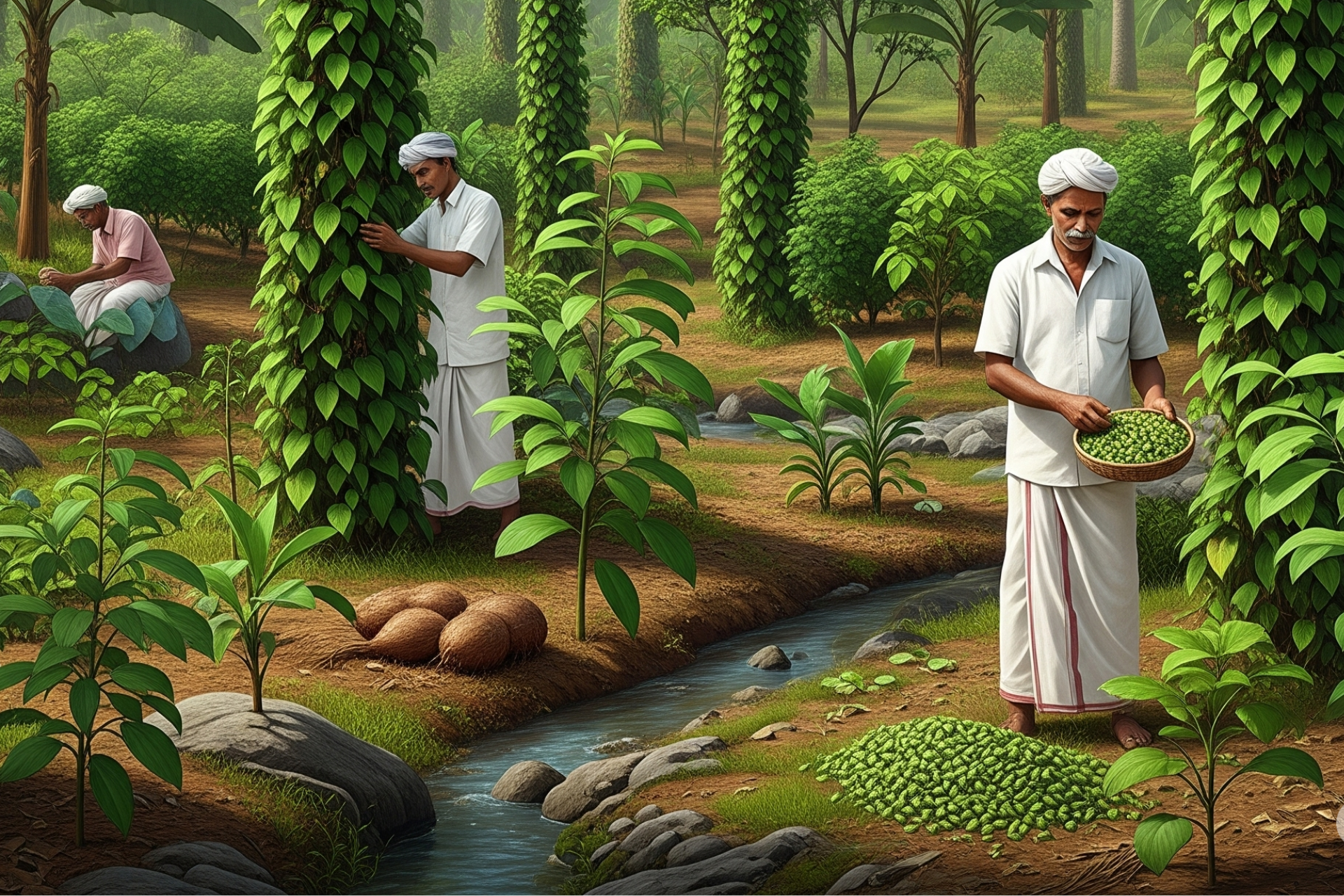
In Kerala’s Wayanad district, tribal communities have cultivated home gardens for centuries. These plots include jackfruit, banana, pepper vines, turmeric, and vegetables under larger canopy trees.
Result: Food security, medicine, income, and carbon sequestration—all on one plot.
 Mali: Farmer-Managed Natural Regeneration (FMNR)
In the Sahel region, degraded farmland is restored by protecting and pruning native tree shoots. This low-cost, community-led agroforestry method is now used on millions of hectares.
Result: Improved crop yields, restored ecosystems, and revived water tables.
How to Get Started with Agroforestry
Step 1: Observe Your Land
- Map sunlight, wind, slope, water flow
- Identify existing trees and biodiversity
Step 2: Start Small
- Integrate a few multipurpose trees with seasonal crops
- Use contour planting or bunds to retain water and prevent erosion
Step 3: Mix Layers
Design like a forest:
- Canopy – Large trees like mango
- Mid-story – Bananas, guava, curry leaf
- Ground layer – Greens, turmeric, ginger
- Vines – Pepper, beans
Step 4: Practice Mulching and Composting
- Use tree litter and pruned branches as mulch. Compost organic waste to feed both crops and trees.
Step 5: Document and Learn
- Observe changes in soil, yield, pest control, and water retention. Take notes and share with other farmers.
Voices from the Field: Vayonadha Partner Farms
Sreekumar, Palakkad, Kerala:
“We planted moringa, jackfruit, and drumsticks around our vegetable field. Not only did our water use go down, but we started earning extra by selling drumstick leaves.”
Meera Bai, Karnataka:
“Agroforestry has brought back birds, bees, and butterflies to our land. Our land feels alive again.
Resources to Learn More
- ICRAF (World Agroforestry Centre) – Global research and training
- National Agroforestry Policy (India) – Guidelines for land use integration
- BAIF Development Research Foundation – Agroforestry support in tribal regions
- Aranya Agricultural Alternatives – Permaculture-based models for dryland agroforestry
Final Thoughts from Vayonadha
Agroforestry is not just a farming practice—it’s a philosophy of coexistence. It teaches us that productivity does not have to come at the cost of nature. Trees are not competitors, but companions in cultivation. As the climate grows more erratic and land becomes fragile, growing trees and crops together may be one of our most hopeful answers.
At Vayonadha, we encourage every farmer, gardener, and land steward to explore agroforestry. Whether you plant one neem tree or design a multi-tier food forest, you’re building a greener, more resilient future.
Join the Movement
Do you practice agroforestry or want to start? Share your experience and photos with #TreesWithVayonadha and inspire others to cultivate the forest-farm connection.
Would you like a step-by-step agroforestry layout or video guide for your region? Let us know, and we’ll prepare it for you