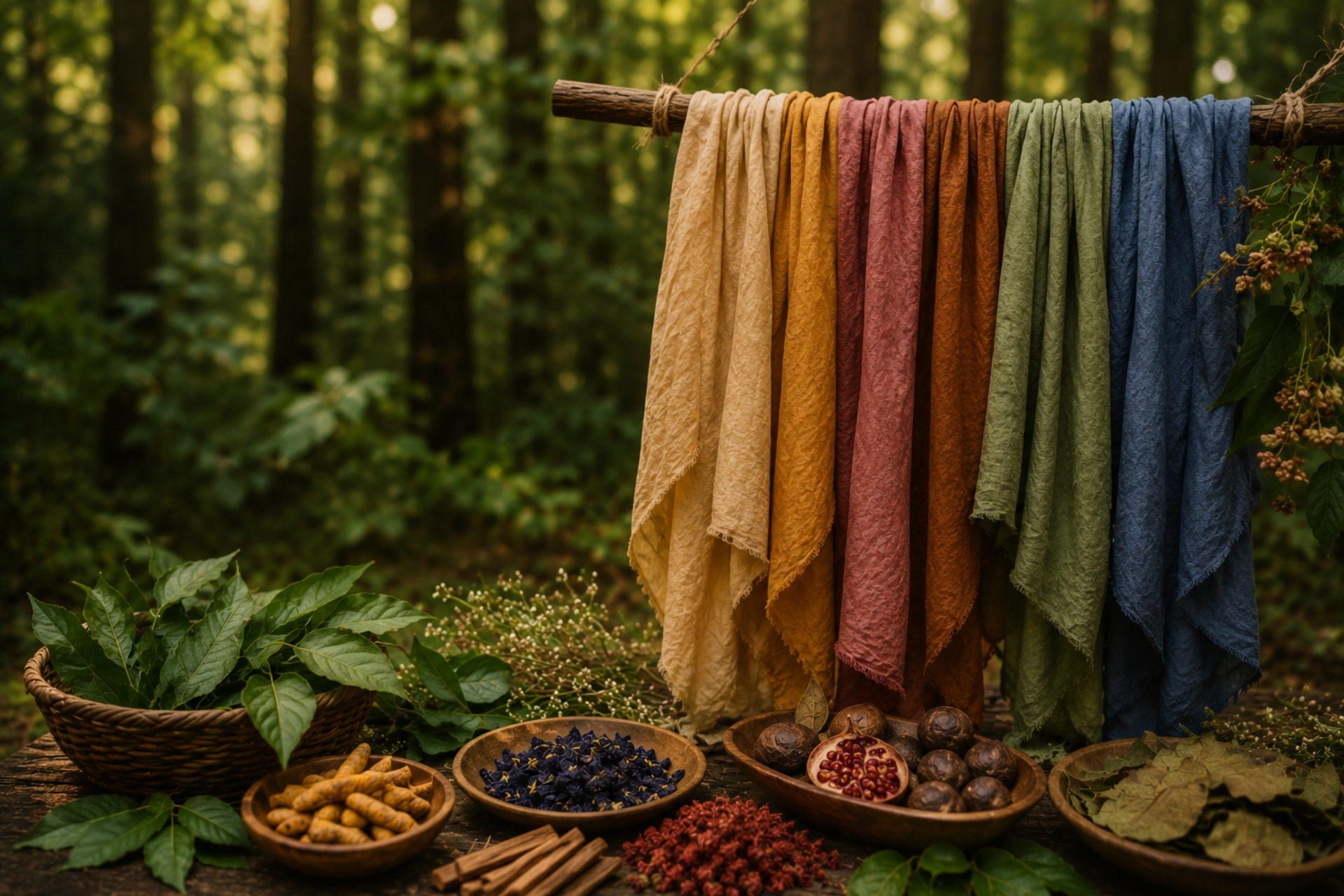
One of the most remarkable characteristics of naturally dyed clothing is that no two pieces are exactly alike. This uniqueness is not a flaw. It is one of the greatest strengths of natural dyeing.
Nature does not create perfect uniformity. Leaves vary in colour, flowers bloom differently, and seasons influence the characteristics of plants. These natural variations are reflected in the dyeing process.
When fabrics are dyed using turmeric, indigo, teak leaves, madder root, pomegranate rind, or other botanical extracts, slight differences in tone and depth can occur. These variations make every garment unique.
In mass production, consistency is often considered the ultimate goal. In natural dyeing, authenticity takes its place. The subtle differences become evidence that the garment was created through a living process rather than a purely industrial one.
Many luxury consumers value uniqueness. They seek products that stand apart from mass-produced alternatives. Naturally dyed garments offer exactly that—a one-of-a-kind connection to nature.
By embracing these variations, we learn to appreciate beauty in a different way. Instead of expecting identical perfection, we celebrate individuality and craftsmanship.
Nature never repeats itself, and that is precisely what makes naturally dyed clothing so special.
Why Natural Variations Occur
Unlike synthetic dyes that are manufactured under tightly controlled conditions, natural dyes depend on living materials. The colour produced can be influenced by several factors:
- The season in which the plant was harvested
- Soil quality and growing conditions
- Rainfall and climate
- Water composition used during dyeing
- Dyeing duration and temperature
- Type of fabric being dyed
Even when artisans follow the same process repeatedly, small variations naturally occur. Rather than being defects, these differences are a visible reminder that nature played a role in creating the garment.
Did You Know?
A single indigo dye batch can produce slightly different shades of blue depending on weather conditions and the age of the dye vat.
This is one reason why natural dyeing has been admired for centuries by textile collectors, artisans, and fashion enthusiasts around the world.
The Human Touch Behind Every Colour
Natural dyeing is both an art and a science. Skilled artisans carefully observe colours as they develop, adjusting techniques based on experience and intuition.
Unlike automated industrial systems, natural dyeing often involves:
- Hand preparation of dye materials
- Careful monitoring of dye baths
- Multiple dyeing and drying cycles
- Traditional knowledge passed through generations
Every colour tells a story of patience, craftsmanship, and connection to nature.
When you wear naturally dyed clothing, you are not simply wearing fabric—you are wearing the result of countless decisions made by skilled hands.
Why Uniqueness Matters in Today’s Fashion Industry
Modern fashion has trained consumers to expect identical products. Walk into a large retail store and every garment looks exactly the same as the next.
But many people are beginning to question whether uniformity should always be the goal.
Naturally dyed clothing offers something increasingly rare:
- Individuality
- Authenticity
- Craftsmanship
- Connection to tradition
- A deeper appreciation for natural materials
In a world filled with mass-produced products, owning something truly unique has become a luxury in itself.
A Shift in How We Define Beauty
For decades, the fashion industry promoted perfection as the ideal. Yet some of the world’s most respected artistic traditions celebrate natural variation.
Think about:
- The grain patterns in wood furniture
- The unique veining in natural stone
- Handmade pottery with subtle irregularities
- Handwoven textiles with slight variations
These characteristics are valued because they reveal the maker’s touch and the influence of natural processes.
Naturally dyed clothing belongs to this same tradition. Its beauty lies not in being identical to every other garment, but in being distinctly its own.
Questions to Consider Before Your Next Purchase
When shopping for clothing, ask yourself:
- Do I want something identical to millions of other garments?
- Do I value craftsmanship and traditional skills?
- Am I willing to embrace natural variation as part of beauty?
- Would I rather own fewer meaningful pieces than many disposable ones?
These questions can help shift the focus from quantity to quality and from perfection to authenticity.
The Growing Appreciation for Slow Fashion
The rise of sustainable and slow fashion has encouraged consumers to look beyond appearance alone. People increasingly want to know:
- Where their clothes come from
- Who made them
- How materials were sourced
- What environmental impact production created
Naturally dyed garments align with these values because they celebrate transparency, craftsmanship, and respect for natural resources.
Each variation in colour becomes a reminder that the garment was created thoughtfully rather than manufactured solely for speed and volume.
Key Takeaways
✔ No two naturally dyed garments are exactly alike.
✔ Colour variations are a natural result of botanical dyeing processes.
✔ These differences showcase authenticity, craftsmanship, and the influence of nature.
✔ Naturally dyed clothing offers individuality in a world of mass production.
✔ Embracing variation helps us appreciate beauty beyond industrial perfection.
Conclusion
The beauty of naturally dyed clothing lies in its uniqueness. Every shade, tone, and subtle variation tells a story that cannot be replicated by machines. Rather than chasing perfect uniformity, natural dyeing invites us to celebrate individuality, craftsmanship, and the creative power of nature itself.
When we choose naturally dyed garments, we are choosing more than sustainable fashion. We are choosing pieces that carry the fingerprints of nature and the skill of the artisan—reminding us that the most beautiful things in life are often those that can never be exactly repeated.