
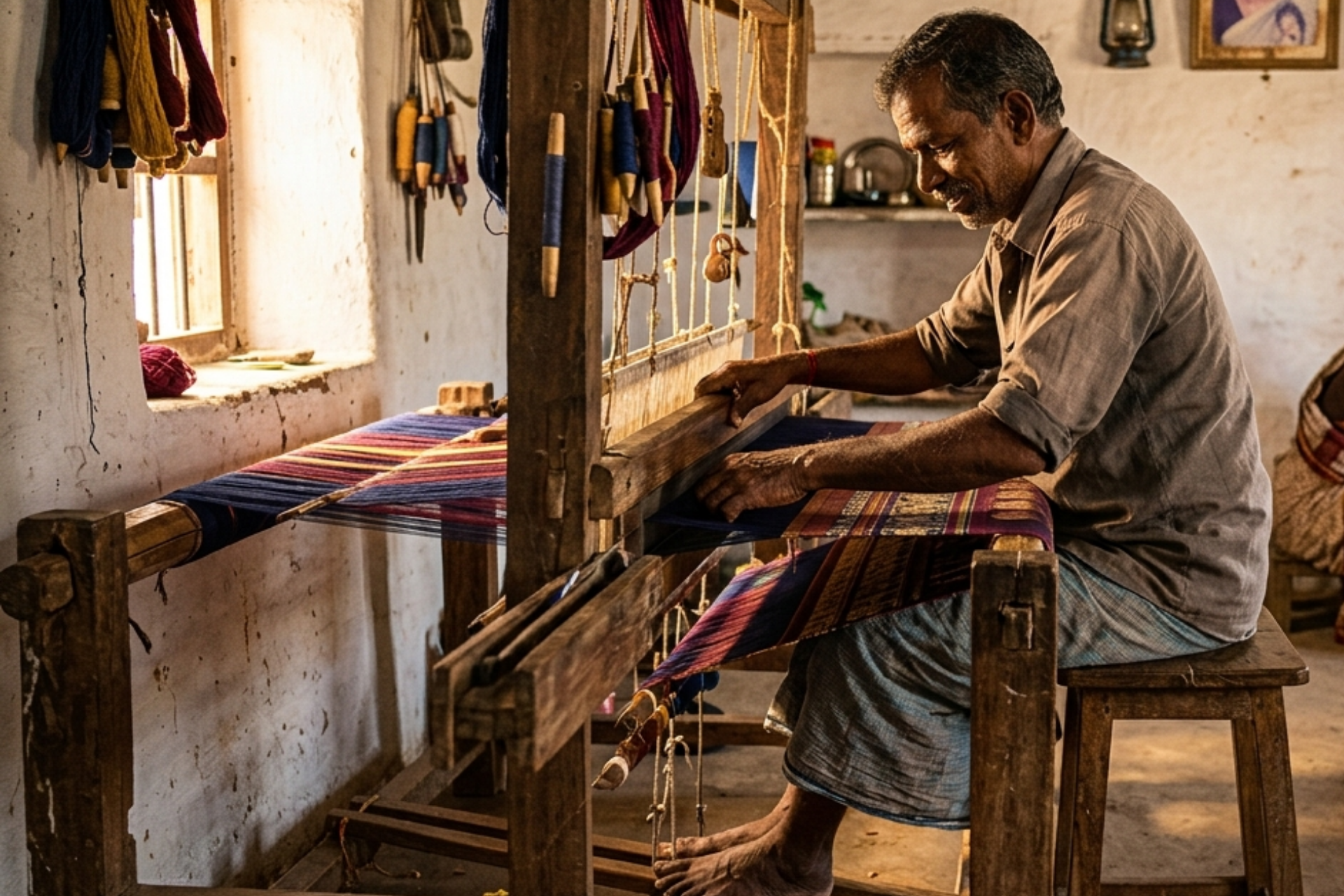
Behind every handwoven fabric is a person with a story. These artisans are the custodians of traditions that have been passed from one generation to the next.
In many weaving communities, children grow up watching parents and grandparents work at looms. Over time, they learn techniques, patterns, and skills that may have existed for centuries. What begins as simple observation gradually becomes a lifelong craft, with knowledge being transferred through hands-on experience rather than textbooks.
Yet many artisan communities face significant challenges. Competition from mass-produced textiles has reduced demand for traditional crafts. Younger generations sometimes leave these professions in search of alternative employment, creating a risk that valuable cultural knowledge could disappear.
Supporting artisan-made products helps preserve these traditions. It creates income opportunities while allowing communities to continue practicing their craft.
At Vayonadha, the focus is not only on creating beautiful clothing but also on celebrating the people behind it. Every handwoven garment represents patience, dedication, and knowledge accumulated over decades.
When consumers understand the human stories behind products, they often develop a deeper appreciation for craftsmanship. The garment becomes more than an item of clothing—it becomes a connection to a culture, a community, and a way of life.
Preserving artisan traditions is not simply about nostalgia. It is about ensuring that valuable skills remain part of our future. By supporting artisan communities today, we help ensure that these traditions continue to thrive for generations to come.
More Than a Fabric: A Story Woven Into Every Thread
When we purchase clothing from a retail shelf, we rarely think about the people involved in making it. Handwoven textiles are different. Every piece carries the fingerprint of its creator.
Unlike factory-made fabrics produced in minutes by automated machines, handwoven textiles require:
- Careful preparation of yarn
- Setting up the loom by hand
- Precision weaving of each thread
- Continuous quality checks throughout the process
- Finishing work that enhances durability and beauty
Each step reflects the artisan’s skill, concentration, and experience.
Did You Know?
- A single handwoven garment can take several days or even weeks to complete.
- Many traditional weaving techniques have been preserved for hundreds of years.
- Certain patterns and motifs represent local history, folklore, or cultural identity.
- No two handmade fabrics are ever completely identical, making each piece unique.
The Challenges Facing Artisan Communities
While handmade textiles are admired around the world, the people who create them often face economic uncertainty.
Some common challenges include:
- Competition from low-cost, mass-produced alternatives
- Limited access to larger markets
- Rising raw material costs
- Declining interest among younger generations
- Lack of recognition for the skill involved in traditional craftsmanship
As older artisans retire, there is a growing concern that some weaving traditions may disappear if sufficient support is not available.
Why Your Purchase Matters
Many consumers underestimate the impact of their buying decisions.
When you choose artisan-made clothing, you help:
- Support local families and communities
- Preserve traditional skills and cultural heritage
- Encourage sustainable and slower production methods
- Promote fairer income opportunities for skilled craftspeople
- Keep generations-old knowledge alive
A purchase may seem small, but collectively, consumer choices can make a significant difference in protecting traditional crafts.
The Human Side of Sustainable Fashion
Sustainability is often discussed in terms of materials, carbon footprints, and environmental impact. However, true sustainability also includes people.
A fashion system cannot be genuinely sustainable if it overlooks the artisans whose skills make these products possible.
By supporting handwoven textiles, consumers contribute to:
- Cultural sustainability
- Economic empowerment
- Community development
- Preservation of traditional knowledge
- Ethical and responsible production practices
This creates a more balanced relationship between fashion, people, and the environment.
Looking Beyond the Price Tag
Handwoven garments may cost more than mass-produced alternatives, but their value extends far beyond the price.
You are investing in:
- Exceptional craftsmanship
- Human creativity
- Cultural heritage
- Sustainable livelihoods
- Timeless quality
Rather than purchasing another piece of clothing, you are supporting a story that continues through generations.
Conclusion
Every handwoven fabric represents far more than threads woven together. It embodies years of learning, countless hours of dedication, and traditions carefully preserved by skilled artisans. Behind every garment is a family, a community, and a heritage worth protecting.
At Vayonadha, each handwoven piece celebrates the remarkable individuals who keep these traditions alive. By choosing artisan-made clothing, consumers become part of a larger story—one that values craftsmanship, preserves culture, and creates opportunities for future generations.
The next time you wear a handwoven garment, remember that you are not simply wearing fabric. You are carrying forward a legacy woven by human hands, skill, and passion.