

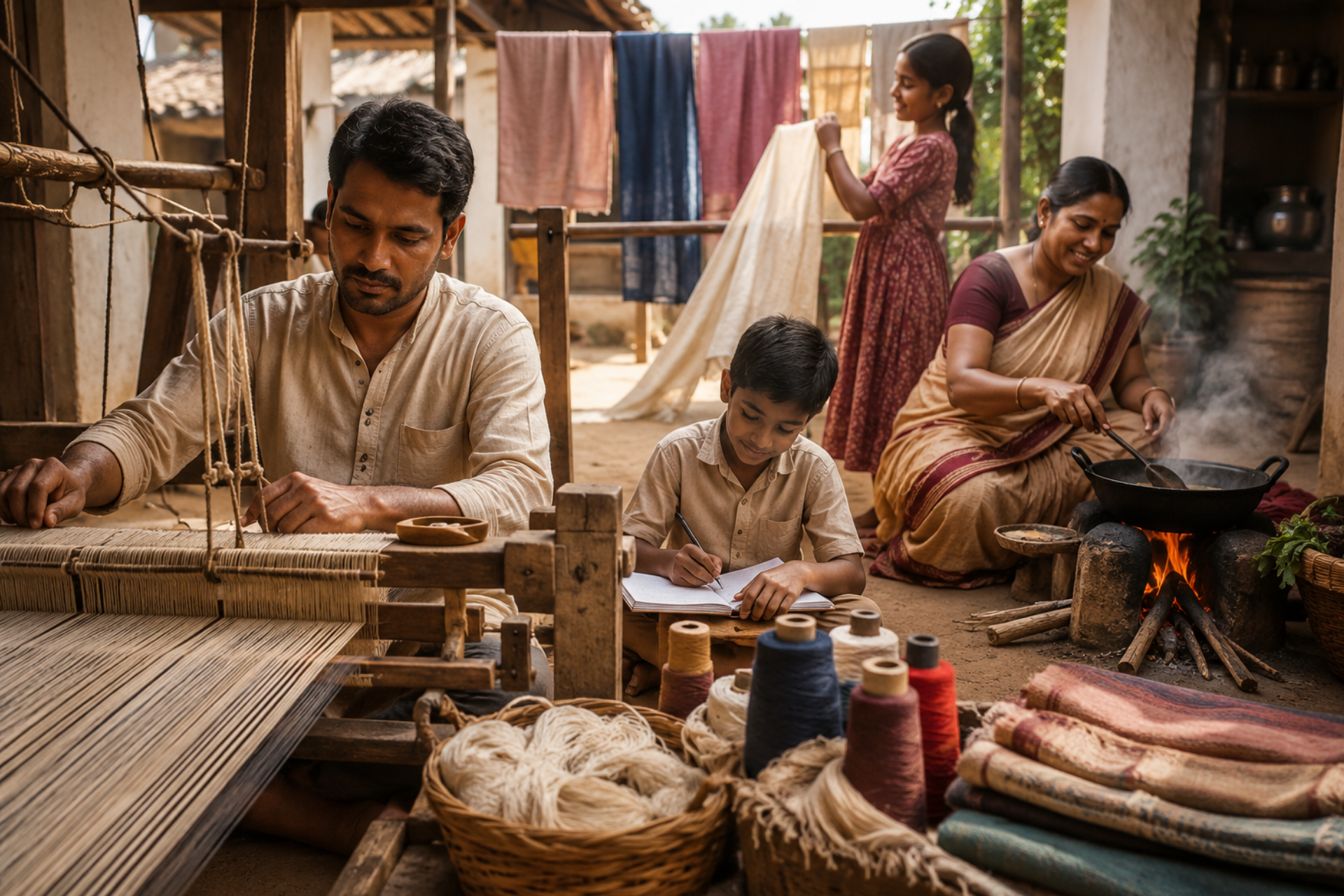
One of the most common questions consumers ask is why handmade clothing costs more than mass-produced alternatives. The answer lies in the people, time, and skill behind every handmade garment.
Machine-made clothing is designed for speed and volume. Automated systems can produce thousands of identical pieces in a short period. Handmade clothing follows a different path. It is created through human skill, attention, and craftsmanship.
Traditional weavers often spend years mastering their craft. Every thread, pattern, and weave requires precision. A handwoven fabric may take days to create, depending on its complexity.
Natural dyeing adds another layer of work. Preparing botanical ingredients, dyeing fabrics, and achieving consistent quality requires patience and expertise. Unlike factory production, many of these processes cannot be rushed.
Handmade garments also support livelihoods. When consumers purchase artisan-made products, they help sustain weaving families, dyeing specialists, tailors, and women-led self-help groups. The price reflects the true value of human work.
Quality is another factor. Handmade garments are often produced in smaller batches with greater attention to detail. They are designed to be appreciated, cared for, and worn for years.
Many consumers are beginning to see clothing as an investment rather than a disposable purchase. A thoughtfully made garment can provide lasting value while carrying a meaningful story.
When you buy handmade clothing, you are not simply paying for fabric. You are supporting craftsmanship, preserving heritage, and helping create a more sustainable fashion ecosystem. That is why handmade clothing is worth every rupee.
The Journey Behind a Handmade Garment
To truly understand the value of handmade clothing, it helps to look at the journey behind a single garment.
Unlike factory-made clothing, which may pass through automated production lines, handmade garments often involve multiple skilled individuals working together. A single piece may involve:
- Farmers growing natural fibres
- Weavers creating fabric by hand
- Artisans preparing natural dyes
- Craftspeople dyeing and finishing the fabric
- Tailors cutting and stitching the garment
- Quality inspectors checking every detail
Each stage requires expertise, patience, and care. The final product represents the combined effort of many hands, not just a machine pressing a button.
Fact Worth Knowing
A handwoven textile that takes several days to create may be competing in the marketplace with machine-made fabric produced in just a few minutes.
This difference in production speed is one of the biggest reasons handmade clothing costs more.
Handmade vs Fast Fashion: Looking Beyond the Price Tag
At first glance, a cheaper garment may seem like the better deal. However, the true cost of clothing becomes clearer over time.
Fast fashion garments are often designed for short-term use. Lower-quality materials and rapid production methods can lead to:
- Faster wear and tear
- Fading colours
- Loose stitching
- Reduced comfort after repeated washing
- Frequent replacement purchases
Handmade garments, on the other hand, are typically made with durability in mind.
Consider this example:
A ₹600 fast-fashion shirt that lasts one year and needs replacing may ultimately cost more than a ₹2,500 handmade shirt that remains wearable for five years or longer.
The question shifts from “How much does it cost today?” to “How much value does it provide over time?”
Preserving Cultural Heritage Through Every Purchase
Many traditional textile techniques have been passed down through generations. These skills represent centuries of knowledge, creativity, and cultural identity.
When consumers choose handmade products, they help preserve:
- Traditional weaving techniques
- Indigenous textile patterns
- Natural dyeing knowledge
- Regional craftsmanship
- Cultural storytelling through fabric
Without consumer support, many of these crafts risk disappearing as younger generations move away from traditional occupations.
Every handmade purchase helps keep these valuable traditions alive.
Questions Every Conscious Shopper Should Ask
Before buying a garment, consider asking:
- Who made this clothing?
- Were the workers paid fairly?
- How long is this garment likely to last?
- Was it produced responsibly?
- Does this purchase support local communities and artisans?
These questions encourage more thoughtful purchasing decisions and help consumers connect with the true value behind their clothing.
The Emotional Value of Handmade Clothing
Handmade clothing offers something that mass-produced fashion rarely can: a personal connection.
Knowing that a garment was carefully crafted by skilled artisans creates a deeper appreciation for what we wear. These pieces often become favourites in our wardrobes because they carry meaning, not just function.
Many people find that they:
- Take better care of handmade garments
- Wear them more often
- Keep them for longer periods
- Feel more connected to the story behind the product
This emotional durability is an often-overlooked aspect of sustainable fashion.
Why Paying More Can Create Greater Impact
Every rupee spent is a vote for the kind of fashion industry we want to support.
Choosing handmade clothing helps:
- Support artisan livelihoods
- Promote fair compensation for skilled work
- Encourage sustainable production methods
- Reduce dependence on mass manufacturing
- Preserve traditional craftsmanship
- Create stronger local economies
The higher price is not simply about the product itself—it reflects a more ethical and human-centred approach to fashion.
Final Thoughts
In a world where clothing is often treated as disposable, handmade garments remind us that fashion can be meaningful, responsible, and deeply personal.
The next time you see a handmade garment with a higher price tag, consider the story behind it. Think about the hours of skilled labour, the generations of knowledge, the livelihoods supported, and the environmental benefits created through slower, more thoughtful production.
Handmade clothing is not expensive because it is exclusive. It costs more because it reflects the true value of craftsmanship, time, and human effort.
When viewed through that lens, handmade clothing is not simply a purchase—it is an investment in people, culture, quality, and a better future for fashion.