

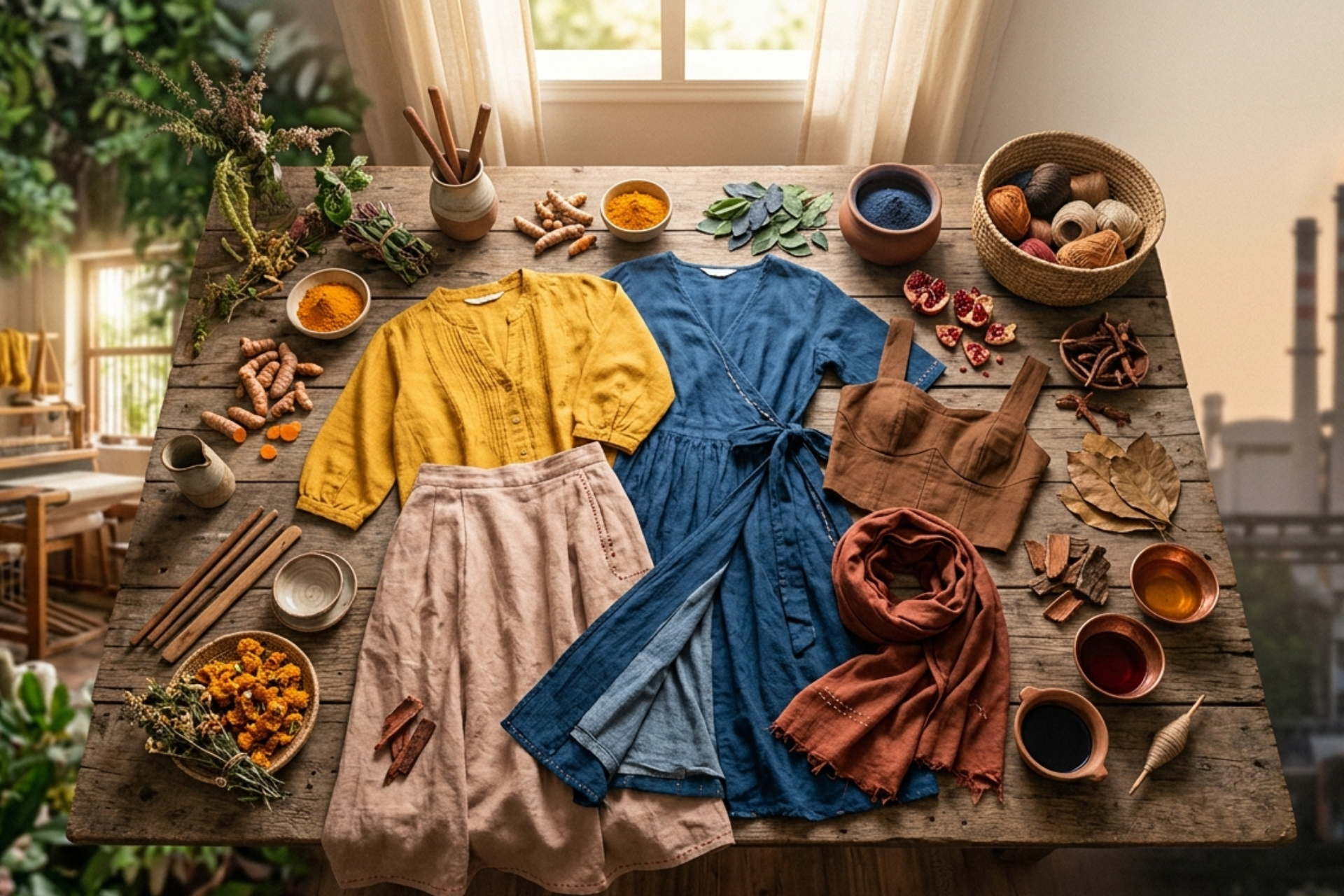
For thousands of years, humans coloured fabrics using plants, roots, flowers, bark, minerals, and other natural materials. Long before synthetic dyes existed, civilizations across India, Asia, Africa, and Europe relied on nature to create beautiful textiles. Today, after decades of industrial textile production, natural dyes are making a remarkable comeback.
Consumers are becoming more aware of where products come from and how they affect the environment. Many people are now questioning the hidden costs of synthetic dyes and are looking for alternatives that align with sustainability, wellness, and conscious living.
Natural dyes offer more than colour. They represent heritage, craftsmanship, and a connection to nature. Colours derived from turmeric, indigo, teak leaves, pomegranate rind, and other botanical ingredients often carry a richness and depth that cannot be fully replicated by industrial processes.
Another reason for the resurgence is the growing demand for authenticity. In a world filled with mass-produced products, people increasingly value items that feel unique and personal. Naturally dyed garments often have subtle variations in tone, making each piece distinctive.
Natural dyeing also supports traditional knowledge systems. Many artisan communities have preserved dyeing techniques for generations. Supporting naturally dyed textiles helps keep these skills alive and provides economic opportunities for rural communities.
Consumers are also drawn to the story behind natural dyes. Knowing that a garment was coloured using plant-based ingredients rather than synthetic chemicals creates a stronger emotional connection to the product.
Luxury brands around the world have embraced this movement because modern luxury is increasingly defined by craftsmanship, sustainability, and authenticity rather than mass production.
For brands like Vayonadha, natural dyes represent a bridge between the wisdom of the past and the needs of the future. They remind us that beautiful clothing can be created in harmony with nature while supporting artisans and preserving cultural heritage.
As awareness grows, naturally dyed clothing is no longer seen as a niche product. It is becoming part of a broader movement toward conscious consumption, where people choose quality, meaning, and sustainability over disposable fashion.
Why Synthetic Dyes Are Being Reconsidered
The rise of natural dyes is closely connected to growing concerns about the environmental impact of synthetic dyeing processes. The textile industry is one of the world’s largest consumers of water, and conventional dyeing often involves chemicals that can contaminate rivers, soil, and ecosystems when not properly treated.
Did You Know?
- Natural dyes are derived from renewable resources such as plants, leaves, roots, fruits, and flowers.
- Many traditional dyeing techniques use significantly fewer synthetic chemical inputs.
- Natural dyeing practices have been part of human culture for thousands of years across multiple continents.
- The Beauty of Imperfection
One of the most appealing aspects of naturally dyed clothing is that no two pieces are exactly alike.
Unlike factory-produced garments designed for complete uniformity, naturally dyed textiles often feature slight tonal variations that reflect the unique characteristics of the dye source, weather conditions, and artisan techniques used during production.
Rather than being viewed as imperfections, these subtle differences are celebrated as marks of authenticity.
When you wear naturally dyed clothing, you are wearing something that feels personal, handcrafted, and connected to nature.
A Return to Slow Fashion
The comeback of natural dyes is also part of the larger slow fashion movement.
Slow fashion encourages consumers to buy fewer, better-quality garments that last longer and carry deeper meaning. Instead of treating clothing as disposable, it promotes thoughtful purchasing decisions and appreciation for craftsmanship.
Choosing naturally dyed garments often means choosing:
- Quality over quantity
- Craftsmanship over mass production
- Sustainability over convenience
- Long-term value over short-term trends
This mindset helps reduce waste while fostering a healthier relationship with what we wear.
How Consumers Are Changing the Fashion Industry
Consumer preferences have always influenced the market. Today, people are increasingly supporting brands that demonstrate environmental responsibility and ethical production practices.
When consumers choose naturally dyed clothing, they encourage:
Preservation of traditional artisan skills
Greater demand for sustainable materials
Reduced reliance on chemical-intensive production methods
Increased transparency throughout the supply chain
Small purchasing decisions, when multiplied across millions of consumers, can create significant positive change.
What Makes Natural Dyes Feel Different?
The appeal of naturally dyed garments extends beyond sustainability.
Many people describe them as feeling more connected to nature because the colours often appear softer, richer, and more organic than highly processed synthetic alternatives. Shades created from turmeric, indigo, madder root, or pomegranate can develop beautiful character over time, giving garments a living quality that evolves with use.
This creates a deeper emotional connection between the wearer and the garment—something increasingly rare in today’s fast-fashion environment.
Looking Ahead: The Future of Natural Fashion
As innovation and sustainability continue to shape the textile industry, natural dyes are likely to play an even bigger role in the future of fashion.
Researchers, designers, and artisan communities are exploring new ways to combine traditional knowledge with modern production methods. This creates opportunities to scale sustainable practices while preserving the authenticity that makes natural dyeing so special.
The growing popularity of naturally dyed clothing suggests that consumers are no longer focused solely on appearance or price. They are increasingly interested in the story, values, and impact behind the products they buy.
Final Thought
Every garment tells a story. Some stories begin in factories and chemical processing plants. Others begin in fields, forests, gardens, and artisan workshops where generations of knowledge are carefully preserved.
The growing comeback of naturally dyed clothing shows that many consumers are choosing stories rooted in sustainability, craftsmanship, and respect for nature. As this movement continues to grow, natural dyes remind us that fashion can be beautiful, meaningful, and responsible all at the same time.