

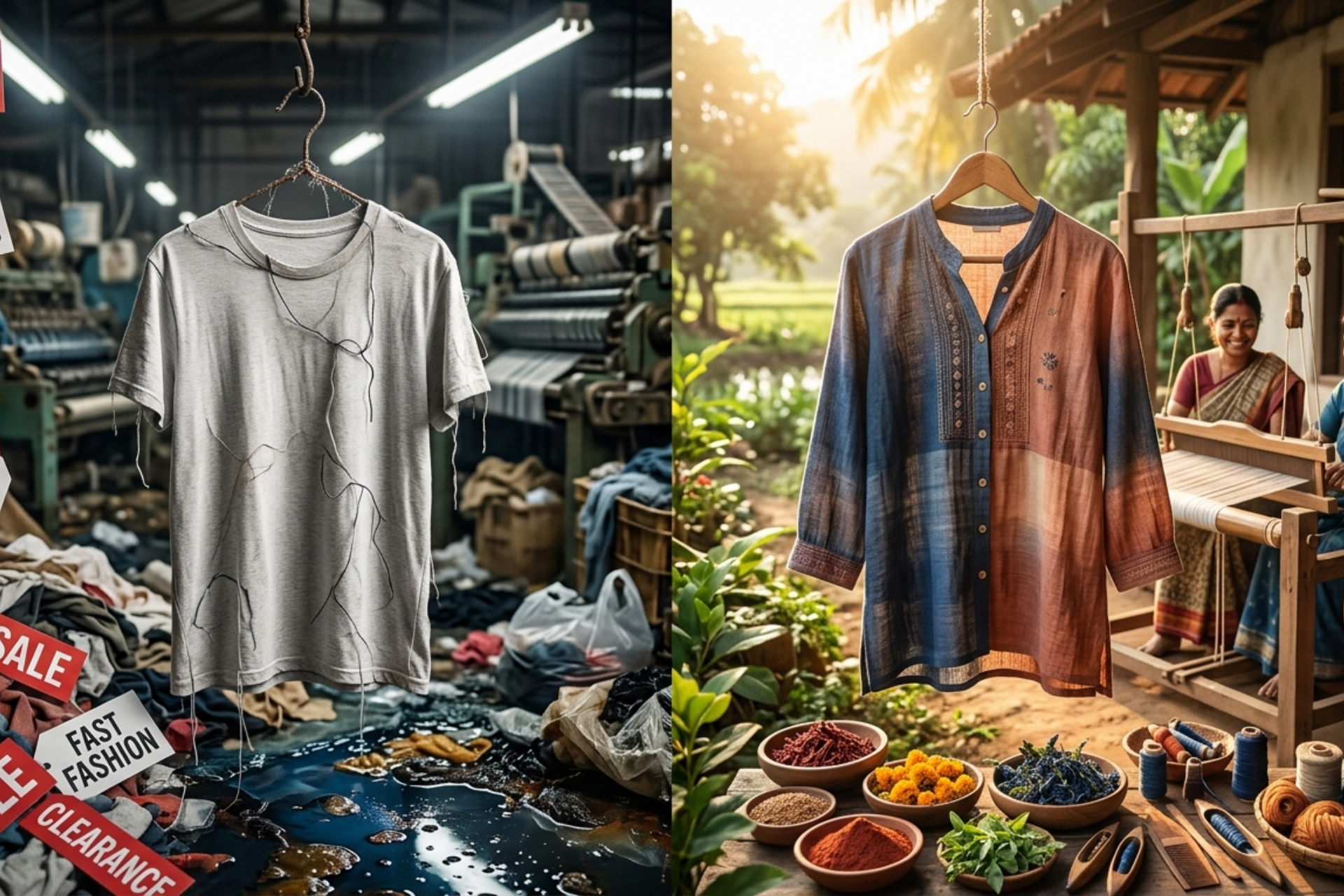
The Shirt That Costs Less Than a Meal
Imagine walking into a store and buying a shirt for less than the cost of a family dinner. It feels like a bargain. You leave the store happy, believing you’ve made a smart purchase.
But have you ever wondered how that shirt became so cheap?
Behind every low-priced garment lies a story that most consumers never see. A story of massive factories, enormous water consumption, chemical pollution, textile waste, and often, workers earning very little for long hours of labor.
This hidden side of the fashion industry is known as fast fashion, and while it has made clothing more affordable than ever before, it has also created some of the world’s biggest environmental and social challenges.
Understanding these challenges helps us make more informed choices about what we wear and why it matters.
What Is Fast Fashion?
Fast fashion refers to the rapid production of inexpensive clothing designed to follow the latest trends.
Instead of producing a few seasonal collections each year, many fashion brands release new styles every few weeks. The goal is simple: encourage consumers to buy more clothing, more often.
As a result, clothing has become disposable.
Many garments are worn only a handful of times before being discarded or forgotten in wardrobes.
While this model keeps prices low, it comes at a significant cost to people and the planet.
The Environmental Cost of Cheap Clothing
Most people don’t realize that the fashion industry is one of the world’s largest consumers of natural resources.
Water Consumption
Producing textiles requires enormous amounts of water.
Cotton cultivation, fabric processing, dyeing, and finishing all consume water at every stage.
When multiplied by billions of garments produced annually, the total water footprint becomes staggering.
In regions already facing water scarcity, large-scale textile production can place additional pressure on local communities and ecosystems.
Pollution from Textile Dyeing
One of the biggest environmental challenges comes from the dyeing process.
Many synthetic dyes contain chemicals that can contaminate rivers and waterways if wastewater is not properly treated.
Around the world, communities living near industrial textile zones have witnessed rivers changing color based on the dyes being used by nearby factories.
The impact extends beyond water quality.
Aquatic ecosystems, fish populations, and surrounding agricultural land can all be affected by pollution entering natural waterways.
Mountains of Textile Waste
The fast fashion model encourages consumers to buy frequently and discard clothing quickly.
As a result, millions of tons of textile waste are generated every year.
Many discarded garments end up in landfills where they may take years—or even decades—to break down, especially when made from synthetic fibers.
Others are incinerated, contributing to air pollution and greenhouse gas emissions.
Unlike traditional clothing that was often repaired, reused, or passed down through generations, modern fashion has increasingly become a throwaway culture.
The Human Side of Fast Fashion
Environmental concerns are only part of the story.
Behind every garment are people.
To keep prices extremely low, manufacturers often face pressure to produce large volumes at the lowest possible cost.
This can create difficult working conditions in parts of the global supply chain.
Many textile workers around the world spend long hours performing repetitive tasks while earning modest incomes.
Although the industry provides employment to millions of people, questions about fair wages, workplace safety, and worker well-being continue to be important topics of discussion.
When we buy clothing, we rarely think about the individuals who helped create it.
Yet every garment represents human effort, skill, and time.
The Loss of Traditional Craftsmanship
As mass production expanded, many traditional textile communities began to struggle.
For centuries, artisans across India developed remarkable weaving, dyeing, embroidery, and textile-making traditions.
These crafts were not merely occupations. They were cultural legacies passed down from one generation to the next.
However, machine-made alternatives often compete at prices that handmade products cannot match.
As demand for handcrafted textiles declines, many artisan families are forced to abandon traditional skills in search of other work.
When this happens, communities lose more than income. They lose knowledge, identity, and heritage.
Why Handmade Clothing Costs More
Many consumers compare a handwoven garment with a factory-made alternative and wonder why the handmade piece costs more.
The answer lies in the process.
A handwoven textile may take days or even weeks to create.
Natural dyeing often requires multiple stages and careful attention to detail.
Artisans spend years mastering their craft.
Women-led self-help groups and small tailoring units invest significant time into creating garments with care and precision.
When you purchase a handcrafted product, you are supporting a network of people rather than an automated production line.
The higher price reflects the true value of skilled human work.
The Rise of Conscious Fashion
Fortunately, consumer awareness is growing.
Around the world, more people are asking questions about:
- Where their clothing comes from ?
- How it is made ?
- Who made it ?
- What materials are used ?
- How production affects the environment ?
This shift has given rise to the slow fashion movement.
Slow fashion emphasizes quality over quantity, durability over disposability, and sustainability over short-term trends.
It encourages consumers to buy fewer items but choose them more thoughtfully.
Why Your Choice Matters
Every purchase sends a signal.
When we buy products that prioritize sustainability, ethical production, and traditional craftsmanship, we support businesses that invest in people and the environment.
We help preserve artisan skills.
We encourage responsible production.
We contribute to a more sustainable future.
No single purchase will change the world overnight, but millions of conscious choices can create meaningful change.
A Different Way Forward
At Vayonadha, we believe clothing should carry a story worth telling.
A story of artisans who preserve centuries-old traditions.
A story of natural dyes inspired by the earth.
A story of women gaining opportunities through community-based production.
A story of mindful consumption and conscious living.
Fashion should not simply be about what we wear.
It should also reflect the values we choose to support.
Final Thoughts
The next time you see a very inexpensive garment, consider the journey behind it.
Ask yourself:
- How was it made?
- Who made it?
- What impact did it have on the environment?
- What impact did it have on communities?
The answers may not always be visible on the price tag.
But they matter.
Because every garment tells a story.
The question is: what kind of story do we want our clothing to tell?