

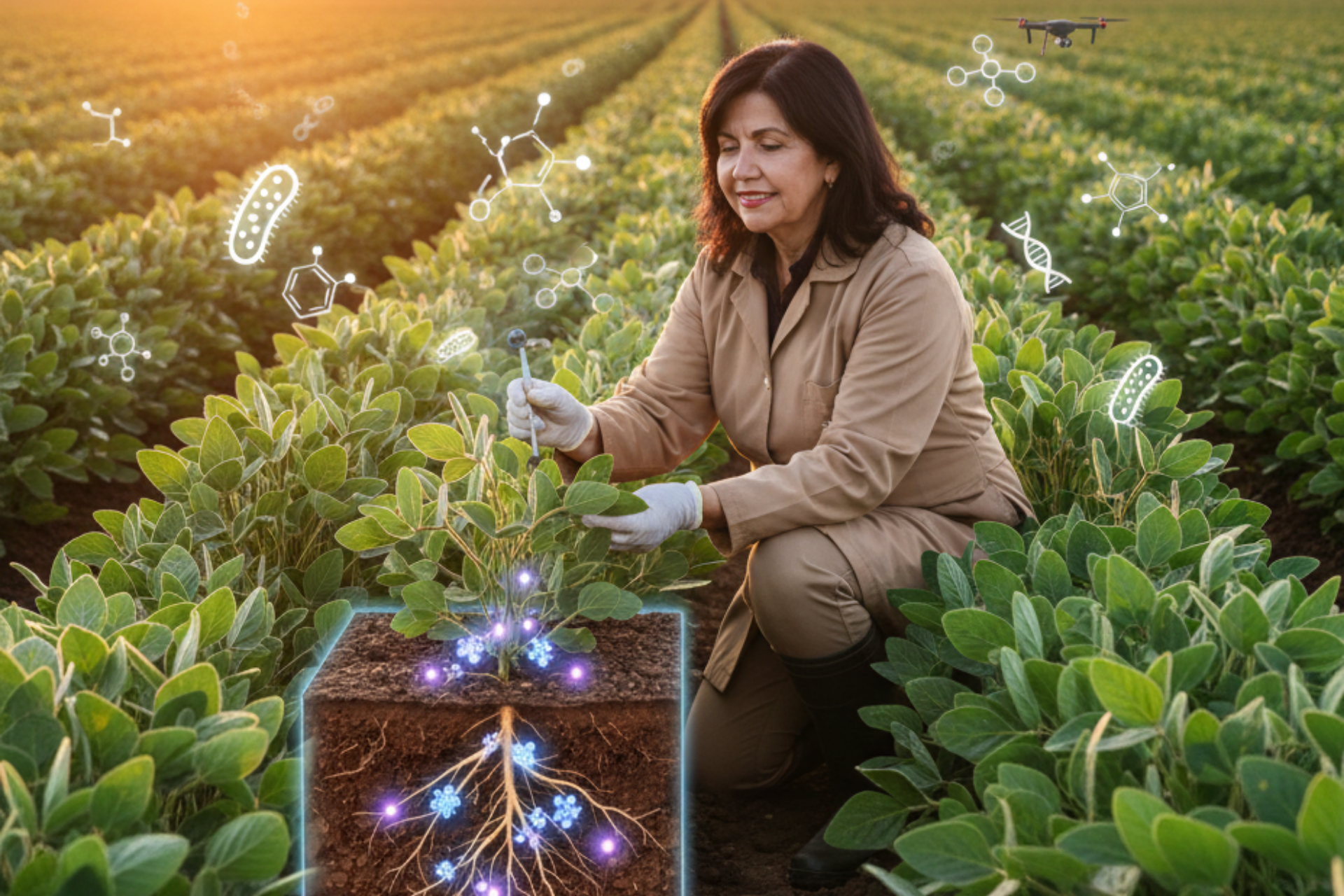
In an era where agriculture is facing mounting challenges—from climate change to soil degradation—one revolutionary scientist has emerged as a beacon of hope. Dr. Mariangela Hungria, a distinguished researcher at the Brazilian Agricultural Research Corporation (EMBRAPA), has been awarded the prestigious 2025 World Food Prize for her groundbreaking contributions to sustainable agriculture. With her innovative work in soil microbiology, Dr. Hungria is rewriting the future of farming—ushering in a new era where we can say goodbye to synthetic fertilizers.
The World Food Prize: A Legacy of Innovation
The World Food Prize, often referred to as the “Nobel Prize for Food,” is one of the highest honors in the field of global food security. Each year, this prize recognizes individuals whose work has contributed to feeding the world in sustainable ways. Dr. Mariangela Hungria has earned this distinction for her revolutionary methods in Biological Nitrogen Fixation (BNF), a natural process that involves using specific strains of bacteria to fix nitrogen in the soil, making synthetic fertilizers less necessary.
Her work, which spans over three decades at EMBRAPA, has had a far-reaching impact, particularly in Brazil and other parts of South America. Dr. Hungria’s approach has drastically improved agricultural sustainability, boosted yields, and minimized environmental harm.
A Soil Microbe’s Power: Biological Nitrogen Fixation
At the core of Dr. Hungria’s innovation is the ability to tap into nature’s most efficient tool for nourishing crops: soil microbes. Through BNF, she introduced bacteria strains that convert nitrogen from the air into a form that plants can use. This eliminates the need for synthetic fertilizers, which often leach into water sources, polluting ecosystems and contributing to greenhouse gas emissions.
For crops like soybeans, which are crucial to global food production, this has meant a dramatic reduction in fertilizer use. By using naturally occurring bacteria, Dr. Hungria’s methods have not only improved crop yields but have also helped farmers maintain healthier soils over time—without the toxic buildup caused by chemical fertilizers.
The Far-Reaching Impact: 40 Million Hectares and Counting
The scale of Dr. Hungria’s work is nothing short of staggering. Her biological technologies are now used on over 40 million hectares of farmland in Brazil alone. This vast adoption has translated into billions of dollars in savings for farmers, with an estimated US$40 billion saved annually by reducing the need for costly synthetic fertilizers.
But the financial benefits go beyond cost-saving. Dr. Hungria’s methods are helping farmers weather the challenges of an increasingly unpredictable climate. By building healthier soils that are more resilient to extreme weather events, her research has equipped farmers with the tools to grow more food with fewer inputs.
A Green Revolution: Reducing Emissions and Saving the Planet
Dr. Hungria’s achievements extend far beyond agriculture—they are directly aligned with global sustainability goals. Through the widespread application of her innovations, more than 180 million metric tons of carbon dioxide equivalent emissions are being prevented every year. This is a monumental contribution to combating climate change and preserving biodiversity, as reducing the reliance on synthetic fertilizers has a direct impact on reducing greenhouse gas emissions.
The environmental benefits of her work are significant. As agriculture remains one of the largest contributors to global greenhouse gas emissions, transforming farming practices to be more sustainable is essential for achieving international climate goals. Dr. Hungria’s work is proof that agriculture and environmental conservation do not have to be at odds. In fact, with the right tools, they can work hand in hand.
Brazil’s Agricultural Leadership: A Global Blueprint
Dr. Hungria’s work has not only transformed Brazil’s agricultural landscape but has also positioned the country as a global leader in sustainable farming practices. Brazil, one of the world’s largest producers of soybeans and other vital crops, has seen a profound shift toward ecological farming methods. Dr. Hungria’s efforts have helped boost Brazil’s agricultural exports, particularly to markets that prioritize sustainability, such as the European Union.
The beauty of her work lies in its accessibility—her biological technologies are low-cost, scalable, and applicable to a wide range of crops beyond just soybeans. Farmers across the world can adopt these practices, fostering a more resilient and sustainable global food system.
The Path Ahead: Scaling Up for Global Food Security
The recognition of Dr. Hungria’s achievements through the World Food Prize is not only a celebration of her career but also a call to action for the global agricultural community. The methods she pioneered can offer solutions to food security challenges worldwide, particularly in developing nations that face limited access to synthetic fertilizers or are dealing with soil degradation.
As the world continues to grapple with the dual threats of climate change and growing food demands, Dr. Hungria’s work provides hope. Her research is a testament to the fact that nature holds the answers to many of our most pressing problems, and it’s time we start listening.
Conclusion
Dr. Mariangela Hungria’s contributions to soil microbiology have not only revolutionized agriculture in Brazil but are setting the stage for a global movement toward more sustainable farming practices. By harnessing the power of natural microbes, she has shown us that the most effective solutions for feeding the world may lie beneath our feet. With over 40 million hectares already benefiting from her work and a global environmental impact that cannot be ignored, Dr. Hungria’s legacy is a powerful reminder of the potential of science to change the world—for the better.
For our readers, this isn’t just a celebration of one scientist’s incredible achievements—it’s a call to action for embracing the future of farming. Sustainable, eco-friendly, and innovative solutions like Dr. Hungria’s are the key to ensuring a food-secure world for generations to come.