
Let’s Discuss the Challenges Ahead in 2026!
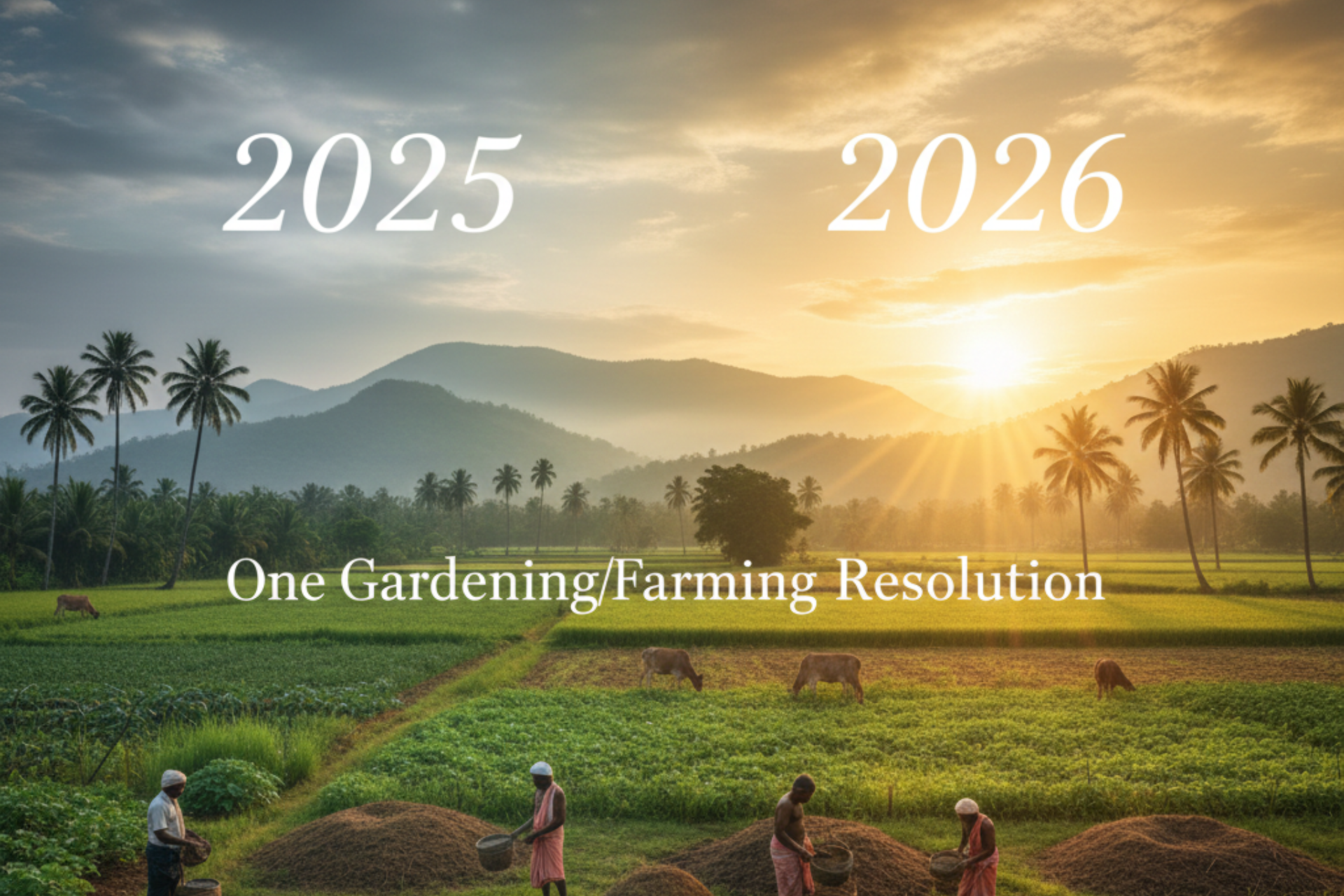
The dawn of a new year is always a time for reflection and new beginnings. For organic farmers and gardening enthusiasts, it’s an opportunity to set intentions, push boundaries, and overcome challenges that might have held them back in the past. As part of the Vayonadha community, we’d love to hear from you—what is your one gardening or farming resolution for the upcoming year? Share your thoughts, experiences, and aspirations with us as we embark on a journey of growth together.
In this blog, we’ll also delve into the top five challenges that Kerala and India might face in the farming and food industry in 2026. The landscape is rapidly changing, and both farmers and consumers need to be prepared for the shifts that are coming. We’ll touch on issues like sustainable farming practices, food security, and the growing importance of organic farming for a healthier future. So, let’s get into it!
What is Your One Gardening/Farming Resolution for the New Year?
Whether you’re cultivating your own small garden, working on a larger-scale farm, or simply aiming to grow your knowledge about organic practices, we’re curious to hear about the goals you’re setting for the upcoming year.
Why New Year Resolutions Matter in Farming and Gardening
New year resolutions aren’t just for fitness or personal growth; they can be incredibly valuable for those involved in farming and gardening too. It’s all about setting a course for progress.
A Look Back at 2025 – What Worked for You?
Before diving into the resolutions, let’s take a moment to reflect on the year gone by.
How did 2025 go for your garden or farm?
Did you achieve your goals?
Were there any unexpected successes or challenges?
Common Farming and Gardening Resolutions
Some of the most common resolutions in the world of gardening and farming include:
· Improving soil health: Whether it’s through composting, mulching, or crop rotation, many farmers are committed to improving the quality of the soil they work with.
· Incorporating more organic practices: More farmers are resolving to go organic or reduce their dependency on chemical fertilizers and pesticides.
· Increasing crop diversity: Crop rotation and experimenting with new crops to increase biodiversity and resilience.
· Water conservation and efficient irrigation: With water scarcity becoming a growing issue, many are committing to using water more efficiently.
· Growing food for the community: Many farmers are focusing on growing more nutritious, local produce to support their communities and reduce their carbon footprint.
Top 5 Challenges Kerala and India Will Face in 2026: The Road Ahead
Let’s take a closer look at the top five challenges that farmers, especially in Kerala and India, could face in the coming years.
1. Climate Change and Its Impact on Farming
One of the biggest challenges farmers will face in 2026 is climate change. We’re already seeing the effects of erratic weather patterns, unpredictable rainfall, and rising temperatures. These changes pose a significant threat to crop production, especially for those relying on monsoon-dependent agriculture. Kerala, with its rich agricultural heritage, is no stranger to the impact of heavy rains and floods, which can devastate entire crops.
What Can Farmers Do?
Farmers can adapt by investing in climate-resilient crops, improving water management systems, and adopting more sustainable farming practices. Educating farmers about climate-smart techniques and providing access to resilient seed varieties will be critical in facing these challenges head-on.
2. Food Security and Ensuring a Sustainable Supply Chain
With the population of India steadily increasing, ensuring food security will be another major challenge in 2026. While organic farming is gaining momentum, it still faces challenges in scaling production to meet the growing demand. Many areas are still dependent on chemical-intensive farming methods, which not only harm the environment but also pose health risks to consumers.
How Can Organic Farming Contribute to Food Security?
By increasing the awareness and adoption of organic farming, we can ensure that the food supply is both healthy and sustainable. Organic farming practices, such as crop rotation, composting, and minimizing pesticide use, help create a more resilient agricultural system. In addition, community-supported agriculture (CSA) and farm-to-fork initiatives can help bridge the gap between farmers and consumers, ensuring that fresh, healthy food is accessible to all.
3. The Challenge of Farm-to-Fork Transparency
The growing demand for organic and sustainable food options has led to a surge in farm-to-fork initiatives, where food is sourced directly from farmers and delivered to consumers. However, ensuring transparency in this process is a significant challenge. Consumers are becoming more conscious about where their food comes from, but there are still gaps in transparency along the supply chain.
Building Trust Through Transparency
To meet this challenge, there needs to be a focus on creating clear and traceable supply chains. This includes certifications, labeling, and direct partnerships between farmers and consumers. Technology like blockchain can also be employed to track the movement of food from the farm to the table, ensuring that organic produce is genuinely what it claims to be.
4. Lack of Adequate Infrastructure for Organic Farming
While organic farming is on the rise, many areas still lack the proper infrastructure to support it. From access to organic seeds and fertilizers to the lack of organic farming training and support
systems, infrastructure gaps remain a key barrier to scaling organic agriculture across India, including in Kerala.
Solutions for Infrastructure Gaps
To address these issues, there needs to be more investment in organic farming infrastructure. This includes better access to organic farming inputs, government incentives, farmer training programs, and improved marketing and distribution channels for organic produce. Public-private partnerships can play a crucial role in bridging these gaps.
5. Rising Input Costs and Economic Pressures on Farmers
Farmers across India are feeling the pressure of rising input costs—whether it’s for seeds, fertilizers, water, or labour. In many cases, these costs are outpacing the prices farmers can fetch for their produce, especially in the organic sector where yields may be lower initially.
Creating Economic Resilience for Farmers
To combat this, there needs to be a more robust economic support system for farmers. This could include price guarantees, subsidies for organic farming inputs, and better access to financing. Furthermore, cooperatives and farmer producer organizations (FPOs) can help increase the bargaining power of farmers, ensuring fair prices for their produce.
Conclusion: Looking to 2026 and Beyond
By focusing on sustainability, building infrastructure, ensuring food security, and embracing new technologies, we can create a thriving agricultural ecosystem that benefits everyone farmers, consumers, and the planet.
Now, we’d love to hear from you.
What is your one gardening or farming resolution for the new year?
Share it with us, and let’s continue to learn and grow together as a community.