
At Vayonadha, we are constantly inspired by individuals who take sustainable living to heart and turn their dreams into thriving realities. Recently, we had the pleasure of interviewing Mr.Pramod Madhavan, a passionate part time farmer our CEO who embarked on an incredible journey to create a self-sustaining garden on just half an acre of land. Through careful planning and dedication, he has successfully cultivated a diverse range of fruits, vegetables, and medicinal plants, all grown using organic methods. In this interview, Pramod shares the detailed plan he implemented how he transformed dry land into a vibrant farm that now feeds his family and provides for their daily needs.
Join us as we explore the practical steps, challenges, and rewards of creating a farm that’s not just about food, but about living sustainably, year-round. Lets hear it from Mr. Pramod Madhavan directly.
Pramod Madhavan: Three years ago, I walked onto a dry, barren half-acre piece of land with a simple but powerful goal: to ensure my family of three could enjoy fresh, organic vegetables every day. At the time, the idea of cultivating my own food seemed like a daunting task especially with the dry land and limited resources. But I knew I had to give it a try. I wanted to take control of our food source, reduce our dependency on the market, and live a healthier, more sustainable life.
Clearing the Land: From Dry Soil to Fertile Ground
The land I started with was far from ideal it was dry and neglected for years. But I saw potential. My first task was to clear the area and make it suitable for planting. It wasn’t just about removing weeds or overgrowth but about planning the space wisely to maximize productivity.
Overcoming Challenges: The Borewell Saga
In the early stages of my farming journey, water was a major challenge. With a dry, barren half-acre of land, I quickly realized that I would need a reliable water supply to bring my crops to life. So, I decided to dig a borewell. But as fate would have it, after drilling the well, we hit rock bottom literally. I was left with no choice but to redrill the borewell, hoping for better luck.
After much effort, we finally struck water but not as much as we had hoped. We now have a supply of 500 litters on a good day, which is not enough to sustain the farm. Transporting the water to the plants, which are spread across the land, is physically demanding and time-consuming. Every drop is precious, and every task requires careful planning and hard work.
But despite these challenges, the experience taught me the importance of persistence and resourcefulness. Water is, without a doubt, one of the most critical resources for farming, and while it hasn’t been easy, it’s been a reminder of how much effort goes into growing your own food and sustaining a healthy, organic farm. It’s not just about planting it’s about nurturing every part of the ecosystem, including the water that keeps everything alive.
This struggle with water has made me more mindful of the challenges many farmers face in their daily work. It has also made me appreciate the importance of efficient irrigation methods, conservation, rainwater harvesting, micro water collection pits and finding creative ways to overcome the hurdles of farming in a dry climate.
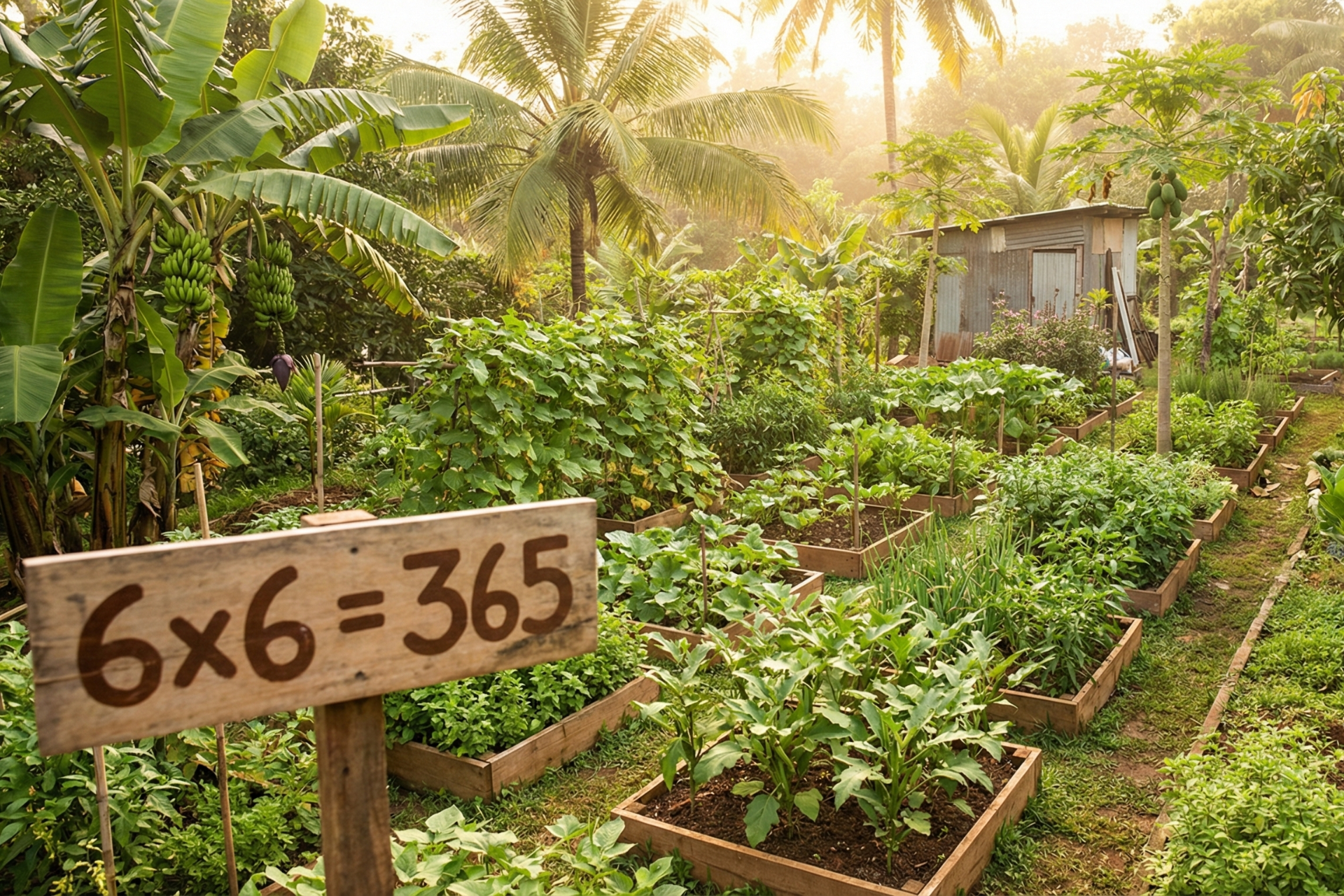
6*6=365 (I know what you are thinking) Might be the maths is wrong but my plan was right.
I divided the land into small, manageable portions, each measuring roughly 6 feet by 6 feet. This design allowed me to plant a variety of crops in turns, ensuring a year-round supply of vegetables.
The idea behind the “6 feet by 6 feet” system was simple: Each small plot on a rotational basis would feed us 365 days a year. I planted a mix of trees, vegetables, and fruits ensuring diversity and a seasonal harvest.
The Growth of My Garden: A Bounty of Trees, Fruits, and Vegetables
Over time, my garden began to take shape. I started with a foundation of fruit trees, which would take longer to grow but provide a steady supply of food in the years to come. These included:
· Bananas: I planted 10 banana plants today around 30+ not only do they provide fresh fruit, but their leaves are also a sustainable resource eliminating my stainless steel plates.
· Coconuts: With 25 coconut trees, I’ve ensured a reliable supply of coconuts for cooking, coconut oil and they also provide valuable mulch to keep the soil healthy.
· Mangoes and Jackfruit: These trees will provide long-term benefits, both in shade and seasonal fruit.
· Papaya: A quick-growing tree that gives us fresh fruit year-round.
In between these trees, I planted a variety of vegetables and fruits that can thrive in the small plots. Some of the vegetables I grow include:
· Brinjal, Ladies Finger (Okra), Long Beans, Chillies, Ivy Gourd, Ash Gourd, and more. These vegetables are the backbone of our daily meals.
· Pumpkins, Squash, Tapioca, and Lemon: These plants offer variety and nutritional value.
· Guava, Miracle Fruit, Tamarind: For a touch of tropical flair, these trees also provide health benefits and unique flavours.
Adding Medicinal and Spice Plants: A Healthier Approach to Living
Beyond the basic vegetables and fruits, I decided to grow medicinal plants and spices that offer health benefits and add flavour to our meals. I’ve incorporated plants like:
· Chitharathai (Galangal), Turmeric and Ginger: Great for digestion and adding flavor to our meals.
· Tulsi (Holy Basil): Known for its anti-inflammatory and immunity-boosting properties.
· Black Pepper, Nutmeg, and Tipili: These spices are rich in antioxidants and add depth to our cooking.
· Amla, Aloe Vera, Neem, and Indian Borage: These plants offer a range of health benefits, from skin healing to immune support.
I also planted Dragon Fruit, Betel Leaves, Long Coriander, and a variety of Herbs like Lemongrass, Mukkutti, and Kalyana Murungai, which are both useful for culinary purposes and natural remedies. I even planted Blue Peas and Hibiscus, which have been great for boosting the garden’s biodiversity and adding colour and beauty to the farm.
Organic Practices: Growing with Nature
One of the most important choices I made in my farming journey was to grow everything organically. I decided early on that I wouldn’t use any chemical fertilizers or pesticides. Instead, I rely on organic manure, composted kitchen waste, and farmyard waste to nourish the soil. This approach not only protects the environment but also ensures that the food we consume is free from harmful chemicals.
Looking Forward: Beekeeping and the Future of My Farm
As my garden grows, I am looking forward to expanding the farm further with the addition of beekeeping. Bees are essential for pollination and having them on the farm will not only help improve yields but also produce honey, which will be another sustainable product. This step will further contribute to the biodiversity and sustainability of the farm.
An Inspirational Journey: Sustainable Living on a Half Acre
Looking back, I can hardly believe how much my farm has transformed in just Five years. What started as a barren, dry plot of land has become a thriving, self-sustaining garden that feeds my family and provides for our everyday needs. The “6 feet by 6 feet” design has proven to be highly effective in managing the space, and the diversity of crops ensures a continuous supply of fresh, organic food.
I share my story because I want others to know that sustainable living is not just a dream it’s something that’s achievable, even on a small scale. The investment of time and effort in cultivating your own food can lead to better health, reduced reliance on the market, and a stronger connection to the land. Instead of spending large amounts on medical bills or packaged foods, we can invest in our own land and create a healthier, more fulfilling life.
It’s not just about feeding ourselves it’s about living in harmony with nature and taking responsibility for our own well-being.