

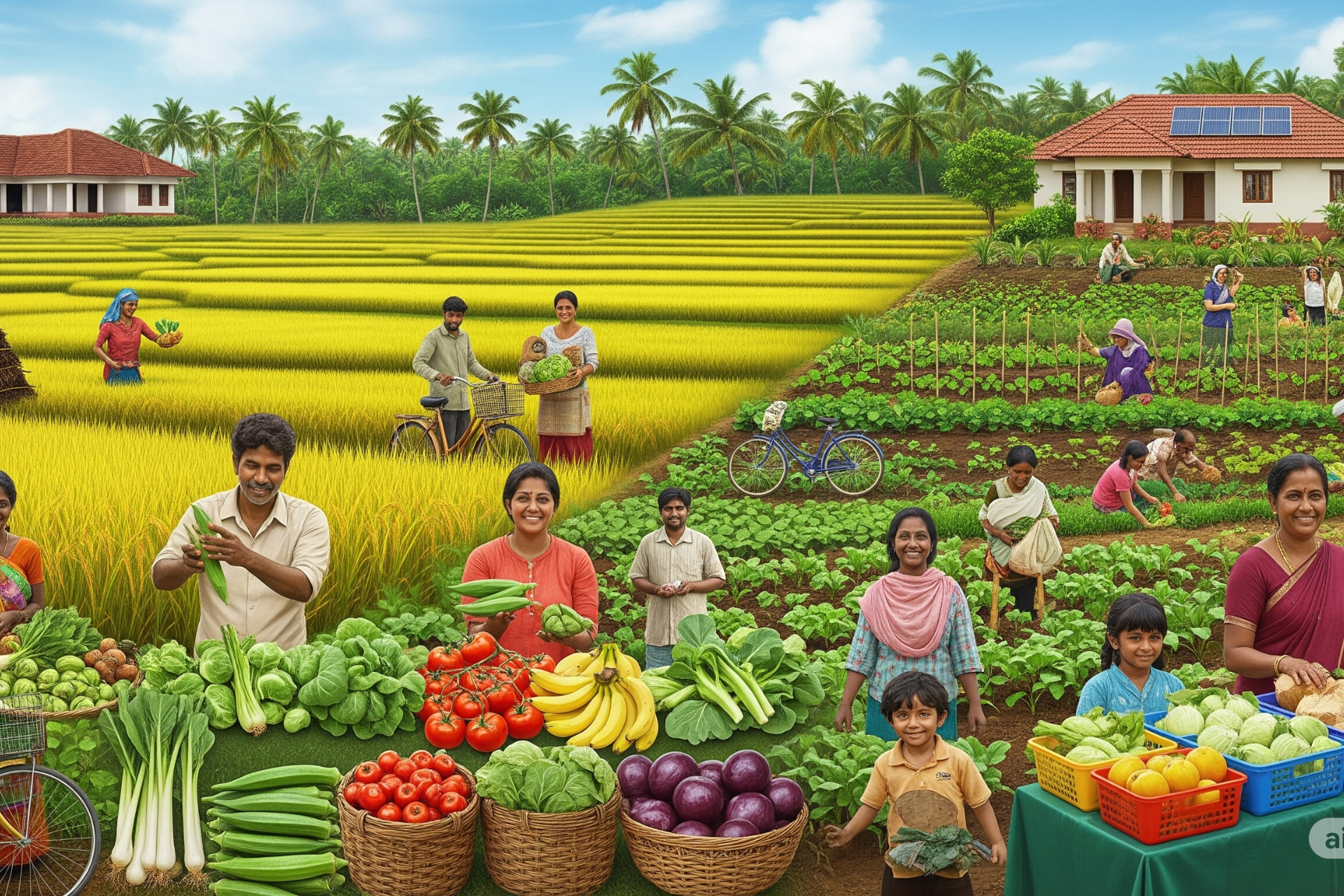
In a world racing towards globalization and industrial-scale agriculture, the simple idea of “Grow Local, Consume Local” has quietly emerged as a powerful movement one that holds the key to restoring not just our environment but also our health, economy, and cultural integrity.
But why is this concept becoming so important today? How does it impact various layers of society and the ecosystem? And what practical steps can communities, volunteers, and governments take to make this vision a reality?
Understanding ‘Grow Local, Consume Local’
At its heart, this philosophy encourages individuals, communities, and regions to grow their own food or source it from nearby farms and producers rather than relying on distant, industrial-scale food supply chains. This is not just a sentimental call to return to the “good old days” — it’s a scientifically and economically sensible step toward a resilient future.
Impact Areas of ‘Grow Local, Consume Local’
- Public Health
- Local food is fresher and more nutritious. Vegetables, fruits, and grains harvested at the right time, close to the point of consumption, retain more vitamins, antioxidants, and minerals.
- Industrial agriculture’s reliance on chemical preservatives, long transport times, and cold storage degrades food quality.
- A study by the National Institute of Nutrition (India) found that produce traveling over 500 km loses up to 30% of its nutritional value by the time it reaches consumers.
- Locally grown crops are also more adapted to regional diets, digestive systems, and seasonal needs, reducing food-related illnesses.
- Environmental Benefits
- India transports around 400 million tonnes of food annually over long distances, emitting vast amounts of CO₂ from diesel-run trucks.
- Reducing food miles drastically cuts down on fossil fuel use and greenhouse gas emissions.
- Local farming practices, especially organic and natural farming, build soil health, increase biodiversity, and reduce chemical pollution in water and soil.
- Economic Growth
- Kerala imports a significant share of vegetables and fruits from Tamil Nadu, Karnataka, and Andhra Pradesh. This outflow of money weakens the local rural economy.
- If even 25% of vegetables were produced locally, an estimated ₹1,500 crore per year could be retained within Kerala’s economy, generating rural employment and supporting smallholder farmers.
- Local markets and farmer cooperatives thrive under this model, creating job opportunities in packaging, processing, marketing, and retail.
- Social and Cultural Revival
- Traditional crop varieties like Navara rice, Njavara, Kuthiravali millets, and local tubers are disappearing in Kerala due to external crop dependence.
- ‘Grow Local’ revives interest in these ancient crops, preserving culinary traditions, medicinal uses, and agricultural knowledge passed down through generations.
- Reduced Pollution and Waste
- Long-distance food requires excessive packaging (plastic, thermocol, etc.), generating tons of non-biodegradable waste.
- Local sourcing minimizes the need for such packaging and reduces cold storage dependency, lowering energy consumption.
When Did We Start Importing So Much Food?
In the post-1980 era, Kerala witnessed a sharp decline in self-sufficiency in food. Once boasting local rice, banana, vegetable, and tuber production, the state began relying heavily on imports for basic staples like onions, tomatoes, carrots, and even rice.
Statistics show:
- Kerala produces only 35% of its vegetable demand, with the rest coming from neighboring states.
- Paddy cultivation land in Kerala declined from 8.82 lakh hectares in 1975 to less than 2 lakh hectares by 2020.
- Heavy dependence on external food supply has made Kerala vulnerable to price shocks, quality issues (pesticide-laden vegetables from outside), and supply disruptions.
Challenges in Adopting ‘Grow Local, Consume Local’
- Lack of Urban Farming Space
Urbanization has eaten into cultivable spaces, and cities have no structured farming policy for rooftops, balconies, or community gardens. - Changing Food Habits
Fast foods and processed items have shifted dietary preferences, reducing demand for native grains, pulses, and vegetables. - Low Farmer Motivation
Small farmers receive low returns; growing for local markets requires better price assurance and demand predictability. - Seed and Input Dependence
Loss of local seed varieties and dependency on hybrid, commercial seeds restrict true “local” production. - Policy Gaps
Government policies are often tilted towards large agribusiness rather than community-supported agriculture.
Solutions and Recommendations
For Volunteers and Communities:
- Urban Gardening Drives: Promote terrace gardening, vertical farming, and kitchen garden movements.
- School Gardens: Teach children to grow vegetables as part of the school curriculum.
- Farmer’s Market Promotion: Organize local ‘Krishi Melas’, weekly farmer’s markets to connect consumers with nearby producers.
- Traditional Seed Banks: Collect, preserve, and distribute indigenous seeds suited to Kerala’s climate.
For Governments:
- Policy Incentives: Subsidies for urban farming kits, organic farming, and natural soil amendments.
- Zonal Food Planning: Encourage districts to map local food needs and potential production capacities.
- Farm-to-Table Support: Digital platforms to link farmers directly with households and local restaurants.
- Price Protection: Assured Minimum Support Price (MSP) for native crops to encourage their cultivation.
Successful Real-Life Examples
- Auroville, Tamil Nadu
This international township grows 80% of its food locally through organic methods, reducing its dependence on the external market and boosting community health. - Sikkim – 100% Organic State
Sikkim’s push for organic and local production has improved soil health, attracted eco-tourism, and improved farmer incomes without reliance on distant markets. - Thrissur, Kerala
Several panchayats in Thrissur district have introduced kitchen garden projects, reducing household vegetable costs by 30% while improving food security. - Cuba’s Urban Agriculture Revolution
After the Soviet collapse, Cuba turned to urban agriculture, producing 50% of Havana’s fresh vegetables within the city itself — a model Kerala’s cities could emulate.
How Can We Replicate This in Kerala?
- Build a “Grow Local” pilot project in every block Panchayat with active volunteer participation.
- Set up model villages like “Navara Village” in Palakkad for traditional rice revival.
- Launch a digital marketplace exclusively for locally grown crops to cut middlemen exploitation.
- Create Kerala’s own “Local Food Certification” to encourage local produce buying by hotels, canteens, and supermarkets.
Conclusion
‘Grow Local, Consume Local’ is not just an environmental slogan — it’s an economic strategy, a public health movement, and a cultural necessity. It promises cleaner air, healthier bodies, stronger communities, and a sustainable economy rooted in the richness of Kerala’s soil and spirit.