
Tapioca or lovingly called Kappa in Kerala, is not just a food crop here. It is a part of the state’s culture, economy, and daily life. Boiled for breakfast, fried for snacks, or used in a variety of dishes, tapioca is now inseparably woven into Kerala’s culinary fabric. But have you ever wondered where this humble root came from and how it became Kerala’s beloved staple? Let’s take a deep dive into the fascinating history, benefits, myths, and modern-day challenges surrounding tapioca.
Origin of Tapioca: A South American Gift to the World
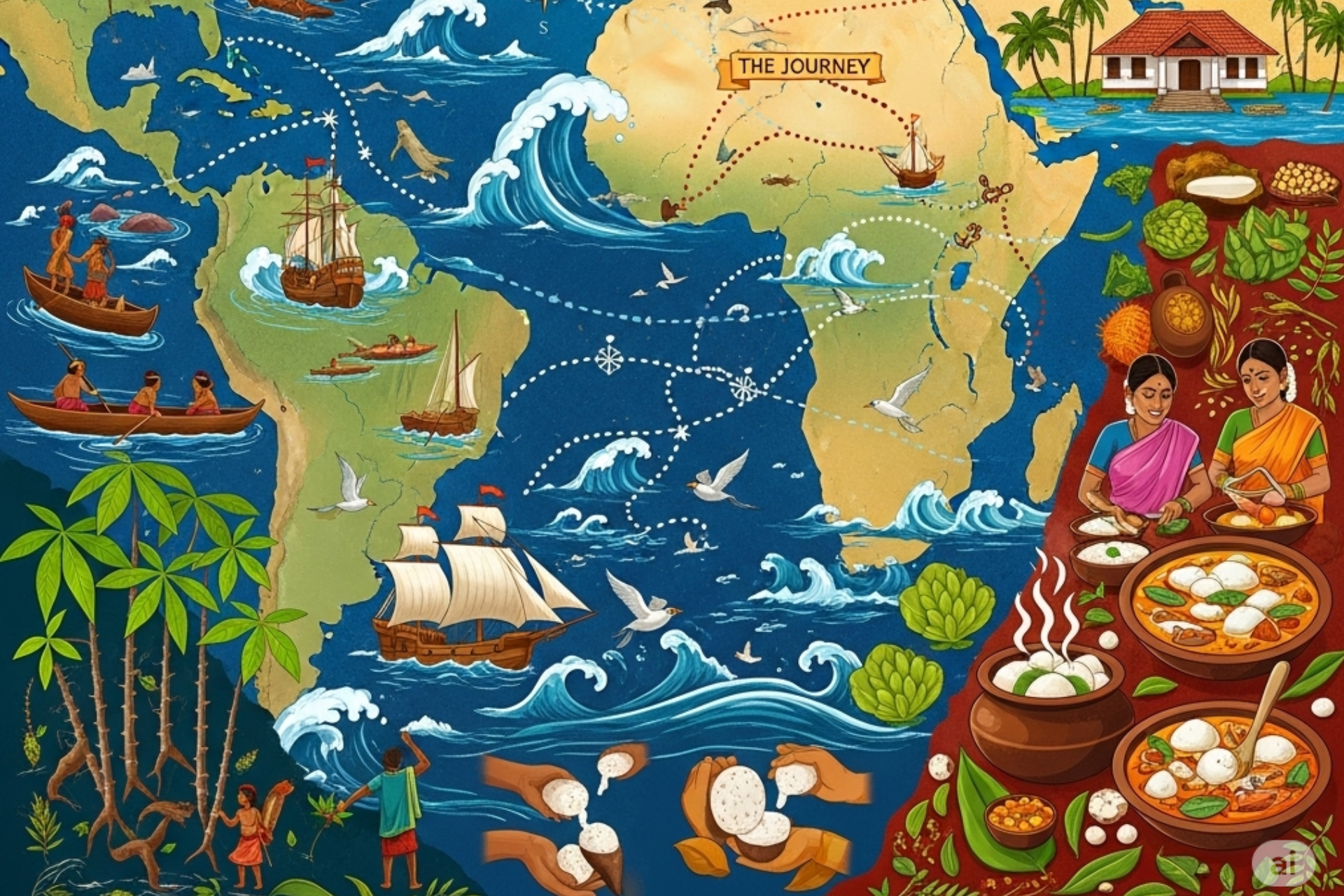
Tapioca, scientifically known as Manihot esculenta, originated in the Amazon basin of South America. Indigenous tribes in Brazil and surrounding regions domesticated this drought-resistant tuber thousands of years ago. Its popularity spread across the tropical world due to its ability to thrive in poor soils where other crops struggled.
Tapioca made its way to Africa and Asia through colonial trade routes, thanks to Portuguese and Spanish explorers. It became a food security crop in several regions for its calorie-rich and filling nature.
The Arrival of Tapioca in Kerala: A Historical Tale
Tapioca came to Kerala during the late 19th century. History credits King Vishakham Thirunal Rama Varma of Travancore (ruled 1880–1885) for introducing tapioca to the state. Concerned about possible famines and rice shortages, the King encouraged the cultivation of tapioca as an alternative food source.
The story goes that the King learned about the tuber from the British and recognized its potential to feed the masses. Tapioca was easy to grow even on the rocky soils and hill slopes of Kerala, unlike rice which needed abundant water and fertile plains. He personally promoted its cultivation by ordering tapioca saplings from Ceylon (present-day Sri Lanka) and distributing them to farmers free of cost.
Within a few decades, tapioca transformed from a “poor man’s food” to a staple that saved lives during food scarcity, especially during World War II when rice imports fell drastically.
Tapioca in Kerala’s Economy and Daily Life
Tapioca’s impact on Kerala’s rural economy has been significant. By the mid-20th century, it had become the state’s second most important food crop after rice. Areas like Kollam, Pathanamthitta, and parts of Palakkad saw widespread tapioca cultivation. Families grew it in backyard plots as insurance against hunger.
It also supported industries — starch extraction, alcohol production, sago (sabudana) manufacturing, and cattle feed — providing employment and income to thousands. Kerala even exported tapioca-based products to other Indian states and abroad.
In homes, boiled tapioca (kappa puzhungiyathu) with fish curry became an iconic Kerala dish — a symbol of simple but wholesome food. Fried tapioca chips also became a famous snack, sold widely across India and in the Middle East.
Health Benefits of Tapioca: More than Just Carbs
While tapioca is high in carbohydrates, especially starch, it also offers several nutritional benefits:
- Gluten-Free: Ideal for those with celiac disease or gluten sensitivity.
- Easy to Digest: Used as baby food and for those with digestion problems.
- Source of Resistant Starch: Supports gut health and may improve insulin sensitivity.
- Rich in Calcium & Iron (when unprocessed): Good for bone strength and energy levels.
- Satiety: Its high fiber content keeps you full longer, aiding weight control when eaten boiled without frying.
However, it is also energy-dense with low protein and fat, so a balanced diet is necessary.
Facts & Myths about Tapioca
Interesting Facts:
- India is the second-largest producer of tapioca in the world after Nigeria.
- Kerala contributes about 80% of India’s tapioca production.
- A properly prepared tapioca root can contain more calories than rice — making it an emergency food in times of scarcity.
- Tapioca starch is used in paper, textile, and pharmaceutical industries globally.
Common Myths:
- “Tapioca is poisonous” — Raw tapioca contains cyanogenic glycosides, but traditional processing (peeling, boiling, drying) removes these toxins. Properly cooked tapioca is safe.
- “Tapioca has no nutritional value” — While it is carb-heavy, it contains resistant starch and minerals when prepared correctly.
- “Only the poor eat tapioca” — Today, tapioca-based dishes are served in star hotels and gourmet kitchens across the world, including fancy tapioca pearls in bubble tea.
Global Tapioca: A World Crop
- In Thailand, Vietnam, and Indonesia, tapioca is a major export crop used for making starch and ethanol.
- In Brazil and Africa, it remains a food security crop.
- The global cassava (tapioca) starch market is valued at over $7 billion USD and is expected to grow with the rise of gluten-free and plant-based diets.
Current Challenges and Problems in Kerala
- Despite its glory, tapioca farming in Kerala is facing serious challenges:
- Decline in Cultivation: Farmers have reduced tapioca planting due to low profitability compared to cash crops like rubber and banana.
- Pest & Disease Threats: Cassava Mosaic Disease (CMD) and tuber rot diseases reduce yields and farmer interest.
- Import Dependency: Kerala now imports processed tapioca products from Tamil Nadu and other states, despite once being a leader in production.
- Changing Food Habits: Younger generations prefer rice, wheat, and ready-made fast foods over tapioca, affecting its demand.
- Climate Impact: Extreme rains and drought cycles disrupt planting and harvesting patterns.
The Way Forward: Reviving Tapioca’s Glory
To address these challenges, Kerala can:
- Encourage organic tapioca farming as part of sustainable agriculture.
- Promote tapioca-based value-added products (like gluten-free flour, snacks).
- Set up local processing units to boost farmer profits.
- Highlight the health benefits of tapioca to younger generations via media campaigns.
Conclusion: A Root of Resilience
Tapioca’s journey from South America to Kerala is a tale of survival, adaptation, and cultural transformation. Once dismissed as a famine food, today it represents resilience and tradition. It fed generations during hardships, shaped rural economies, and delighted taste buds across classes. While modern challenges remain, tapioca’s story in Kerala is far from over — with innovation, this humble root may find a bright new chapter in the future of sustainable, healthy eating.