
In a world grappling with climate change, soil degradation, and declining biodiversity, the answers to sustainable farming often lie in ancient wisdom. Two such time-tested agricultural practices—intercropping and crop rotation—are now making a powerful comeback. These regenerative techniques, once a common feature of traditional farming systems, are proving to be essential for modern organic and climate-resilient agriculture.
At Vayonadha, we celebrate the return of these nature-aligned methods that restore soil health, protect crops, and nurture ecosystems. Let’s explore how intercropping and rotation are helping farmers around the world thrive—without harming the planet.
🌾 What Is Intercropping?
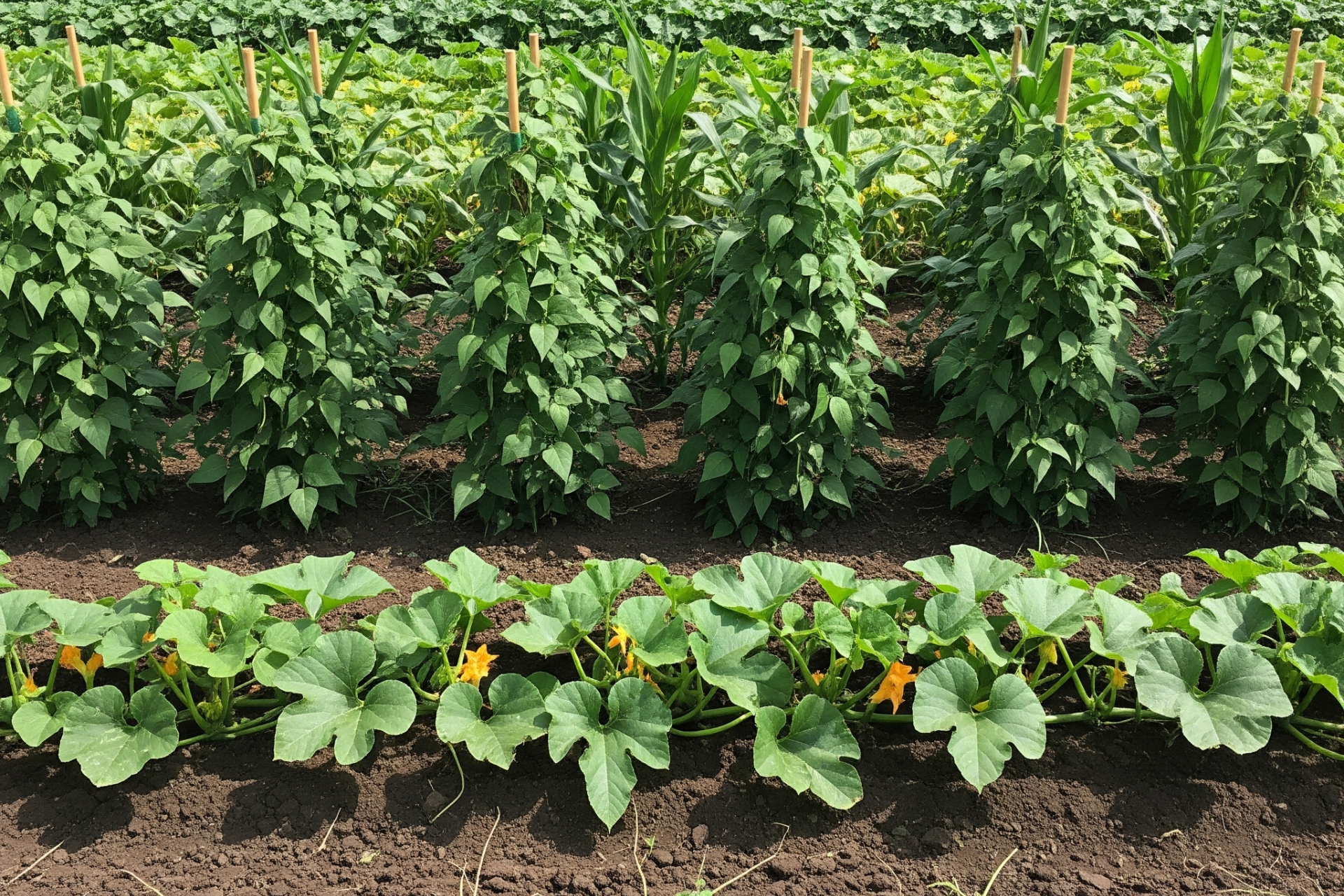
Intercropping is the practice of growing two or more crops in proximity on the same plot of land. The crops are selected based on their complementary traits—one may fix nitrogen, while the other suppresses weeds or repels pests.
Types of Intercropping:
- Row Intercropping: Alternating rows of different crops.
- Strip Intercropping: Wide strips of crops that are harvested separately.
- Mixed Intercropping: Randomly sown combinations, often used in traditional farming.
- Relay Intercropping: Sowing a second crop before the first is harvested.
🌿 What Is Crop Rotation?
Crop rotation involves growing different types of crops sequentially on the same land across seasons or years. This rotation breaks the cycle of pests, balances nutrient use, and improves soil structure.
For example:
Year 1 – Legume (adds nitrogen)
Year 2 – Leafy vegetable (high nutrient demand)
Year 3 – Root crop (aerates soil)
Year 4 – Grain (breaks pest cycle)
🌱 Why These Practices Matter in Organic Farming
- Reduces Pest and Disease Pressure: Rotating crops and mixing species confuse pests and reduce their buildup.
- Improves Soil Fertility: Legumes fix nitrogen; deep-rooted crops break up hard soil layers.
- Maximizes Land Use: Intercropping increases yield per square meter.
- Enhances Biodiversity: Diverse fields support pollinators, predators, and microbes.
- Builds Climate Resilience: Varied root depths and canopy cover protect against extreme weather.
🌍 Global Case Studies of Intercropping and Rotation
🇲🇽 Mexico – The Milpa System
In Central America, Indigenous farmers have practiced the Milpa system for over 7,000 years. It’s a form of mixed intercropping involving maize, beans, and squash. The maize offers a climbing stalk for the beans, the beans fix nitrogen, and the squash spreads over the ground to suppress weeds.
“It’s not just farming, it’s a way of life,” says Don Carlos, a farmer in Oaxaca. “Each plant supports the others, like a family.”
🇮🇳 India – Intercropping in Coconut Plantations
In Kerala and Tamil Nadu, coconut farmers intercrop with bananas, black pepper, turmeric, and legumes. These crops make use of different soil layers and light availability while improving overall farm income.
Research by ICAR (Indian Council of Agricultural Research) shows that coconut intercropped with legumes improves yields by up to 25% while enhancing soil fertility.
🇧🇷 Brazil – Rotation for Soil Regeneration
In Brazil’s Cerrado region, farmers have successfully rotated soybeans with cover crops like sunn hemp and millet. These rotations have reversed soil compaction and restored organic matter, reducing the need for external fertilizers.
Many Brazilian farmers now follow a three-crop cycle: soybean (cash crop), millet (cover crop), and maize (feed crop), maintaining high productivity with fewer chemical inputs.
🇰🇪 Kenya – Intercropping for Food Security
In Kenya, smallholder farmers grow maize intercropped with beans and sweet potatoes. This combination ensures dietary diversity, optimizes land use, and protects against crop failure.
Agroecology trainers report that intercropping increases household food security by offering harvests at different times, even during drought conditions.
🧠 Expert Perspectives
Dr. Asha Nair, Agronomist and Soil Specialist
“Nature never plants a monoculture. When farmers mimic natural ecosystems through rotation and diversity, soil health regenerates and external inputs become minimal.”
Muthuvel R., Organic Farmer in Coimbatore
“We rotate rice with sunhemp and green gram. Our soil has more earthworms now, and we don’t buy fertilizers anymore.”
Vayonadha Tip
Always plan intercrops based on plant compatibility. Avoid combinations where one crop overshadows or competes heavily with another for water and nutrients.
📋 Intercropping and Rotation Design for Small Farms
Here’s a sample intercropping and rotation plan suitable for a 1-acre organic farm in tropical conditions:
| Main Crop | Intercrop | Benefit |
| Coconut | Banana + Legume | Multi-layered, improves income, fixes nitrogen |
| Tomato | Marigold | Pest control (repels nematodes) |
| Maize | Beans | Beans fix nitrogen; maize provides support |
Rotation:
| Year | Crop | Purpose |
| Year 1 | Green gram | Nitrogen fixer |
| Year 2 | Chilli or okra | Cash crop |
| Year 3 | Millets | Soil strengthening |
| Year 4 | Leafy greens | Short cycle, nutrient drawdown |
🌿 Tools to Implement These Practices
- Soil Tests: Understand what your soil lacks before rotation.
- Planting Calendars: Choose crops suited to each season.
- Biodiversity Maps: Plan farm layouts to maximize ecological niches.
“Incorporating these tools with traditional knowledge leads to regenerative abundance,” says Dr. Soumya Krishnan, an agroecology educator with Vayonadha.
📈 The Long-Term Benefits
- 30–60% yield increase (combined crops)
- Reduced fertilizer use by up to 70%
- Improved soil carbon and water retention
- More stable income from diversified produce
These benefits are not hypothetical—they are being experienced by farmers across continents, from the rice paddies of South Asia to the fields of East Africa.
💬 Closing Thoughts from Vayonadha
In a time of ecological crisis, intercropping and crop rotation offer hope rooted in tradition and proven by science. These are not just agricultural techniques—they are philosophies of working with, not against, nature.
At Vayonadha, we believe the future of farming is diverse, local, and regenerative. Intercropping and rotation are your tools to nourish the soil, build resilience, and ensure food security for generations to come.
🧩 Resources and Next Steps
- Want to create a custom crop rotation plan for your land? We can help! Reach out to the Vyonadha advisory team.
- Join our training sessions on regenerative agriculture, hosted monthly online and in-person across Kerala.
📣 Share Your Story
Do you intercrop or rotate crops on your farm? Tag us with your photos and experiences on social media using #GrowWithVayonadha. We’d love to feature your journey in our next blog!