
Pests are one of the biggest challenges in agriculture—but the solution doesn’t have to be toxic. In fact, nature has already provided us with the tools we need to manage pests without resorting to synthetic pesticides that damage soil, water, biodiversity, and human health.
At Vayonadha, we believe that healthy ecosystems lead to healthy crops. Natural pest control is about working with nature—not against it—to build resilient farms that protect both food and the environment. In this article, we explore time-tested and science-backed strategies to manage pests in organic systems, along with global success stories and expert advice.
🌿 What Is Natural Pest Management?
Natural pest management—or ecological pest control—involves using biological, cultural, mechanical, and botanical methods to prevent or reduce pest damage, without relying on chemical pesticides.
These methods focus on:
- Enhancing biodiversity
- Strengthening plant immunity
- Disrupting pest life cycles
- Encouraging beneficial predators
🐛 The Problems With Synthetic Pesticides
While synthetic pesticides may offer short-term control, they create long-term problems:
- Kill beneficial insects and soil microbes
- Leave harmful residues on food and in water
- Cause pest resistance, leading to stronger outbreaks
- Harm pollinators like bees and butterflies
- Affect farmer and consumer health
🌾 Natural Pest Control Techniques
- Companion Planting:
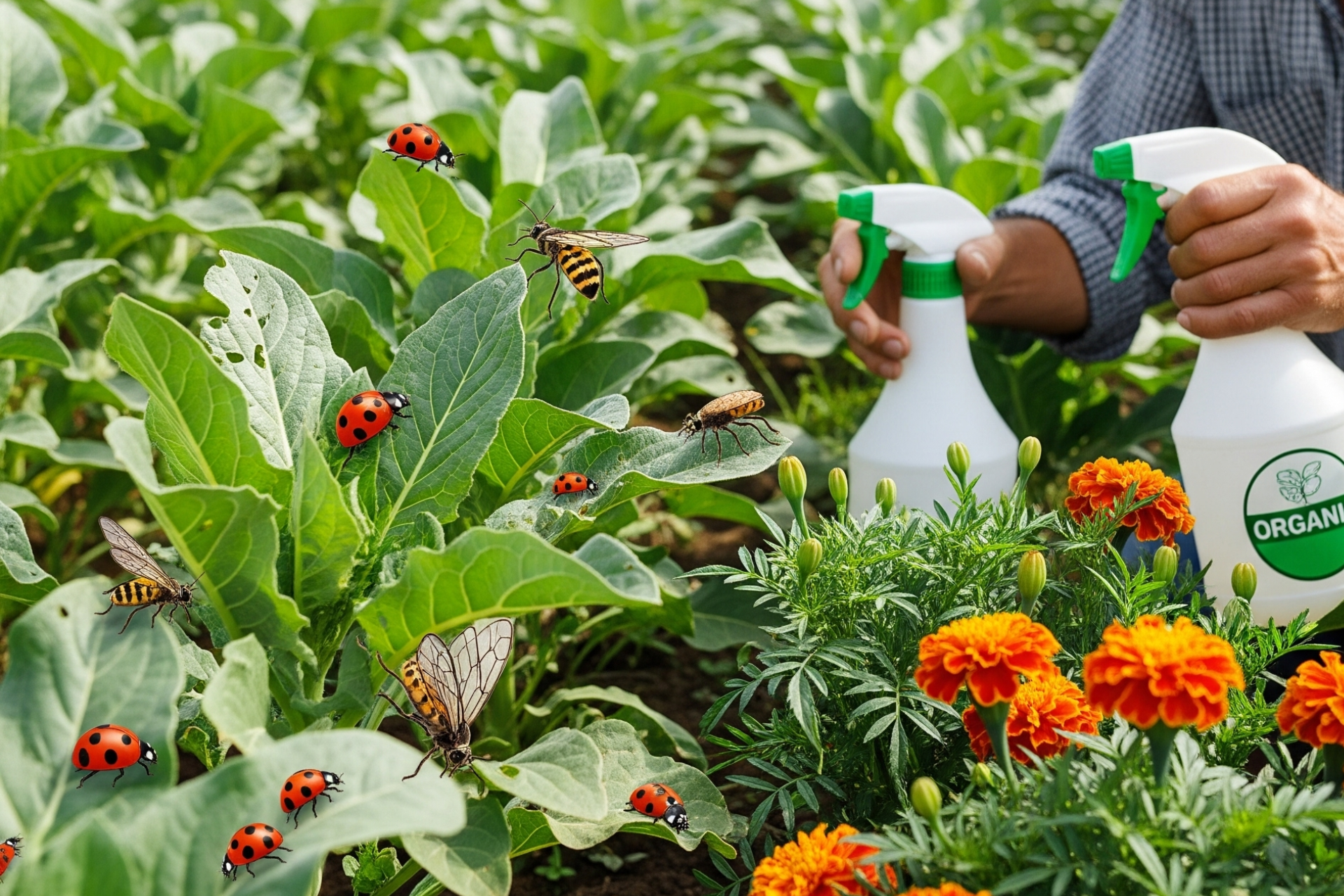
Certain plants naturally repel pests or attract their predators. For example, marigolds deter nematodes, while basil repels aphids and whiteflies. Companion planting also adds biodiversity to the field, disrupting pest cycles.Vayonadha Tip: Plant basil near tomatoes or neem near brinjal for natural repellent effects. - Neem-Based Sprays:
Extracts from neem leaves and seeds are powerful, natural insect repellents. Neem interferes with pest reproduction, feeding, and hormone systems, yet is safe for humans and beneficial insects.- Neem oil (0.5–1%) mixed with soap and water can control aphids, whiteflies, and mites.
- Weekly spraying is most effective in early infestation stages.
- Biological Control:
Encourage or introduce beneficial insects that prey on pests:- Ladybugs: Eat aphids and scale insects.
- Lacewings: Feed on thrips and mealybugs.
- Trichogramma wasps: Parasitize pest eggs.
You can buy beneficial insects or plant habitats (like flowering herbs) to attract them.
- Trap Crops:
Planting certain crops as “sacrifices” can divert pests away from your main crop.- Example: Mustard can be used to attract aphids away from cabbage.
- These trap crops can later be removed or treated separately.
- Fermented Plant Extracts (FPE) and Panchagavya:
Organic farmers in India use traditional pest repellents made from fermented plant materials, cow dung, cow urine, and jaggery.- Panchagavya: Enhances plant immunity.
- Agniastra and Neemastra: Repel caterpillars and sucking insects.
These are inexpensive, farm-made, and part of India’s natural farming heritage.
- Physical and Mechanical Controls:
- Sticky traps to catch flying insects like whiteflies
- Row covers to prevent entry of flying pests
- Handpicking of visible insects like caterpillars or beetles
- Light traps for night-flying pests
“Prevention is always more effective than cure. A pest outbreak often means the farm ecosystem is out of balance.”
– Dr. Aparna Rao, Entomologist and Organic Farming Specialist
🌎 Case Studies in Natural Pest Management
🇮🇳 Andhra Pradesh – Zero Budget Natural Farming (ZBNF)
Farmers across Andhra Pradesh are adopting ZBNF principles, which rely heavily on farm-made inputs for pest control. Products like Brahmastra (a fermented herbal insecticide) have reduced pest attacks on paddy and groundnut by over 60%, according to state agriculture reports.
Farmer Venkatesh Reddy shares:
“We no longer depend on market chemicals. Our costs have come down, and the soil is more alive.”
🇹🇿 Tanzania – Push-Pull Technology
Smallholder farmers in East Africa use push-pull intercropping to manage stem borers in maize:
- Desmodium is planted between maize to repel pests (push).
- Napier grass is planted around the field to attract pests (pull).
This method is entirely pesticide-free and improves both yield and livestock fodder availability.
🇫🇷 France – Flower Strips in Vineyards
Organic vineyards in southern France plant flower strips with yarrow, fennel, and clover between vines. These attract predatory insects like hoverflies and spiders, which naturally control leafhoppers and mites.
Grower Jean-Claude Lemoine says:
“With flower strips, the vineyard becomes a living ecosystem. I see more bees, birds, and balance.”
🇵🇭 Philippines – Rice-Duck Farming
In parts of the Philippines and Vietnam, farmers raise ducks in rice fields. The ducks eat insect pests and weeds while fertilizing the fields with their droppings.
This integrated system reduces the need for both pesticides and fertilizers and is gaining popularity among small rice farmers.
🧠 Expert Advice for Organic Farmers
Dr. Satish Kumar, Plant Pathologist
“Rotate crops, use resistant varieties, and ensure crop spacing. Good farm hygiene and diverse planting go a long way in reducing pest pressure.”
Meenakshi Pillai, Vayonadha Agro-Advisor
“Train your eye to observe. Early signs of stress or leaf curl often signal pest issues. Intervention at the right time saves the whole crop.”
🌾 Building Long-Term Pest Resilience
Natural pest management isn’t about quick fixes—it’s about building resilient farm ecosystems. Healthy, living soils produce stronger plants. Diverse crops confuse pests. Encouraging beneficial insects and microbes restores the balance.
When you stop spraying poisons, nature steps in to help.
💬 Final Thoughts from Vayonadha
Farming without poisons is not only possible—it’s necessary. As organic farmers, our role is not to fight nature but to support its rhythms. Natural pest control offers a safe, regenerative path forward for people, planet, and production.
Let’s shift from fear-based farming to ecosystem-based farming. Let’s grow with life—not against it.
🧩 Need Help with Your Pest Issues?
The Vayonadha Advisory Team offers personalized pest control plans using organic methods. Contact us for workshops, guidance, or custom solutions.
📣 Share Your Practice
Do you use natural pest management techniques? Share your photos and methods with #GrowWithVayonadha to inspire others!